


Qsc PA Speaker Buying guide
Qsc Pa Speaker: A Complete Buyer's Guide
Selecting a QSC PA speaker system requires careful consideration of your venue, budget, and technical requirements. Understand key specs and trade-offs to get the best performance for your money.
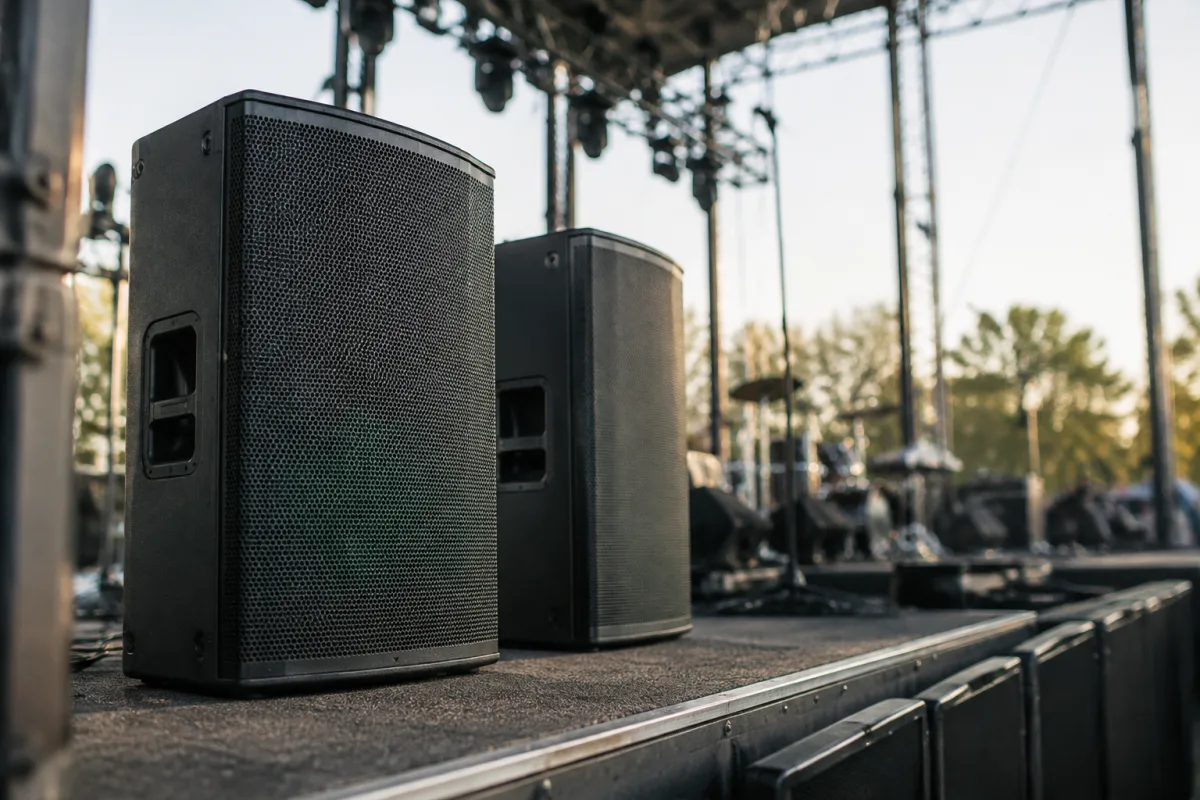
Selecting a QSC PA speaker system requires careful consideration of your venue, budget, and technical requirements. Whether you're outfitting a small club, a touring rig, or a permanent installation, understanding the key specs and trade-offs will help you avoid costly mistakes and get the best performance for your money.
Understanding QSC Speaker Power Ratings and Wattage
QSC PA speakers range from compact 200-watt models to full-range systems exceeding 2,000 watts. The wattage doesn't tell the whole story—a 500-watt QSC system often outperforms cheaper 800-watt alternatives due to driver quality and amplifier efficiency. For small venues (under 200 people), 300–600 watts per speaker suffices. Medium rooms (200–500 people) typically need 800–1,200 watts combined. Larger installations or outdoor events require 1,500+ watts per system.
Impedance, Connectivity, and Speaker Size Matters
QSC speakers come in 8-ohm and 4-ohm configurations. Eight-ohm models are more flexible for chaining multiple speakers together, while 4-ohm versions deliver higher power output in compact designs. Check your amplifier's compatibility before purchase—mismatched impedance reduces efficiency or risks damage. Speaker size directly affects frequency response and coverage area: 12-inch woofers dominate the mid-market, offering a balance between portability and projection, whilst 15-inch versions deliver deeper bass but add weight and bulk. Compact 10-inch designs suit smaller spaces but sacrifice low-end response.
Key Specifications to Compare Before Buying
| Specification | Why It Matters | What to Look For |
|---|---|---|
| Frequency Response | Determines which sounds the speaker reproduces clearly | Wider range (40 Hz–20 kHz) for full-range use; narrower acceptable for subwoofer-paired systems |
| Dispersion Pattern | How sound spreads through the room | 60–90° horizontal for medium-sized venues; wider for larger or clustered arrays |
| Sensitivity (dB SPL) | How loud a speaker gets with given power input | Higher sensitivity (88+ dB) means louder sound without pushing the amplifier harder |
| Driver Quality | Durability, clarity, and reliability during long gigs | Reinforced cones and professional-grade components outperform budget alternatives |
Common Purchasing Mistakes to Avoid
Many buyers focus solely on wattage, overlooking the amplifier's quality and the cabinet's build materials. Cheap plywood cabinets can rattle and distort even powerful systems; QSC's premium plywood construction resists warping. Another pitfall is underestimating DSP (Digital Signal Processing) capabilities—modern QSC models include built-in limiters, equalisers, and crossover settings that protect drivers and optimise sound. Overlooking these features means you'll need external processing equipment, adding cost and complexity.
Price Tiers and What You Actually Get
Entry-level QSC PA speakers (£400–700 per unit) deliver decent quality for small venues and rehearsals, with solid drivers and rugged cabinets. Mid-range options (£700–1,200) add refined voicing, better sensitivity, and more sophisticated DSP, ideal for touring musicians and permanent venue installations. Premium models (£1,200+) feature top-tier drivers, exceptional build quality, and advanced processing, suited to demanding venues or multi-speaker arrays requiring tight sonic coherence.
Matching Your QSC Speaker to Your Venue
A 12-inch 1,000-watt QSC speaker works beautifully in a medium pub or small theatre but lacks output for a large festival. Conversely, overkill systems waste power and money. Calculate your space's volume and expected acoustic absorption (soft furnishings reduce the sound power needed). For accurate guidance, consult the ultimate guide to QSC active PA speakers, which explores system architecture and design philosophy in detail.
Portable vs. Permanent Installation Considerations
Touring musicians prioritise lightweight, flyable designs with built-in handles and compact footprints. QSC's K-series and E-series excel here, though they command premium pricing. Permanent venues can opt for larger, heavier cabinets, accepting weight for superior bass reproduction and dispersion. Active systems (amplifier integrated) simplify setup and reduce cable clutter but limit flexibility if you later upgrade amplifiers. Passive systems pair with separate amplifiers, costing more upfront but offering modular scalability.
Warranty, Support, and Long-Term Value
QSC's reputation hinges on reliable after-sales support. Verify warranty periods before purchase—typically 2–3 years for consumer models, longer for pro installations. Check if your retailer provides local technical support. A well-maintained QSC system lasts 10+ years, making upfront quality investment worthwhile. Budget for occasional driver replacement or amplifier servicing, especially in high-use venues.
Making Your Final Purchase Decision
Test-drive speakers in your actual space if possible—online specs don't capture how a system sounds in your room's acoustics. Compare at least three configurations across price tiers. Consult the sibling guide if you need foundational knowledge about PA speaker architecture before finalising your choice. Prioritise build quality, sensitivity, and DSP over raw wattage, and remember that a well-chosen £900 QSC system will outperform a poorly selected £1,500 bargain.



Comments