


Power Amplifier Buying guide
Power Amplifier: A Complete Buyer's Guide
Choosing a power amplifier doesn't need to be confusing. Understand RMS watts, impedance, speaker matching, and how to avoid common buying mistakes.
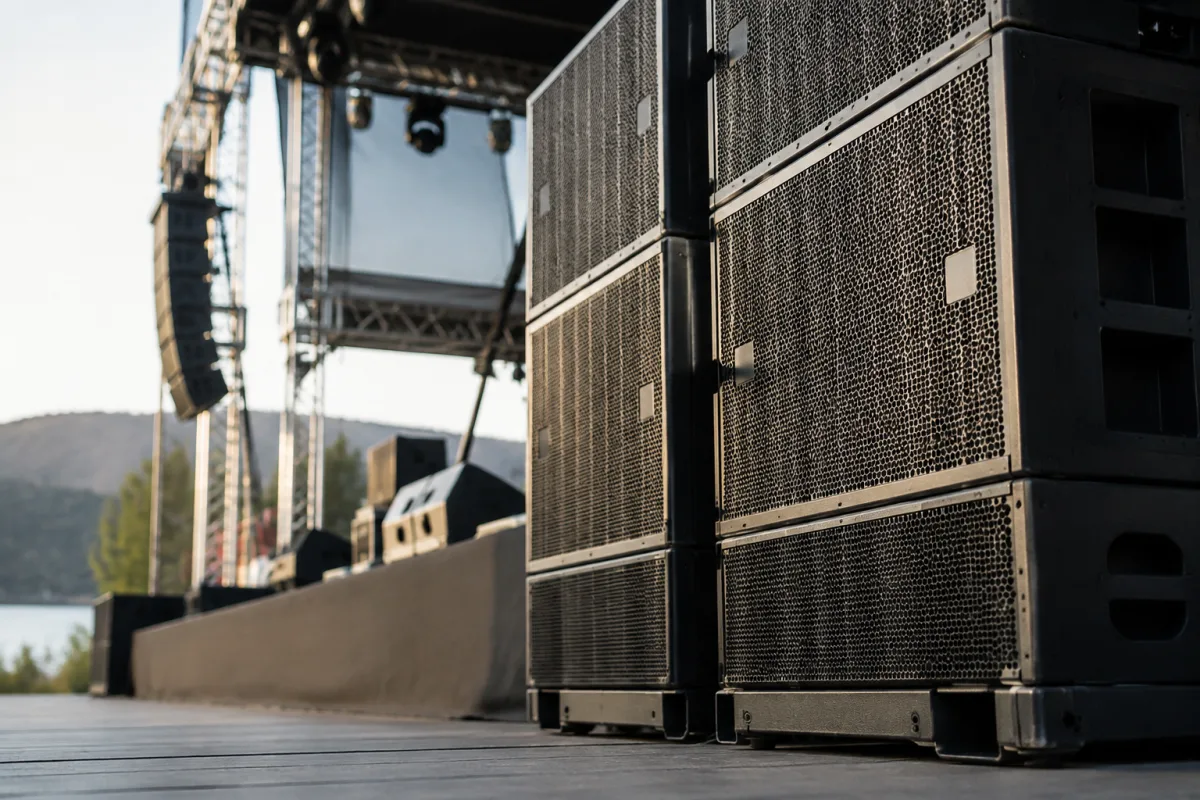
Choosing a power amplifier is one of those purchases that feels fraught with jargon if you're new to live sound. Wattage, impedance matching, cooling requirements, bridging mode—it all sounds deeply technical. Here's the reality: a power amplifier is a straightforward device with one job—take a line-level signal from your mixer and make it loud enough to drive speakers. Getting the right one for your needs is simpler than the terminology suggests. This guide shows you exactly what specs matter when you're buying a power amplifier, so you end up with something that can actually handle your gigs without breaking the bank.
Understanding What a Power Amplifier Actually Does
A mixer outputs weak signals at line level—typically around –10 dBV to +4 dBu. Speakers need thousands of times more power to move air. A power amplifier takes that line-level signal and boosts it to several hundred watts. Most modern power amplifiers are solid-state (transistor-based), though tube power amplifiers still exist for boutique applications. For live sound, solid-state dominates because it's reliable, lightweight, and cost-effective.
Power Rating: Understanding Watts and RMS
The first spec you'll see is power rating in watts. A power amplifier might be rated at 300W per channel at 4 ohms, or 600W bridged at 8 ohms. These numbers matter, but context matters more.
RMS watts (root mean square) are the real power output—what the power amplifier delivers continuously. This is the spec that matters. Peak watts or PMPO (peak music power output) are marketing noise and often wildly inflated. Always compare RMS power between amplifiers.
At what impedance? A power amplifier's power output depends on speaker impedance. The same amplifier rated at 300W into 8 ohms might deliver 600W into 4 ohms. Lower impedance = higher power output, but also higher load on the amplifier. Know your speaker impedance before buying and choose an amplifier rated for it.
Impedance Matching: A Critical Detail
Impedance is measured in ohms. Speakers are typically 4 ohms, 8 ohms, or 16 ohms. A power amplifier has a minimum impedance rating—often 4 ohms, sometimes 2 ohms. Never connect a speaker with lower impedance than your power amplifier's minimum rating. The amplifier will overheat and fail. If you're connecting multiple speakers, the total impedance drops. Two 8-ohm speakers in parallel equal 4 ohms. Three 8-ohm speakers in parallel equal 2.67 ohms. Know your speaker configuration and match it to a power amplifier rated for that impedance.
Channels: Stereo vs Mono (Bridging)
Most power amplifiers have two channels (stereo). You can also "bridge" them—combine the two channels into one mono channel with doubled power. A 300W stereo amplifier becomes 600W mono. This is useful for subwoofer amplification or single-channel applications. If you're buying specifically to power subwoofers, a bridged power amplifier is more efficient than buying two separate amps.
Cooling and Thermal Protection
A power amplifier generates heat. Budget models with passive cooling rely on heatsinks and convection. Professional models use active cooling (fans). If you're running the amplifier hard for hours, thermal protection matters. A power amplifier with overheating protection will throttle down or shut off before damaging itself. Cheap amplifiers sometimes lack this and just fail.
Connectivity and Inputs
Does the power amplifier have balanced XLR inputs (professional standard), unbalanced RCA inputs (cheaper), or both? Professional live sound uses balanced XLR. Budget models often have just RCA. If you're running long cable runs from mixer to amplifier (more than 5 metres), balanced XLR is essential—unbalanced picks up noise over distance.
Does it have speaker-level outputs with Speakon connectors (industry standard) or just binding posts? Speakon is more secure and professional. Check these details.
Price Tiers and What You Actually Get
Budget (£150–350): Entry-level power amplifiers with 100–300W RMS per channel. Often bare-bones—minimal cooling, basic connectors, no metering. Fine for small rooms or rehearsal spaces. Reliability is variable.
Mid-range (£350–800): Solid 300–600W RMS power amplifiers with better cooling, professional connectors, decent build quality. This is where most live sound applications sit. Reliable enough for touring.
Professional (£800+): High-power amplifiers (1000W+) with active cooling, premium build, integrated DSP, detailed metering. Used for large venues and permanent installations. You pay for reliability and feature depth.
Form Factor: Rack Mount vs Standalone
Most power amplifiers are rack-mount units (standard 19-inch rack size). Some are floor units with carrying handles. Rack-mount is standard for touring because everything stacks neatly. Floor units work fine for smaller setups. Choose based on your transport and setup workflow.
DSP and Built-In Processing
Some power amplifiers include DSP (digital signal processing)—EQ, crossover filters, limiter protection. This is genuinely useful, especially for subwoofers (low-pass filtering ensures the sub only plays low frequencies). Budget power amplifiers skip this. Mid-range models sometimes include basic processing. Professional amplifiers often have full DSP control via software.
Efficiency and Heat Output
A power amplifier that's 85% efficient wastes 15% of its input power as heat. A 95% efficient design (often Class D technology) runs cooler and draws less power from your AC mains. For gigging, thermal efficiency matters. You'll get less thermal strain on the amplifier and on your venue's power distribution.
Common Mistakes When Buying a Power Amplifier
- Buying way too much power. A 2000W power amplifier for small club gigs is overkill and expensive. A good power amplifier matching your speaker system's actual needs works better.
- Ignoring impedance matching. Connecting incompatible speakers and amplifiers is the fastest way to destroy a power amplifier. Verify impedance before buying.
- Assuming used means unreliable. A well-maintained used power amplifier often outlasts a cheap new one. Check the unit thoroughly before buying secondhand.
- Skipping cooling assessment. A power amplifier without adequate thermal management fails under sustained load. Check cooling specs for your climate and usage pattern.
Making Your Final Decision
Calculate your actual power needs. What's the impedance of your speakers? How many channels do you need? What's your typical venue size? Buy a power amplifier that handles this conservatively with headroom (rule of thumb: 30% more power than minimum). A power amplifier you use at 70% capacity lasts longer than one maxed out constantly. Test the amplifier with your actual speakers if possible. Borrow one from a friend or rent before buying. A power amplifier that sounds clean at your volume matters far more than published specs.
For deeper understanding of power amplifier technology and installation practices, read our complete guide to power amplifiers, which covers thermal design, signal flow, and troubleshooting.


Comments