


4 Channel Mixing Desk article
The Complete Guide to 4 Channel Mixing Desk
A 4 channel mixing desk is the practical choice for small venues, travelling performers, and portable studio work. Learn what makes these compact mixers invaluable.
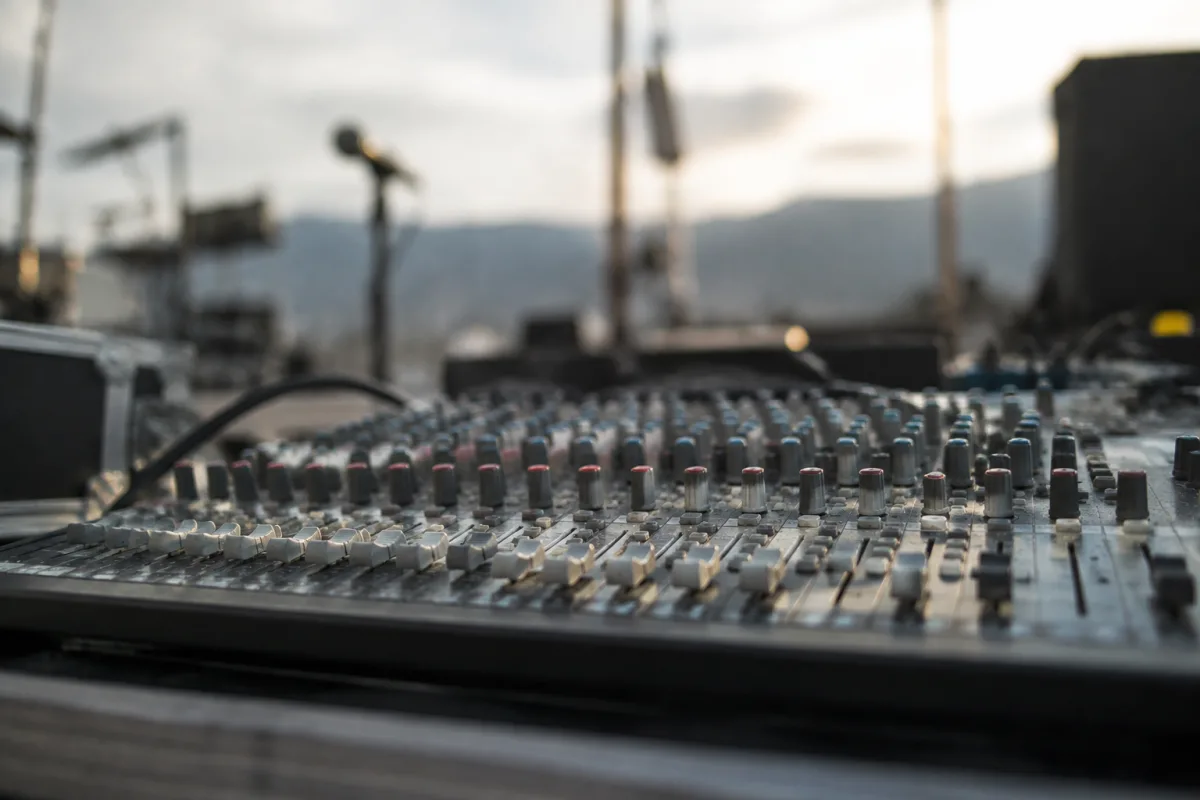
The Compact Operator's Choice: All About 4 Channel Mixing Desks
For small venues, travelling performers, and location sound recording, few pieces of equipment offer as much value as a compact four-channel mixer. This guide explores what makes a quality mixing desk with four channels worth the investment, how to evaluate models, and how to get the best sound from one in the field.
What Is a 4 Channel Mixing Desk?
A four-channel mixer is a compact audio control surface designed for small-scale live sound work and studio tasks. Unlike larger mixing consoles with twenty, thirty or more channels, a compact four-channel desk accepts up to four simultaneous audio inputs—typically via XLR microphone connectors, 1/4" instrument jacks, or RCA line-level inputs. Each input channel strips down to essentials: gain control, basic EQ (often just bass and treble), and a fader for level.
The compact nature of a four-channel mixer makes it portable, affordable, and straightforward to operate. It is neither a full studio console nor a simple passive mixer; it sits squarely in the sweet spot for semi-professional applications where simplicity and compactness outweigh the need for extensive onboard effects or an enormous feature set.
When Do You Need a 4 Channel Mixing Desk?
A four-channel desk shines in several scenarios. A small band playing pubs or cafes might use one to blend a couple of microphones (vocals, drums, acoustic instrument) with a line input from a backing track. A solo performer or DJ may use a four-channel mixer to layer microphone, music player, and effects sends. Live stream producers often opt for a compact four-channel model to manage camera audio, commentary, music playback, and emergency voice-over simultaneously. Small studios, podcast setups, and location sound recordists likewise find them indispensable for portability without sacrificing professional audio control.
The key question is: do you need simultaneous control of four or fewer audio sources? If yes, a four-channel mixer may be the practical solution. If your applications demand more simultaneous inputs or complex routing, a larger mixing desk might be necessary.
Core Features of Most 4 Channel Mixers
Although designs vary, a typical four-channel mixing desk includes:
- Four input channels: Each with its own preamp (typically 40–60dB of gain) and level fader. Some models include pan controls to position the signal in stereo.
- Phantom power: 48V power for condenser microphones, usually switchable to protect ribbon mics and avoid damage.
- Basic EQ: High-pass filter and 2–3 band tone shaping (bass, mid, treble). Parametric or graphic EQ is rare on ultra-compact units.
- Main output: A stereo master fader and level meters (often simple LED indicators) showing overall output level.
- Monitor send or AUX output: A separate submix useful for monitoring or recording a live mix without affecting the main stereo out.
- Power supply: Either AC mains or USB bus power for ultra-portable models.
Comparing Compact vs. Larger Mixing Desks
A four-channel mixing desk differs substantially from both smaller passive mixers and larger professional consoles. A passive or unpowered mixer cannot boost a quiet microphone; it merely blends and attenuates. A four-channel desk with preamps solves that. Conversely, a 16 or 24-channel mixing console offers far more simultaneous inputs, deeper processing, onboard effects, and sophisticated cue mixing—but at a much higher cost and complexity. A four-channel mixer hits the balance: it is an active, powered device with real gain and control, yet remains simple enough for anyone to learn in an afternoon.
Choosing the Right 4 Channel Mixing Desk
Several factors separate a good four-channel mixer from a marginal one:
Build quality and noise floor: A metal chassis and heavy-duty connectors survive travel. A low-noise preamp circuit (typically 60dB SNR or better) ensures the mixer does not add audible hiss to quiet sources. Budget models often compromise here.
Preamp headroom: Many compact four-channel desks offer only 40dB of gain, which works for loud sources but may leave quiet ribbon microphones struggling. Forty-five to sixty dB of clean gain is preferable.
Metering and monitoring: Simple LED meters are better than no metering. Some four-channel mixers add a headphone monitor output so you can hear the mix without disturbing others during setup.
Phantom power reliability: Cheap phantom supplies can contaminate the audio with ripple and noise. Quality brand-name models usually implement it cleanly. Always switch it off if using ribbon or dynamic microphones that do not need it.
Connectivity and I/O flexibility: Can you send a channel to an external recorder? Is there a stereo line input for a backing track player? Are the connectors sturdy XLR or flimsy plastic connectors? These details matter for durability and workflow.
Typical Applications for a 4 Channel Mixer
Realworld uses for a four-channel mixing desk span entertainment, education, and production.
Live music: A small jazz ensemble, acoustic folk duo, or circuit band can manage vocals, guitar or bass, kick drum, and a line input from keyboards or playback using a four-channel desk.
Public speaking and events: Wedding MC, conference moderator, or small seminar leader can control a lapel mic, handheld backup mic, playback music, and a line input for a video presentation feed with a four-channel mixer.
Podcasting and content creation: A host, co-host, guest via Zoom, and music/sound effect bed can be balanced using a four-channel mixing desk, then recorded directly to a computer or audio interface.
DJ work: Turntables, CD players, or streaming devices can be blended with microphone and effects using a DJ-oriented four-channel mixer.
Common Challenges and How to Overcome Them
Operators new to a four-channel mixing desk often encounter a few recurring issues. Feedback (howling or ringing when a microphone picks up the monitor speaker output) arises when gain is set too high or speakers are positioned badly. The solution is careful gain staging: set preamp gain so the channel meter peaks around "0" during normal speech or performance, then use the main fader for overall level.
Insufficient input slots mean you cannot add a fifth audio source. Plan your input needs carefully when choosing a four-channel desk. If you later need more channels, a larger mixing console becomes necessary.
Poor metering makes it hard to see if you are overdriving the mix. Seek a four-channel mixer with clear LED indicators or an onboard screen showing both channel and master levels.
Maintaining Your 4 Channel Mixing Desk
A robust four-channel mixing desk will serve years of reliable service if treated well. Keep it dust-free, avoid spilling drinks on it, and use quality cables that won't corrode. Store it in a padded case during transport. Regularly check that phantom power switches are in the correct position before connecting mics—phantom power to a passive ribbon mic can cause a loud pop or damage the element.
If you use the four-channel mixer constantly, inspect faders and pots occasionally for crackling or stuck movement. A bit of contact cleaner can help. Most modern four-channel desks are serviceable; spare parts are usually available from the manufacturer.
FAQs on 4 Channel Mixing Desks
- Q: Can I use a 4 channel mixing desk for live performances?
A: Yes. Thousands of small venues rely on compact four-channel mixers for live sound every day. They are perfect for managing a small band or solo performer with a few mics and a playback source. - Q: What's the difference between a 4 channel mixer and a powered mixer?
A: A standard four-channel mixer requires a separate amplifier and speakers. A powered mixer includes onboard amplification (typically 2 x 100W or more) and can drive speakers directly, making it ideal for portable setups. - Q: Do I need phantom power on my 4 channel mixing desk?
A: Phantom power is essential only if you use condenser microphones. It can damage ribbon mics, so always switch it off when using ribbons or if you are unsure. Dynamic mics tolerate phantom power but do not require it. - Q: How do I reduce feedback with a 4 channel mixer?
A: Reduce microphone preamp gain, move the mic farther from speakers, and use a high-pass filter if available. You may also need to use directional microphones (cardioid) and position monitor speakers carefully. - Q: Can a 4 channel mixing desk handle simultaneous recording and playback?
A: Most can. You can send the main stereo output to a recorder whilst simultaneously sending an AUX output to a monitor speaker or headphones, depending on the specific model's routing options. - Q: What budget should I expect for a quality 4 channel mixing desk?
A: A solid four-channel mixer ranges from £100 to £400 depending on build quality, preamp specifications, and additional features. Budget models start around £50 but often have noisier preamps and cheaper components.


Comments