


Stage Monitoring Buying guide
Stage Monitoring: A Complete Buyer's Guide
Learn what specifications matter when buying stage monitoring systems, navigate price tiers from budget to professional, and avoid costly purchasing mistakes.
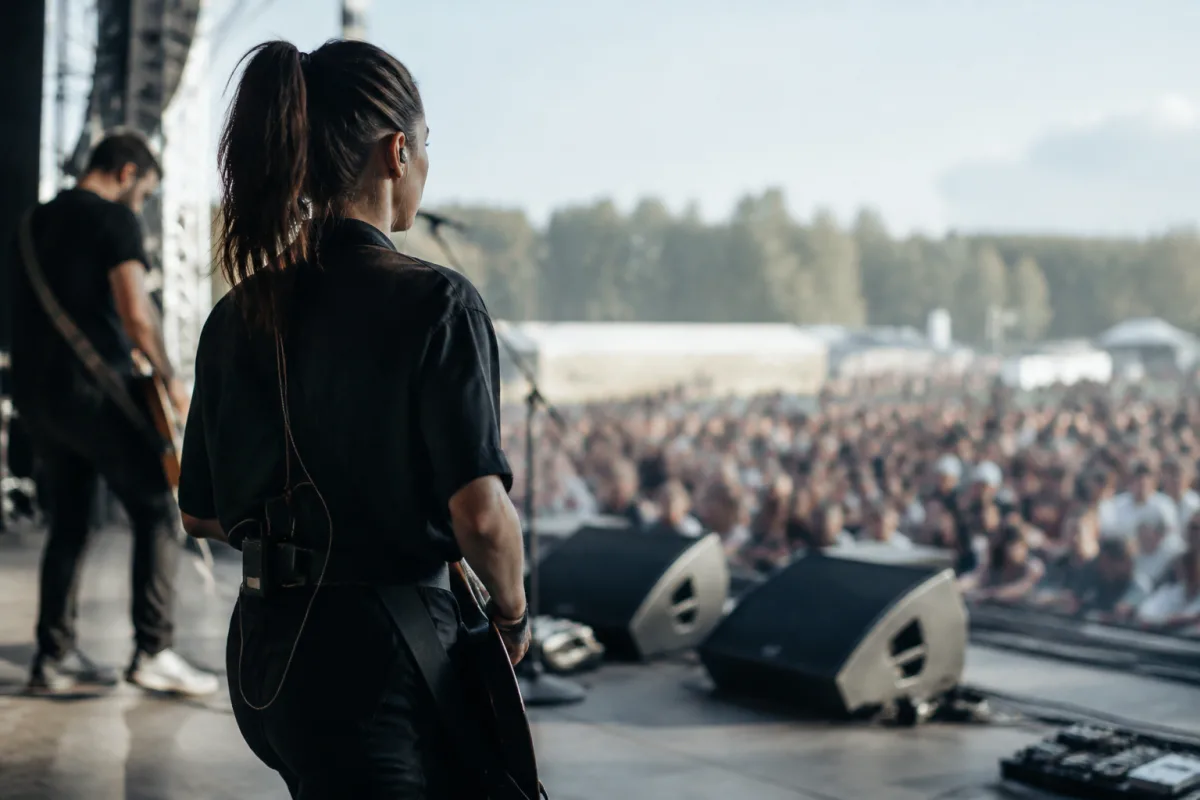
Stage monitoring—whether through in-ear systems, floor wedge monitors, or a combination—is essential for live performers to stay in time, hear themselves, and deliver confident performances. Yet the market for monitoring equipment is confusing. Price ranges span from £300 to £15,000+ for a complete system, and technical specifications vary wildly. Understanding what actually matters, what to inspect before purchasing, and how to match equipment to your venue and budget transforms a daunting decision into a straightforward one. This guide walks you through the buying process with the clarity you need.
Types of Stage Monitoring Systems
Before evaluating specs, understand what monitoring system type fits your needs:
- In-ear monitor (IEM) systems – Wireless packs worn by performers, each receiving independent mixes. Ideal for large stages and multiple performers needing different mixes. Most expensive option but maximum flexibility.
- Floor wedge monitors – Passive or powered speakers positioned at the stage edge. Simple and cost-effective but limited to single-mix or paired stereo mixes. Best for smaller venues or duos/bands without complex mixing needs.
- Personal monitor mixers – Compact units performers use to adjust their personal mix in real-time. Often paired with IEM or wedge systems. Add flexibility but require performer familiarity.
- Drum and instrument monitors – Specialized units positioned for drummers or specific instruments. Used alongside main monitoring systems to give one performer isolated click tracks or instrument-specific mixes.
- Hybrid systems – Combining wedges, IEMs, and personal mixers for maximum flexibility. Common in mid-range and professional venues.
Your venue size, number of performers, and mixing complexity determine which system type suits you.
Key Specifications to Understand
Stage monitoring systems vary across several critical dimensions:
Frequency response: Good monitors reproduce frequencies from at least 50Hz to 15kHz. Wider response (20Hz–20kHz) is preferable but unnecessary for most live applications. What matters is consistency across the frequency range; boomy or shrill monitors make mixing difficult.
Power and SPL: Sound Pressure Level (SPL) measures loudness capability at distance. A monitor producing 100dB SPL at 1 metre is loud enough for most venues; 95dB works for smaller rooms. Underpowered monitors force performers to crowd close to hear themselves, which looks unprofessional.
Impedance and connection: Passive wedges are typically 8 ohms; powered monitors are balanced XLR or optionally Dante digital. Understanding your amplifier or mixer output ensures compatibility. Mixing impedance types in a chain causes impedance mismatches and signal loss.
Wireless transmission range and latency: For IEM systems, latency (delay between what the mixer sends and what performers hear) must be under 10ms to avoid distraction. Operating range should cover your entire stage plus wings. 2.4GHz systems are common, but congested environments require 5GHz or licensed frequencies (UHF).
Durability and weatherproofing: Road-case durability matters for touring. Weatherproofing (IP ratings) matters for outdoor venues. A monitor rated IP65 (dust and jet-wash resistant) outlasts an unrated unit in harsh environments.
Passive Versus Powered Monitors: Cost and Flexibility
Passive wedge monitors are cheaper upfront (£150–£400 each) but require a separate powered amplifier. Powered monitors integrate amplification (£300–£1000+ each) but eliminate separate amp purchases. Powered systems are easier to understand as a beginner; passive systems offer upgrade flexibility if your amplifier has headroom.
For new buyers, powered monitors simplify installation and reduce setup complexity. You connect the mixer directly to the monitor; no separate amp to match, no impedance calculations. This makes powered systems preferable unless you already own a compatible amplifier.
Price Tiers for Stage Monitoring
Budget tier (£300–£800): Entry-level passive or powered monitors work for rehearsals and small venues. Sound quality is acceptable but tonally coloured. Durability is uncertain; these units often fail after moderate touring use. Wireless range and latency on IEM systems are adequate but not exceptional.
Mid-range tier (£800–£2500): This is where real capability emerges. Sound quality improves significantly; units withstand touring conditions. Wireless latency is imperceptible; range covers most stages without drop-outs. A mixed system (wedges plus IEMs) becomes affordable here. Most touring bands and serious venues operate at this level.
Professional tier (£2500–£8000+): Exceptional audio quality, multi-wireless pack systems, redundancy options, and robust construction. Used by touring professionals and major venue systems. Unless you're running multiple simultaneous mixes or performing in stadiums, this tier offers marginal improvements over mid-range.
Most performers and small venues find £1200–£2000 optimal—good quality without excessive cost.
What to Inspect Before Purchasing
Play test the monitors. If buying powered wedges, plug in a microphone and listen to your own voice feedback. The sound should feel natural, not boomy or harsh. If buying IEMs, test wireless pack operation across your intended stage area. Listen for crackling, dropouts, or latency.
Check physical durability. Handle the units. Do they feel solid or plasticky? Are connectors firmly seated? Are handles or grille covers damaged? Road-worn monitors are normal on used equipment, but structural damage indicates poor future reliability.
Test wireless performance if applicable. Operating range and frequency stability matter. Test the IEM pack in the performance space, not just the shop. Nearby WiFi or cellular towers can interfere with 2.4GHz systems.
Verify frequency response personally. Don't trust specifications alone. Play a reference track through the monitors. Does it sound balanced? Do vocals sit well? Does bass feel present? Your ears are the best test.
Confirm electrical safety and compliance. Check for electrical certification (CE, FCC, or local equivalents). Dodgy electrical safety indicates a unit that will fail or potentially cause harm.
Ask about connectivity options. Ensure the monitors have the connections you need (XLR, Dante, USB, wireless, or combinations thereof). Adapters work but add complexity and failure points.
Common Buying Pitfalls
Underestimating mixer costs. Stage monitoring requires a mixer separate from your main house mixer. Some buyers forget this when budgeting. A decent monitor mixer costs £400–£1500 alone. Factor this into your total system cost.
Buying too little power. Underpowered monitors create frustration in live settings. Performers cluster too close; mixes become difficult to control. Err on the side of more power; you can always turn it down.
Mixing wireless and wired monitors without planning. Combining IEMs (wireless) and wedges (wired) is valid but requires careful cable routing and RF planning. Sloppy cable routing invites hum and interference.
Ignoring latency on IEM systems. Latency over 10ms becomes audible and distracting. Cheap wireless packs sometimes exceed this. Test before purchasing if latency-sensitive (vocalists especially notice).
Buying multiple packs of different brands. Matching IEM packs across wireless bands and manufacturers complicates frequency coordination. Stick to one brand and system when possible.
Forgetting about battery management. Wireless packs require rechargeable batteries. Budget for a quality battery charger and backup batteries—downtime mid-performance due to dead batteries is unacceptable.
New Versus Used: Value Considerations
Used monitoring equipment from established brands holds up well if cared for. A five-year-old wedge monitor from a major manufacturer costs 40–60% less than new yet performs identically. Wireless systems, however, age differently. Older 2.4GHz packs struggle in modern congested RF environments. Used wireless systems should be carefully evaluated for range and latency before purchasing.
Buy new if reliability is critical (touring, high-pressure performances). Buy used if budget is tight and you're comfortable testing before committing.
System Configuration Decisions
Wedges only – Simple, cost-effective, limited to one or two mixed mixes. Works for small ensembles and venues.
IEM only – Maximum mix flexibility, wireless freedom, but requires wireless pack for each performer. Expensive but scalable.
Wedges plus personal mix stations – Affordable hybrid approach. Performers get individual mix control without full wireless systems.
Wedges plus IEM backup – Professional redundancy. If wireless fails, performers still hear wedges. Requires dual monitoring paths but ensures reliability.
Choose based on venue size, number of performers, and mixing complexity. Start simple; add complexity as needs dictate.
Integration with Your Existing System
Before purchasing, audit your existing equipment. Do you have a monitor mixer? Do your amplifiers have headroom for additional outputs? Do your cables support balanced XLR connections? Mismatches between new monitoring equipment and existing infrastructure create problems and extra costs.
Planning your signal flow—from microphones through mixer to monitor outputs to stage equipment—prevents purchasing incompatible pieces that don't work together.
Exploring Further
For in-depth knowledge covering stage monitoring from history through advanced techniques and troubleshooting, consult The Complete Guide to Stage Monitoring.
Conclusion
Buying stage monitoring systems requires matching equipment type to your needs, understanding the specifications that genuinely matter, and avoiding predictable pitfalls. Whether you're choosing wedge monitors for a small venue, wireless IEM packs for a touring band, or a hybrid system for maximum flexibility, the process is rational and achievable. Evaluate your actual performance demands, test equipment in realistic conditions, and choose at the appropriate price tier. Quality monitoring transforms live performances from anxious to confident—an investment that pays dividends every time you step on stage.


Comments