


Qsc Audio Amplifiers Buying guide
Qsc Audio Amplifiers: A Complete Buyer's Guide
QSC amplifiers power professional venues and touring systems. This buying guide explains power specifications, impedance matching, and how to select the right QSC amplifier for your application.
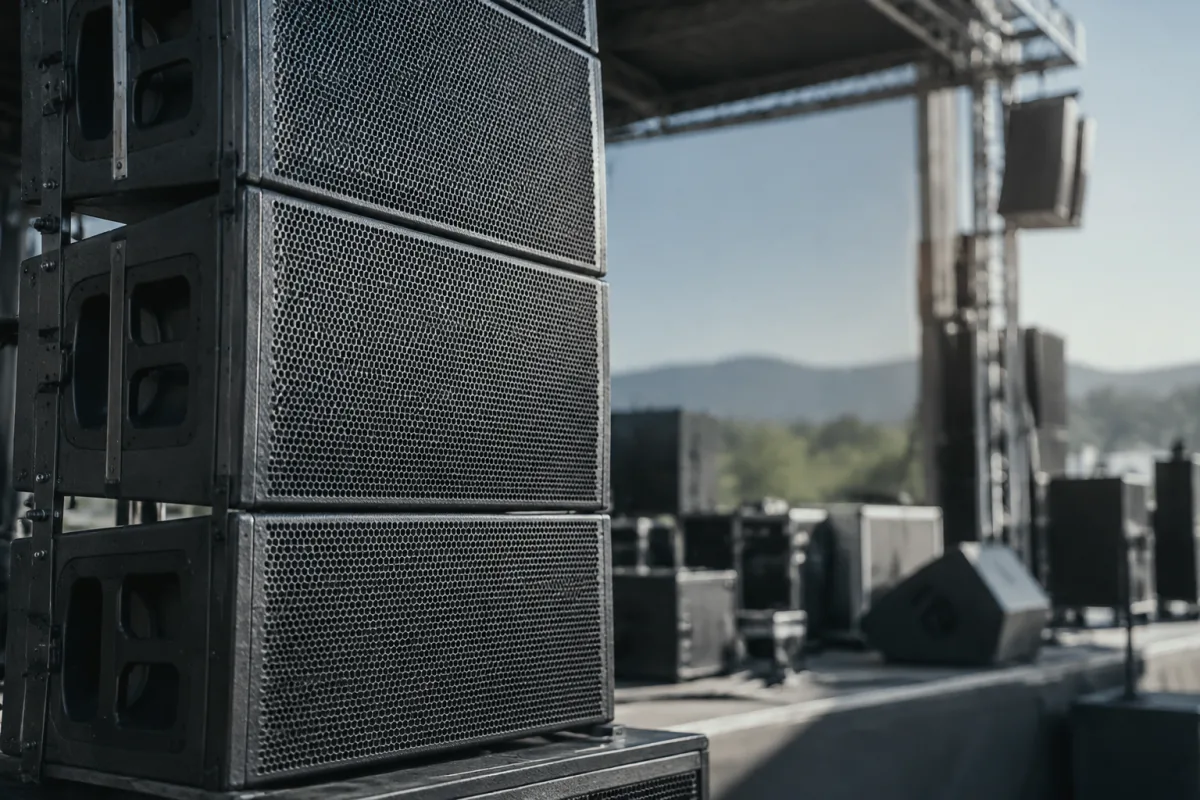
QSC audio amplifiers power professional venues, studios, and touring systems worldwide. Whether you're building a permanent installation, assembling a mobile PA system, or upgrading your existing equipment, understanding QSC's product range, power specifications, and application-specific models ensures you invest in amplifiers that genuinely serve your needs. This guide cuts through technical specifications to reveal the practical considerations that determine which QSC amplifier suits your installation.
QSC's Market Position and Product Philosophy
QSC specialises in professional power amplifiers and integrated amplified speaker systems. Unlike boutique brands targeting niche markets, QSC focuses on reliable, cost-effective solutions for venues, churches, studios, and touring operations. This approach results in products offering exceptional value without exotic features. For comprehensive exploration of QSC's capabilities, review the complete guide to QSC audio amplifiers.
QSC equipment rarely appears in high-end, esoteric installations. Instead, you'll find QSC amplifiers in workhorse applications where reliability matters more than prestige—schools, churches, hired sound companies, and touring operations valuing proven performance over brand status.
Understanding Power Amplifier Specifications
QSC amplifiers come rated in watts of continuous output power. Before purchasing, grasp these fundamental specifications:
Continuous Power (RMS): Measured at specific impedance (typically 8 ohms or 4 ohms), continuous power represents sustained output. A 300W amplifier at 4 ohms outputs approximately 300 watts continuously—this is the realistic power available for actual sound reinforcement.
Impedance Matching: Amplifiers connect to speakers with impedance ratings (4, 8, or 16 ohms). Mismatched impedance either reduces available power or risks amplifier damage. Verify your speaker system's impedance before purchasing amplifiers.
Bridged vs. Stereo Operation: Many QSC amplifiers operate either stereo (left and right channels independently) or bridged (both channels combine for monoural output at higher power). Bridged operation doubles available power but eliminates stereo separation. Choose stereo for music playback; bridged for subwoofer reinforcement or mono PA applications.
Thermal Management: Professional installations demand amplifiers operating hours daily without overheating. QSC amplifiers feature passive convection cooling (relying on natural airflow) or active cooling (internal fans). Active cooling handles sustained high-output scenarios; passive cooling suits moderate-duty applications.
QSC Model Categories
Compact Power Amplifiers: Lightweight designs suitable for portable systems and small installations. Typically 300–500 watts, these amplifiers prioritise portability over maximum power.
Standard Power Amplifiers: The workhorse category. 600–2000 watts available in rackmount configurations. Most professional installations employ standard amplifiers—they balance power, size, reliability, and cost effectively.
High-Power Amplifiers: 2000–4000+ watts for large-scale installations and touring. These handle substantial speaker loads and extensive cable runs without output degradation.
Integrated Amplified Speakers: QSC's newer offerings combine amplifier and speaker in single enclosures (K12, K10 series). These simplify setup—you connect audio source, power, and speakers without separate amplifier purchases.
Practical Power Considerations
Beginners often misunderstand amplifier power. More watts don't necessarily mean "better"—they mean louder potential output.
| Application | Typical Power Range | Reasoning |
|---|---|---|
| Small venue (< 50 capacity) | 300–500 watts | Modest power handles intimate spaces without excessive volume |
| Medium venue (50–200 capacity) | 600–1200 watts | Adequate power covers most events with good headroom |
| Large venue (200+ capacity) | 1500+ watts | Substantial power handles outdoor events and large halls |
| Subwoofer reinforcement | 500–1500 watts | High power delivers bass impact without distortion |
| Mobile PA system | 600–1500 watts | Versatile power handling diverse venue sizes |
Critical insight: A 1000W amplifier at 80% output volume sounds twice as loud as 500W amplifier at maximum volume. Headroom matters profoundly—it allows comfortable operation without pushing amplifiers to their thermal limits.
Analog vs. Digital Amplifiers
Traditional QSC amplifiers employ analog signal processing—incoming audio signals drive power stages directly. Analog designs sound "warm" and operate reliably across varied input conditions.
Newer QSC models incorporate digital processing—converting incoming analog signals to digital, applying DSP effects (EQ, dynamics, filtering), then converting back to analog for speaker output. Digital amplifiers offer sophisticated signal management and integrated tools simplifying setup.
For beginners, either design functions admirably. Choose analog for simplicity and proven reliability; choose digital if you value integrated processing and advanced features.
Critical Connectors and Signal Flow
QSC amplifiers employ standard professional audio connectors:
- XLR inputs: Standard professional audio connection. Balanced, noise-immune design ensures clean signal transmission over long cable runs.
- RCA inputs: Consumer-level connection, less noise-immune than XLR. Suitable for close cable runs (under 5 metres) from audio sources.
- Speaker connections: Typically Speakon connectors or traditional binding posts. Verify compatibility with your speaker systems.
QSC amplifiers generally accept both XLR and RCA simultaneously, allowing flexibility in installation design.
Thermal Management and Duty Cycle
Professional installations operate amplifiers continuously throughout events. This demands attention to cooling:
Passive cooling: Natural airflow removes heat. Adequate if amplifiers operate at moderate power levels with airspace around the amplifier.
Active cooling: Integrated fans maintain operating temperatures during sustained high-output operation. Essential for touring systems, festivals, and venues operating at significant power levels continuously.
Rack mounting considerations: Rackmount amplifiers generate heat. Install in well-ventilated racks with spacing between units. Poor ventilation causes thermal shutdown during performances—unacceptable in professional contexts.
Impedance Matching and Speaker Configuration
This critical topic confuses many buyers. Every speaker system has impedance ratings (4, 8, or 16 ohms). Your amplifier must match this impedance for optimal performance.
Mismatches create problems:
- Amplifier impedance higher than speaker: Reduced available power. A 500W amplifier at 4 ohms might output only 250W into 8-ohm speakers.
- Amplifier impedance lower than speaker: Amplifier operates excessively hard, potentially causing damage or thermal shutdown.
- Multiple speakers in series or parallel: These configurations change overall impedance. Verify total impedance before operation.
Before purchasing, know your speaker system's impedance rating precisely. QSC amplifier specifications clearly state performance at various impedances—reference these charts to confirm suitable matching.
New vs. Refurbished QSC Equipment
QSC frequently offers refurbished amplifiers at substantial discounts (typically 25–40% off new prices). Refurbished units are thoroughly tested and often come with partial warranties.
Refurbished benefits: Significant cost savings, often identical functionality to new units, full QSC backing.
Refurbished considerations: Cosmetic condition may vary, warranty duration is shorter, availability is limited.
For budget-conscious buyers, refurbished QSC equipment represents exceptional value. For installations requiring extended warranty coverage, new purchases provide peace of mind.
Installation and Support Considerations
QSC amplifiers require professional installation in most scenarios. Improper wiring, impedance mismatch, or inadequate cooling can damage expensive equipment or create unsafe conditions.
Budget installation costs separately from amplifier purchase—typically £200–1000+ depending on system complexity. Professional installers understand impedance matching, thermal management, and safety standards governing professional audio systems.
QSC provides installation documentation and technical support—utilise these resources. Many retailers offer installation guidance, and QSC's technical support team addresses questions quickly.
When QSC Makes Sense
Choose QSC when:
- You need reliable, cost-effective amplifiers for established installations
- Your budget is limited but performance demands are substantial
- You prioritise proven reliability over exotic features
- You operate venues, churches, or rental companies requiring dependable equipment
- You assemble touring systems valuing lightweight, transportable solutions
When Other Brands Might Suit Better
Consider alternatives if:
- Your installation demands boutique sonic characteristics or specific coloration
- You require integrated processing beyond QSC's standard offerings
- Your budget allows premium brands offering extended features
- You prioritise brand prestige alongside performance
Making Your Purchase Decision
Begin by clarifying your application: venue size, speaker system impedance, duty cycle requirements, and budget constraints. Match these requirements against QSC's product matrix to identify suitable candidates.
Verify impedance compatibility and thermal requirements match your installation. Consult QSC's specification sheets rigorously—they reveal crucial details about output power at your specific impedance and operating conditions.
If you're uncertain about technical specifications, engage a professional installer. Their expertise prevents costly mistakes and ensures system reliability for years of operation.


Comments