
Yamaha Console Mixer article
The Complete Guide to Yamaha Console Mixer
Yamaha console mixers are the standard in professional live sound worldwide. Learn which model suits your venue and how Yamaha's reliability transforms complex audio environments.
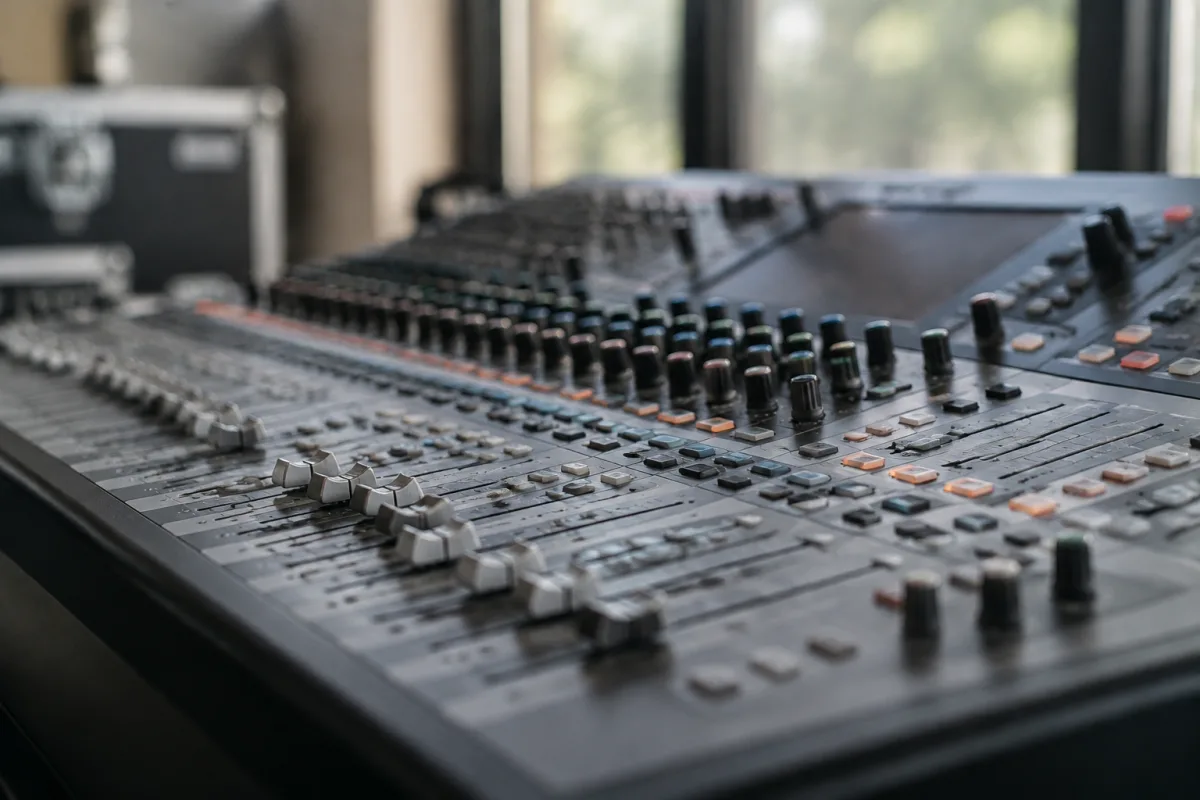
Yamaha console mixers form the backbone of professional live sound systems and recording studios worldwide. With a heritage spanning decades of mixer design and manufacturing excellence, Yamaha produces consoles suitable for everything from small venue amplification to international touring productions. Understanding Yamaha's product range, core technology, and what distinguishes their mixers helps sound engineers and venue operators make informed purchasing decisions that align with their operational needs.
Yamaha's Mixer Heritage and Philosophy
Yamaha entered mixer manufacturing in the 1970s, building a reputation for reliable, professional-grade equipment. The company's philosophy emphasises durability, straightforward operation, and sound quality that reveals rather than colours the audio signal. This approach has made Yamaha mixers the standard in countless venues, churches, schools, and touring companies.
Unlike boutique manufacturers focusing on distinctive tone character, Yamaha emphasises neutral sound reproduction. A Yamaha console's role is to handle audio cleanly and transparently, allowing the venue's amplified sound system—not the mixer itself—to determine sonic character. This philosophy makes Yamaha mixers adaptable to virtually any venue type or use case.
Yamaha's Current Mixer Product Lines
Yamaha manufactures digital and analogue console mixers across multiple formats and sizes. The MG-series comprises compact, budget-friendly mixers for small venues, schools, and community events. The O1V and TF-series are digital mixing systems popular in touring, theatres, and professional studios. The PM-series encompasses larger analogue and digital format consoles for major installations.
This tiered product range ensures that operators at every level—beginners establishing their first small venue systems, working professionals managing touring productions, and broadcast engineers—can select appropriate Yamaha equipment for their scale and requirements.
Digital vs. Analogue Yamaha Consoles
Yamaha manufactures both digital and analogue mixers. Analogue consoles like the PM-series emphasise straightforward operation—every function corresponds to a physical fader or knob. Digital mixers like the TF-series employ touchscreen interfaces and sophisticated routing flexibility that analogue mixers cannot achieve.
Analogue consoles suit venues preferring intuitive, tactile operation and minimal learning curve. Digital consoles suit complex installations where flexible routing, effects processing, and recallable settings are valuable. The choice depends on operator expertise and operational requirements.
Channel Count and Scalability
Yamaha consoles range from small 4-channel mixers for intimate venues to massive format consoles with 64+ channels for stadium touring. A church requiring simple amplification might employ a 16-channel mixer; a touring rock production might use a 48-channel digital console. Yamaha's product range ensures the right size is available for any operational scale.
Digital consoles offer additional scalability through networking—additional I/O modules extend channel capacity without purchasing an entirely new console. This modularity proves valuable in touring environments where configuration changes frequently.
Built-In Effects and Processing
Modern Yamaha consoles include substantial on-board effects processing—reverbs, delays, compression, EQ, and modulation effects. This integrated processing reduces the need for expensive outboard equipment. Professional touring systems might supplement the console's built-in effects, but small venue and club operators often find the on-board processing entirely adequate.
Digital consoles allow precise control over effect parameters—digital delay times can be synced to tempo, compression thresholds adjusted with surgical precision. Analogue consoles typically offer simpler effect controls suitable for straightforward applications like adding reverb to vocals.
Reliability and Durability
Yamaha mixers are renowned for reliability. Professional touring companies depend on Yamaha consoles because the equipment survives years of rigorous use—daily setup/teardown cycles, transport to hundreds of venues, operation in demanding environments. Repair parts are widely available, and service documentation is thorough.
The company's attention to build quality means a Yamaha console purchased 20 years ago often functions perfectly today if maintained reasonably. This durability translates to excellent used equipment value—Yamaha mixers represent sound investment for operators unwilling to spend new equipment budgets.
User Interface and Learning Curve
Yamaha analogue consoles feature intuitive layouts—channels arranged logically, standard fader and knob configurations. Operators with zero mixer experience can navigate basic functions within minutes. Complex operations like matrix mixing or advanced routing require learning, but fundamental functionality is accessible to beginners.
Digital Yamaha consoles employ touchscreen interfaces that modern operators find familiar. However, digital mixing requires understanding concepts like banks, scenes, and virtual channels—more sophisticated than analogue operation but offering greater flexibility. The learning curve for digital consoles is steeper than analogue alternatives.
Connectivity and Integration
Yamaha consoles integrate with modern audio infrastructure. Digital consoles support audio over IP networking (Dante or AES67), allowing audio to travel over standard network cables rather than analogue copper. This technology simplifies complex installations and allows remote operation.
Professional consoles include USB connectivity for direct computer integration, MIDI for controlling external equipment, and compatibility with wireless microphone systems. This integration capability ensures Yamaha mixers work seamlessly in modern venues combining multiple audio sources and destinations.
Size and Portability Considerations
Compact Yamaha mixers (MG-series) weigh mere kilograms and fit easily in vehicle trunks. Professional touring consoles are substantially heavier and require flight cases for transport. Size selection depends on portability requirements—a touring sound company requires different equipment than a fixed installation.
Many touring productions employ compact mixing consoles paired with networking technology that achieves sophisticated functionality without massive physical size. Modern technology allows complex mixing from surprisingly small devices.
Price and Value Proposition
Yamaha mixers offer exceptional value across price points. Budget MG-series mixers (£200–500) deliver usable quality for amateur and semi-professional applications. Professional touring consoles (£10,000–50,000+) represent substantial investment justified only for extensive touring. Most venues find mid-range consoles (£2,000–8,000) optimal value.
The secondary market for Yamaha equipment is robust—used Yamaha consoles sell readily and retain substantial value. This resale market value makes Yamaha equipment a safer investment than boutique alternatives that may be harder to resell.
Conclusion
Yamaha console mixers remain the standard in professional live sound and recording because they deliver reliability, straightforward operation, and sound quality that serves any venue or application. From small churches to touring rock productions to broadcast facilities, Yamaha offers appropriately sized equipment with the durability and support infrastructure that professionals depend on. Investing in Yamaha means choosing equipment proven across decades and countless installations worldwide.



Comments