
Yamaha Audio Mixer article
The Complete Guide to Yamaha Audio Mixer
Yamaha mixers are trusted worldwide for professional audio mixing. Discover the lineup from compact to large-format, sound quality, and why professionals choose Yamaha.
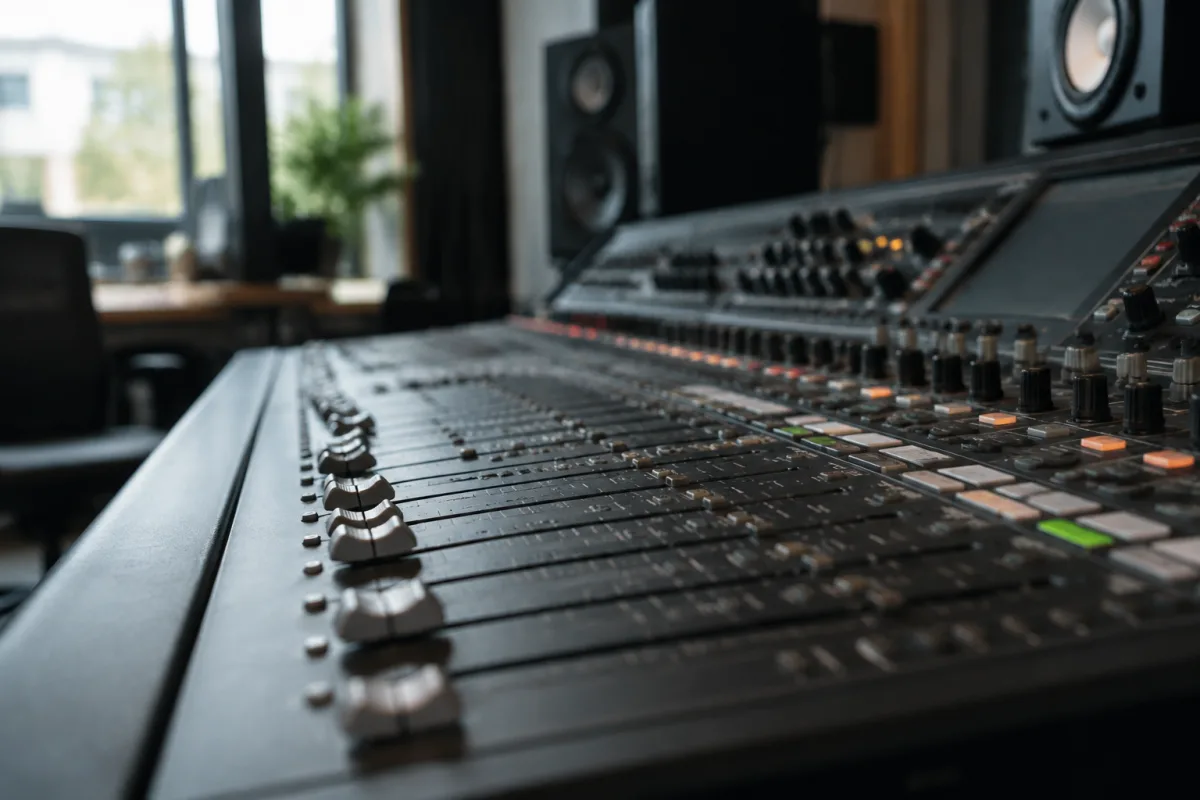
Why Yamaha Dominates Professional Audio Mixing
When you walk into a professional live sound venue, a broadcast centre, or a recording facility, odds are substantial that you'll find Yamaha mixing equipment at the core. The Japanese manufacturer has spent decades building mixers that professionals trust with their most critical work. From intimate theatre productions to massive festival stages, from podcast studios to 24-track recording sessions, Yamaha provides the mixing foundation that countless productions depend upon daily.
The consistency is what impresses most professionals. A Yamaha audio mixing console behaves predictably—no surprises, no idiosyncratic signal flow, no learning curves steep enough to derail a session. You plug in your inputs, adjust your faders, and the mixer does exactly what you expect. That reliability, that absence of drama, is precisely what separates professional equipment from consumer alternatives.
Yamaha's Mixing Console Lineup
Yamaha offers mixers across multiple categories, each engineered for specific applications. The MG series represents the entry point—affordable mixing solutions for small venues, studios, and enthusiasts. These compact mixers deliver solid audio quality without unnecessary complexity. Audio quality is genuine; the feature set is manageable. It's the choice for someone who needs reliable mixing without the investment required for professional-grade systems.
The MGPro and QL series step into professional territory. These mixers feature more channels, deeper mixing capabilities, better preamps, and more robust construction. A mid-sized venue, touring band, or professional recording studio typically operates in this range. The investment is substantial but justified by the capabilities and reliability on offer.
The PM5, CL, and LS series represent the pinnacle—large-format digital and analogue mixers engineered for serious professional work. These aren't impulse purchases; they're strategic infrastructure investments for established facilities. A broadcast centre mixing a major sporting event, a touring production company handling arena shows, a world-class recording studio—these operations deploy Yamaha systems at this level.
Preamp Quality and Audio Path
The preamplifier—the first stage that takes a microphone's tiny signal and amplifies it to usable levels—defines a mixer's sonic character. Yamaha invests heavily in preamp design, recognising that this initial stage sets the tone for everything downstream. A good preamp captures microphone nuance cleanly, adding warmth without colouration.
The signal path from input to output in a Yamaha mixer is meticulously designed. High-quality components, careful impedance matching, and minimalist electronics in the signal path prevent colouration and noise introduction. This isn't just engineering theory—it's practical application born from decades of professional feedback. Engineers choose Yamaha because the sound path is predictable, clean, and musical.
Fader Quality and Physical Interface
The faders—the long sliders that control channel levels—define how a mixer feels in actual operation. Yamaha faders are renowned for their smooth motion, reliable detents (the notches that help you hold a position), and precision. When you move a Yamaha fader, you feel confidence. The mechanism doesn't feel fragile or temperamental; it feels engineered by professionals for professional use.
Rotary encoders, buttons, and other physical controls on Yamaha mixers share this quality. Everything feels solid. Button presses have appropriate tactile feedback. Knobs turn smoothly with sensible resistance. This isn't luxury for its own sake—it's precision engineering that enables confident operation under pressure, whether during live performance or intricate studio work.
Digital vs. Analogue: Yamaha's Options
Digital mixers offer advantages: recall memories of previous sessions, automation of fader movements, integration with DAWs, and ever-expanding processing options. Yamaha's digital mixers leverage these advantages brilliantly—they're intuitive despite complexity, reliable across countless operational scenarios, and expansive in capability.
Analogue mixers offer different virtues: no learning curve for operators trained on traditional consoles, straightforward signal flow without menu diving, and the tonal character some engineers consider more organic. Yamaha manufactures both types at professional level, letting clients choose the philosophy that suits their workflow. Some facilities maintain both, deploying analogue for certain applications and digital for others.
Built-In Effects and Processing
Modern Yamaha mixers include sophisticated effects—reverb, delay, compression, EQ—built into the signal chain. The quality of these effects varies between models but remains high across the board. Even budget Yamaha mixers provide genuinely useful processing; professional models offer effects that rival standalone units costing thousands.
The key advantage is integration. Rather than patching external effects into your signal chain, everything sits in the mixer, accessible via intuitive controls. For live sound, this integration is invaluable. You adjust reverb levels from the console without fumbling with external gear. For recording, it means you can print effects decisions to tape if needed, or recall them identically across multiple takes.
Scalability and Expansion
A Yamaha mixer can grow with your needs. Small systems can be expanded—add more input cards, incorporate external processors, integrate with networked audio systems. This scalability means you're not locked into a fixed configuration. As your facility evolves, your mixer can evolve alongside it.
Networking capability on professional Yamaha mixers lets you integrate with other equipment, distribute audio to multiple locations, and control systems remotely. This flexibility makes Yamaha mixers central hubs in complex audio systems, rather than standalone devices.
Industry Standard Status and Support Ecosystem
Yamaha's dominant position means comprehensive support. Technicians worldwide know Yamaha equipment. Spare parts are readily available. Training resources abound. If something goes wrong, fixing it is straightforward because so many people are familiar with the system.
This ecosystem advantage is underrated. Choosing Yamaha means choosing equipment with an established network of support, parts suppliers, and trained operators. For professional installations, this matters more than specs. You want to know that when an issue arises at 2 AM during a critical event, solutions are accessible.
Choosing the Right Yamaha Mixer for Your Application
Start by understanding your actual requirements. How many simultaneous inputs? How many outputs? Will you need extensive effects processing? How critical is portability? Once you've defined these requirements, Yamaha's range ensures you'll find an appropriate instrument. Buying more mixer than you need wastes money; buying less leaves you frustrated.
Test before committing if possible. Visit a dealer, operate the mixer, feel the faders, listen to the signal path. Audio engineering is ultimately about the sound and the workflow—specs alone don't tell you if a particular Yamaha mixer is right for your situation. The mixer that sounds and feels perfect to one operator might feel wrong to another. Take the time to ensure you're choosing based on actual experience, not just marketing claims.


Comments