
Audio Mixer Battery Powered article
The Complete Guide to Audio Mixer Battery Powered
Live sound professionals increasingly depend on portable equipment delivering professional quality without mains power. Battery-powered audio mixers enable small ensembles and mobile technicians to manage sound independently in diverse performance contexts.
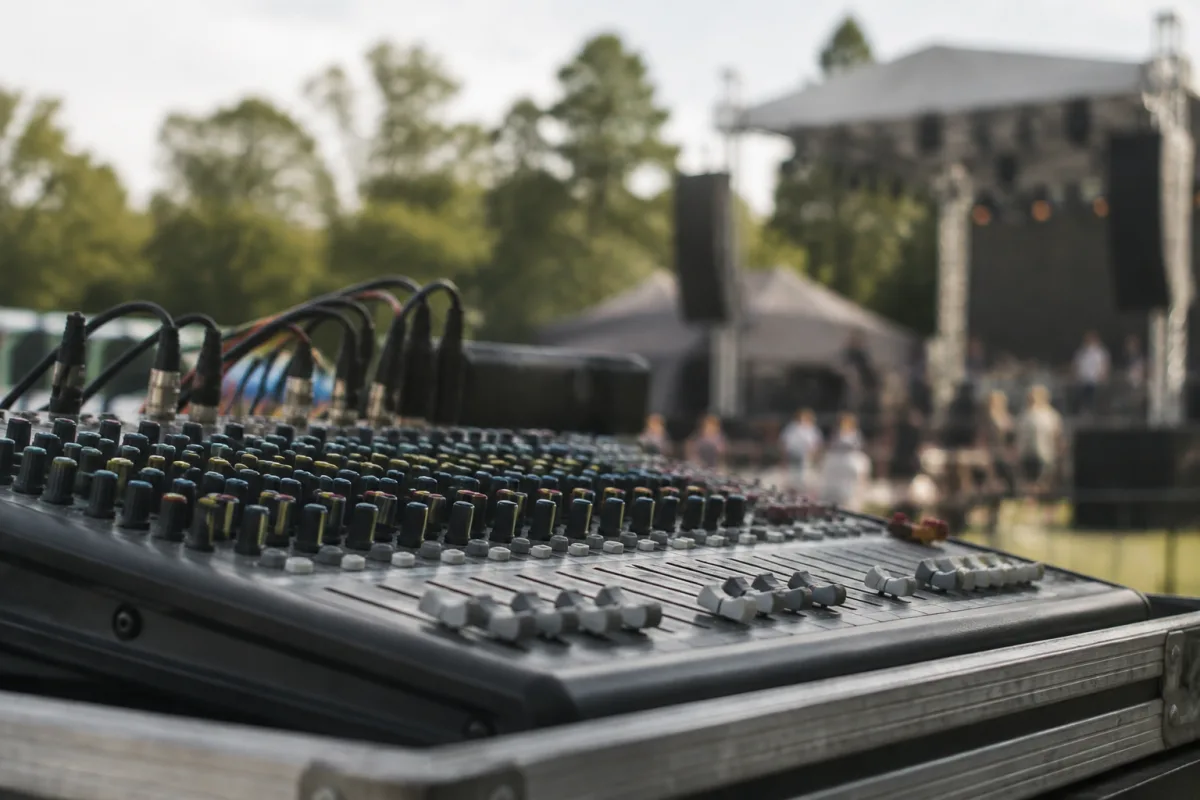
Live sound professionals operating outside conventional venues increasingly depend on portable equipment that delivers professional audio quality without requiring mains power. Battery-powered audio mixers address this need, enabling small ensembles, outdoor performers and mobile event technicians to manage sound independently. Understanding the capabilities and limitations of portable mixing solutions helps technicians select equipment matching their performance contexts and technical requirements.
Why Battery-Powered Mixing Matters
Performance contexts frequently lack convenient mains electricity—outdoor festivals, street performances, remote locations, or temporary venues demand self-contained power solutions. Portable battery-powered audio mixers eliminate dependence on wall outlets, generators or external power infrastructure. This independence transforms what becomes technically feasible in diverse performance environments.
Beyond venue flexibility, battery operation supports technical reliability. Unlike mains power subject to electrical faults, overloads or infrastructure failures, onboard batteries provide direct power management and consistent voltage regulation. This reliability proves crucial when equipment failure during performance risks disappointing audiences or cancelling events.
Battery Specifications and Runtime
Battery capacity determines operational runtime—typically specified in amp-hours (Ah) or watt-hours (Wh). A battery-powered audio mixer drawing moderate current might operate 4-8 hours on a fully charged battery, adequate for most portable applications. High-power setups consuming significant current experience shorter runtime, necessitating multiple batteries or supplementary charging infrastructure for extended events.
Modern battery technologies increasingly favour lithium-ion cells over older alkaline or NiCd batteries. Lithium-ion batteries offer superior energy density, longer lifespan, faster charging and minimal memory effects. A quality battery-powered audio mixer employing lithium-ion technology delivers reliable performance and acceptable operational runtime for most professional applications.
Mixer Channel Architecture
Portable battery-powered audio mixers typically feature simpler channel architectures than full-size consoles, reflecting their compact form factors. A typical model might include 4-8 input channels accommodating microphones and line-level sources, with basic EQ and fader controls per channel. This simplified design reduces cost, power consumption and physical footprint whilst maintaining essential mixing functionality.
Input types generally include XLR microphone connectors, line-level RCA or 3.5mm inputs, and sometimes USB connectivity. Some models include dedicated channels for instrument connections or additional audio source integration. Output options typically provide stereo main outputs plus monitor or headphone feeds, supporting fundamental live sound mixing needs.
Power Consumption and Efficiency
Audio mixer power consumption depends on channel count, built-in amplification and active features. Compact models consuming 10-30 watts enable extended battery operation, whilst larger systems drawing 50+ watts rapidly deplete battery resources. Manufacturers optimise designs balancing feature richness against power efficiency, creating products suitable for specific performance contexts.
Powered mixer designs—incorporating built-in amplification—demand substantially more power than unpowered mixers requiring separate power amplifiers. This trade-off between convenience and battery runtime reflects technological constraints. For battery operation, unpowered mixers feeding compact external amplifiers often provide superior efficiency compared to integrated solutions.
Audio Quality and Signal Management
Portable battery-powered audio mixers maintain respectable audio fidelity despite compact designs. Quality microphone preamps deliver clean gain staging, whilst reasonable channel EQ allows fundamental tone-shaping. Built-in limiters and safety circuits protect speakers and audiences from unexpected overload.
Signal-to-noise ratio—the balance between desired audio and equipment noise—remains acceptable in modern portable equipment. Compact designs achieve this through careful component selection and circuit design. Professional audio engineers often find portable battery-powered audio mixers adequate for small venue requirements, though large-scale productions typically demand more elaborate infrastructure.
Practical Applications and Deployment Scenarios
Small acoustic ensembles—folk musicians, acoustic guitarists, small vocal groups—frequently benefit from battery-powered equipment eliminating venue power dependence. Street performers and buskers particularly value portability and self-contained operation. Event technicians managing temporary installations find battery power enables rapid setup without electrical infrastructure.
Outdoor activities including camping, sports events and recreational gatherings sometimes require mobile audio capabilities. A battery-powered audio mixer addresses these contexts without requiring generator fuel supply or mains connection. The simplicity and reliability prove attractive to non-technical users requiring basic mixing functionality.
Connectivity and System Integration
Modern portable battery-powered audio mixers increasingly incorporate digital connectivity—USB audio interfaces enabling computer integration, Bluetooth wireless microphone support, or digital networking capabilities. These features expand functionality beyond traditional analog-only operation, connecting portable equipment into contemporary production workflows.
The ability to record audio direct from the mixer proves valuable for content creators, allowing direct archival of performances without separate recording equipment. Some models support audio playback from external sources, enabling backing track integration or stored content during live performance.
Durability and Maintenance Considerations
Portable equipment experiences demanding usage—frequent transport, outdoor environments, temperature extremes and physical stress. Quality construction and sealed connectors support longevity. Rechargeable battery maintenance—avoiding deep discharge cycles and using proper chargers—extends battery lifespan significantly.
Rental and touring situations place particular demands on equipment durability. Professional-grade portable battery-powered audio mixers prove more costly than consumer models but tolerate intensive use and provide superior reliability supporting demanding schedules and high-stakes performances.
Comparison with Mains-Powered Alternatives
Mains-powered mixers typically offer more channels, greater features and superior audio quality, reflecting different engineering priorities. Battery-powered designs sacrifice some capability for portability and venue independence. The choice between technologies depends on primary usage context—fixed installation venues favour mains power, whilst mobile applications prioritise battery operation.
Conclusion
Battery-powered audio mixers enable sound management in contexts where mains power proves unavailable or impractical. For street performers, small ensembles, outdoor events and mobile technicians, these devices provide valuable independence and reliability. Modern portable equipment delivers respectable audio quality and sufficient functionality for most non-demanding applications, making battery-powered mixing practical and economical for diverse performance contexts.


Comments