


Dmx Lights Buying guide
Dmx Lights: A Complete Buyer's Guide
If you're shopping for DMX lights for your venue, performance space, or production needs, you're entering a market where terminology can feel overwhelming, specifications seem endless, and price variation is staggering.
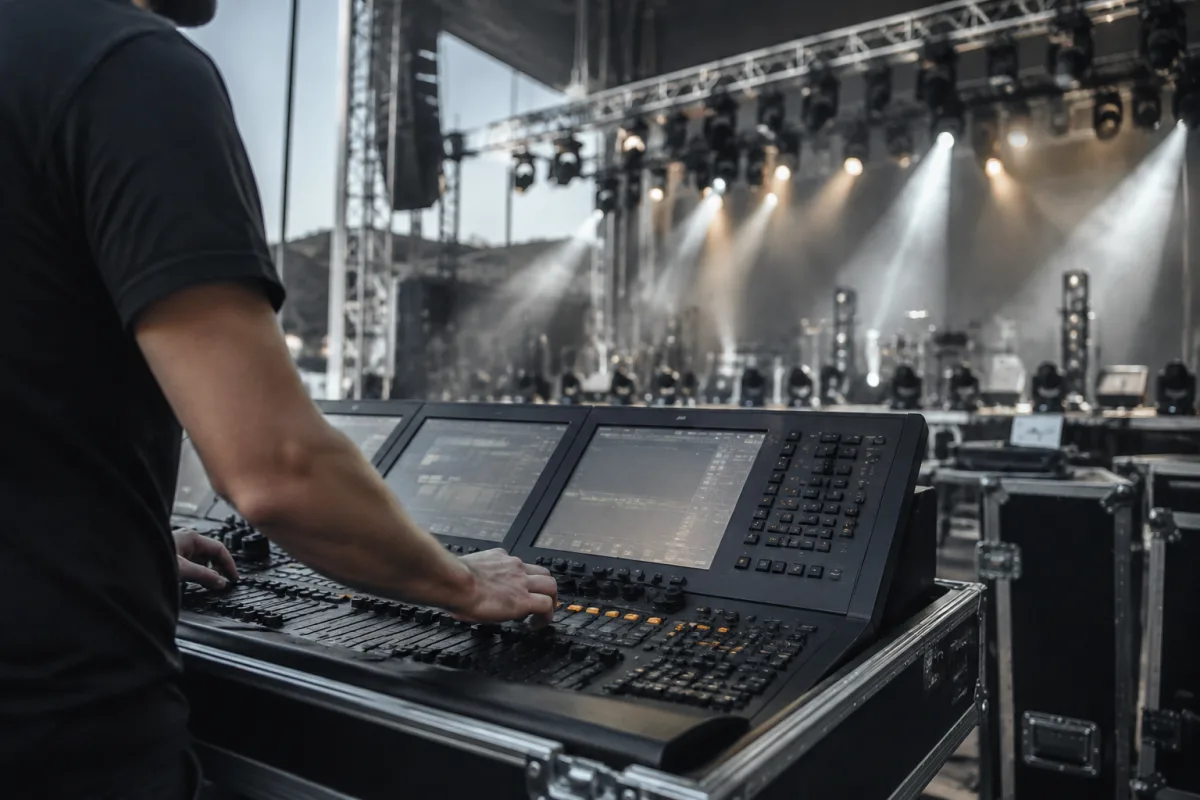
If you're shopping for DMX lights for your venue, performance space, or production needs, you're entering a market where terminology can feel overwhelming, specifications seem endless, and price variation is staggering. A quality DMX lights system transforms how your stage appears, but choosing the right fixtures, controllers, and cables requires understanding what actually matters versus what's marketing noise. This buyer's guide cuts through the complexity and shows you exactly what to evaluate when shopping for DMX lights, where to invest money meaningfully, and where budget options work perfectly well.
Understanding DMX: The Technical Foundation
DMX lights operate on DMX512, a digital control protocol that's been the industry standard since 1986. Understanding this matters because it defines compatibility. All professional DMX lights speak the same language—a lighting fixture from brand A works with a controller from brand B through standard XLR connections. This standardisation means your investment in infrastructure isn't locked to one manufacturer.
DMX512 transmits digital signals through XLR cables, typically daisy-chained from a controller to each fixture sequentially. Each DMX lights fixture occupies a specific channel number (1-512 maximum), and the controller sends instructions to every fixture simultaneously. This architecture means adding more DMX lights simply requires more XLR cables and available channels—no complicated reconfiguration.
What this means practically: DMX lights systems are modular. You can start small, add fixtures gradually, upgrade controllers, and everything works together. Your initial investment doesn't lock you into a specific ecosystem.
Core Specifications: What Makes DMX Lights Different
When evaluating specific DMX lights fixtures, several specifications determine performance, flexibility, and price:
Channels per fixture: A basic DMX lights fixture might use 4 channels (on/off, brightness, colour, strobe). Advanced fixtures use 12-20+ channels for separate colour mixing, position tracking, animation control, and gobo selection. More channels mean more control but also more complex programming. Budget venues benefit from simple 4-channel fixtures; theatres demand advanced DMX lights with maximum channel count.
Brightness (lumens): This is crucial. DMX lights brightness varies from 2000 lumens (suitable for small rooms) to 50000+ lumens (outdoor stages). Insufficient brightness produces washed-out stage appearance; excessive brightness wastes energy and can blind performers. Match DMX lights brightness to your venue size. Test in-person if possible—measured lumens don't capture subjective brightness perception in your specific space.
Colour capability: RGB (red-green-blue) DMX lights produce mixed colours from primary components. RGBW adds white channel for better white light quality and saturation. RGBA adds amber for warmer tones. RGBAW adds ultraviolet for fluorescent effects. More colour channels mean more lighting possibilities but also more power consumption. RGB suffices for most venues; RGBW is a sweet spot for flexibility.
Beam angle: Narrow beams (under 15 degrees) create sharp spotlights; wide beams (45+ degrees) provide wash lighting. Many professional DMX lights include variable beam adjustment. Understanding your intended use determines what angle suits you. Stage spotlighting needs narrow beams; ambient venue wash lighting needs wide. Many venues benefit from both types.
DMX Lights Categories: Choosing the Right Type
DMX lights come in several distinct categories, each serving different purposes:
- Par cans: Simple, rugged fixtures directing light at fixed angles. Budget-friendly DMX lights entry point, starting around £30-80 per fixture. Limited flexibility but bulletproof reliability. Perfect for small venues, touring, or budget-conscious installations.
- Moving head wash lights: Motorised fixtures that rotate and tilt on stage. DMX lights moving heads add dynamic motion but cost significantly more (£150-400+). Suited for clubs, theatres, and professional productions where motion adds visual interest.
- Moving head spot lights: Precision-focused moving heads with gobo wheels and additional effects. Premium DMX lights category at £300-800+. Essential for theatre productions and high-end venues demanding precision positioning.
- LED strip lights: Flexible DMX lights that roll or hang along venues edges. Affordable option (£20-100 per metre) for ambient colour washing. Popular for clubs, bars, and budget productions.
- Intelligent fixtures: Advanced DMX lights combining multiple effect types in single units. Expensive (£400-1500+) but versatile for production companies wanting maximum capability in minimum space.
Price Tiers Explained
DMX lights pricing spans enormous range depending on capability:
Budget tier (£30-80 per fixture): Basic par cans and simple LED strips. These DMX lights work fine for small venues, rehearsal spaces, or hobby use. Reliability is acceptable; brightness is moderate. Suitable for operations where lighting is secondary to audio or performance quality.
Mid-range tier (£100-250 per fixture): This is where most working venues operate. DMX lights at this price include reliable construction, adequate brightness, and flexibility sufficient for professional use. An LED moving head wash at £150 transforms small venues without breaking the budget. The sweet spot for balancing capability and cost.
Professional tier (£300-800 per fixture): Theatre-grade DMX lights with precision mechanics, advanced effects, and bright output. These fixtures are investment purchases expected to operate reliably for years in demanding environments. Premium price reflects durability and performance guarantee.
High-end tier (£800+): Specialist equipment for large festivals, broadcast productions, or permanent installations. These DMX lights require climate control and expert maintenance. Not appropriate for most venues unless budget justifies.
Essential Components Beyond Fixtures
DMX lights systems require infrastructure beyond the fixtures themselves. Planning total cost accurately means accounting for everything:
Controller: This device sends commands to your DMX lights. Budget controllers offer basic on/off and brightness (£50-150). Advanced controllers include programmable scenes, timing, and effects (£200-500+). For small systems (under 10 fixtures), budget controllers suffice. Complex shows demand advanced DMX lights controllers with cueing capability.
XLR cables and connectors: DMX lights require 5-pin XLR cables, not standard 3-pin audio XLR. Budget 5-10 cables per installation. Cheap cables cause dropouts and failures. Professional-grade XLR (£2-5 per metre) prevents headaches. Plan cable runs carefully before installation.
Power distribution: DMX lights collectively consume significant electrical power. A 10-fixture LED system might draw 1500 watts. Verify your venue electrical infrastructure supports this. Industrial-grade power distribution (£100-500+) prevents overloads and failures. Don't underestimate power requirements.
Mounting and rigging: Assuming you're not leaving DMX lights on the ground, budget for proper mounting brackets, lighting trusses, or rigging infrastructure. Quality mounting (£20-100 per fixture position) prevents accidents and enables proper aiming.
Common Purchasing Mistakes
These predictable errors trip up first-time DMX lights buyers:
- Buying excessive brightness: Brighter DMX lights aren't always better—they waste energy and can be overkill for venue size. Test fixtures in your actual space before buying. What seems perfect in a bright shop might overwhelm a small club.
- Overlooking cable requirements: 5-pin XLR cables for DMX lights are different from audio cables. Cheap cables cause signal dropout. Budget properly for quality cables and connectors. This isn't glamorous but prevents frustration.
- Ignoring power consumption: Multiple DMX lights fixtures consume more power than expected. Venues with insufficient electrical infrastructure experience breaker trips during shows. Calculate total wattage before installation.
- Choosing incompatible equipment: While DMX512 is standard, some budget equipment has reliability issues communicating through longer cable runs or with third-party gear. Stick with reputable brands for critical infrastructure.
- Buying motion when stationary fixtures work: Moving head DMX lights are impressive but cost significantly more than fixed par cans. If your space and shows don't actually benefit from motion, the investment doesn't justify itself. Honestly assess needs.
- Assuming professional installer isn't necessary: While simple DMX lights systems are straightforward, complex installations benefit from professional setup. Rigging, electrical integration, and network configuration prevent fires and injuries. This investment pays itself back in safety and reliability.
Scenario-Based Purchasing Advice
Small rehearsal room: Budget par cans (£40-60 each) with simple controller. Four to six fixtures provide functional wash lighting for band rehearsal. Total investment: £300-400. Brightness is adequate for rehearsal; equipment occupies minimal space.
Small live venue (30-100 capacity): Mix of basic moving head wash lights (£150 each) and par cans (£50 each). Total 12-16 fixtures with mid-range controller. Investment: £1500-2500. This transforms venue appearance without overwhelming small space. Brightness is appropriate; flexibility handles most shows.
Theatre or larger venue (300+ capacity): Professional-grade DMX lights with moving head spots, LED washes, and advanced controller. Budget £500-800 per fixture with system integration. Complete system: £8000-15000+. Justifiable investment for venues expecting regular productions demanding sophisticated lighting.
Event production company: Mix of portable DMX lights fixtures, multiple controllers, travelling cases, and spare components. Total investment varies dramatically but generally £5000-25000+ depending on ambition. Prioritise reliability and modularity for touring work.
Warranties and Long-Term Support
Professional DMX lights manufacturers offer 1-3 year warranties and active support. Budget brands might offer 6-12 months or no warranty. For commercial installations, proper warranty protection justifies higher pricing. A £300 fixture with 2-year warranty and active support is better investment than £200 fixture with questionable warranty and no replacement parts availability.
Selecting the right DMX lights requires matching specifications to your actual venue, show requirements, and budget. Don't overspend on brightness or features you'll never use. Don't under-invest in cable quality or power infrastructure. Test equipment in your actual space before committing to large purchases. For detailed exploration of DMX lights technology, compatibility, and options across the full range available, read our comprehensive guide to DMX lights. With proper planning, your DMX lights investment transforms your venue's appearance while remaining economically sensible.


Comments