
Digital Mixer Desk article
The Complete Guide to Digital Mixer Desk
Digital mixer desks combine mixing, effects processing and wireless management into a single integrated platform—the professional standard for modern live sound and recording.
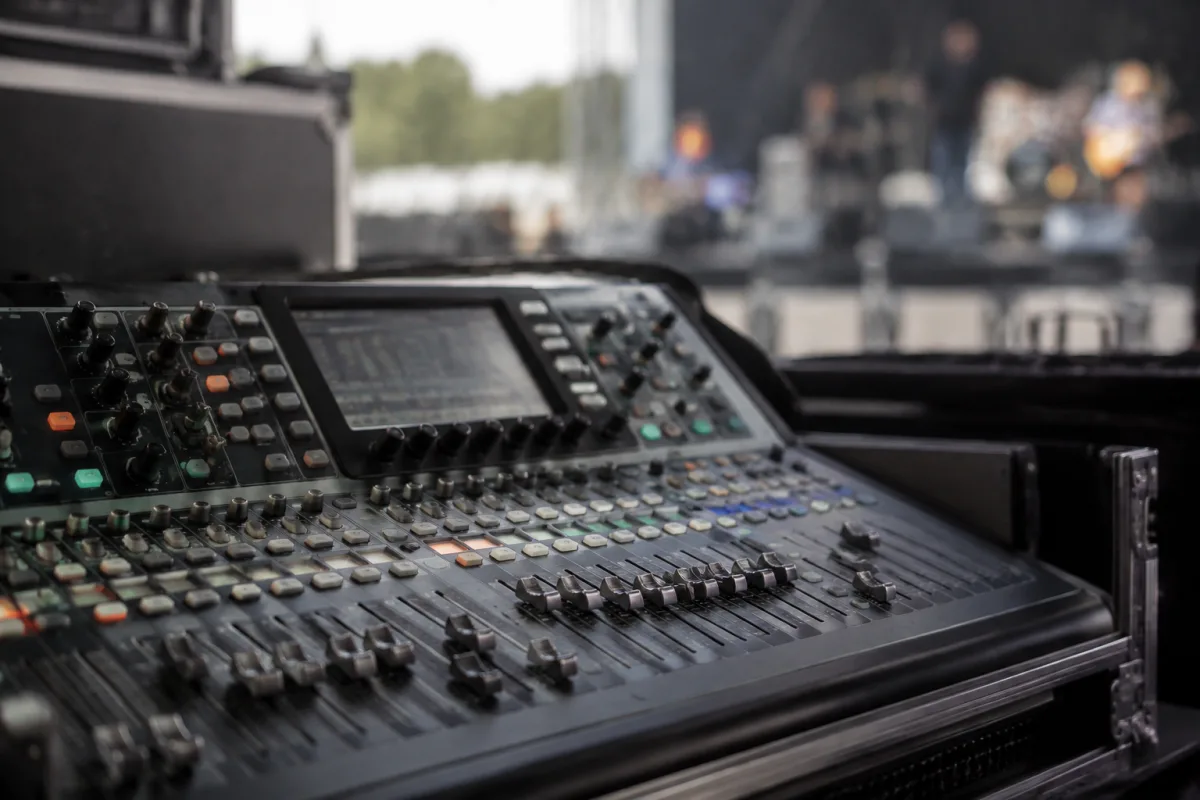
Digital mixer desks have revolutionised live sound engineering and studio recording by offering unprecedented control, flexibility and portability in a single integrated platform. Unlike their analogue counterparts, digital mixer desks combine mixing, effects processing, routing and wireless management into compact hardware that can be mastered by sound engineers with far less training and setup time. Whether you're managing sound at a church, festival, theatre production or professional recording studio, a digital mixer desk is the modern professional standard that separates organised, polished performances from chaotic, poorly reinforced events.
Understanding Digital Mixer Desks
A digital mixer desk is a control centre that processes audio signals from multiple sources—microphones, instruments and playback devices—combines them, applies effects and distributes the mixed output to speakers and recording devices. The term "digital" distinguishes these from analogue mixers, which use voltage-based circuitry to process audio. A digital mixer desk converts incoming analogue audio into digital data, processes it using software algorithms, and converts it back to analogue for amplification and playback.
The core purpose of a digital mixer desk is identical to an analogue mixer: route multiple audio sources to desired outputs with independent level control, EQ, effects and compression. The difference lies in how that processing happens and what capabilities emerge as a result. A digital mixer desk offers recall-ability—you can save and restore exact configurations instantly—networked control, wireless capability, processing power that would fill a room if built from discrete effects units, and a user interface that adapts to show exactly what you need at any moment.
Key Advantages of Digital Mixer Desks
Digital mixer desks offer compelling advantages over analogue designs:
- Compact form factor: A digital mixer desk delivers the processing power of equipment that once required multiple floor units into a single console. A portable 32-channel digital mixer desk weighs far less than an analogue mixer with the same channel count.
- Built-in effects processing: Most digital mixer desks include onboard reverb, delay, compression, EQ and other effects that would require external outboard gear on an analogue system. This saves money, reduces cable clutter and simplifies setup.
- Recall and presets: Digital mixer desks store complete settings as "scenes" or "snapshots." For a multi-act event or album with different mixes per song, save the perfect mix once and restore it instantly. This repeatability is invaluable for touring productions.
- Wireless monitoring and control: Many digital mixer desks connect via WiFi or proprietary wireless protocols to tablets and smartphones, allowing engineers to adjust levels and make mix changes from anywhere in the venue without being tethered to the console.
- Advanced routing and signal flow: Digital mixer desks offer flexible signal routing with multiple mix buses, subgroups and auxiliary sends. You can create multiple independent mixes for different monitor speakers, wireless in-ear monitors or recording feeds.
- Processing power: A single digital mixer desk can apply EQ, compression, reverb, delay and multiband processing to every channel simultaneously without the sonic degradation or noise floor increase that stacking analogue effects can cause.
- Scalability: Many digital mixer desks allow you to expand the system by adding stagebox units—remote audio interfaces that sit on stage next to performers and musicians, extending the number of available inputs without running long cables back to the main console.
Common Applications for Digital Mixer Desks
Digital mixer desks are the standard choice across professional sound reinforcement, live events and high-end recording studios. In live music venues, a digital mixer desk sits in the sound booth, receiving microphone signals from stage and orchestrating the front-of-house mix sent to main speakers. Simultaneously, it typically manages one or more monitor mixes sent to stage speakers and wireless in-ear monitor systems so performers hear themselves.
For corporate events, conferences and theatres, a digital mixer desk manages microphones for presenters and performers, playback music, audience response systems and multiple recording feeds. The ability to save scene snapshots means each speaker's mix settings, background music level and any recorded audio output can be recalled instantly when that speaker takes the stage—eliminating setup errors and speeding transitions.
In churches and houses of worship, digital mixer desks handle worship band amplification, spoken word clarity, pre-recorded backing tracks and the complexity of multiple services where settings vary. The wireless remote control capability allows sound engineers to adjust levels whilst the service proceeds without them being confined to a sound booth.
Professional recording studios use digital mixer desks as control rooms for mixing and mastering. The built-in metering, routing flexibility and effects processing streamline the mixing workflow, and the ability to save mix stems and automation snapshots makes managing complex multitrack recordings straightforward.
Channel Count and Expansion
Digital mixer desks come in various sizes, typically ranging from compact 16-channel models for small venues and studios up to large format 48-channel or 64-channel systems for major touring productions and broadcast facilities. Your channel requirements depend on your typical input count: a worship band might need 8–12 channels for drums, bass, guitars and vocals. A touring rock band might require 24–32 channels once you include instruments, vocals, playback and wireless microphones.
Many digital mixer desks allow expansion via stageboxes or dante networking, which means you can start with a smaller console and grow your system as your needs expand. This makes digital mixer desks a long-term investment rather than an equipment purchase you'll outgrow.
Common Features and Controls
Most digital mixer desks include channel faders, rotary encoders for parameter adjustment, a touchscreen display and physical buttons for section selection. The touchscreen displays channel strips, mixing parameters, effects sends and routing in a customisable interface. Rather than physical knobs for every channel's EQ, reverb and compression like an analogue mixer, a digital mixer desk typically has a few physical knobs paired with a touchscreen that lets you select which parameter you're adjusting and on which channel.
Master section controls include main output level, master mute, talkback (a microphone for the engineer to communicate with stage crew), and controls for monitoring the mix during mixing and mastering. Most digital mixer desks include built-in metering with peak indicators and spectral analysis tools to prevent distortion and ensure frequency balance.
Input connectivity varies, but most digital mixer desks feature a combination of analogue XLR, quarter-inch and RCA connectors for legacy gear, plus digital audio inputs via AES/EBU, S/PDIF or increasingly Dante network audio, which allows dozens of channels over a single Ethernet cable.
Dante Networking and Expansion
Dante is a high-performance, low-latency audio networking standard increasingly adopted by professional digital mixer desks. Instead of running dozens of microphone cables back to a central mixer, Dante allows stageboxes with multiple microphone inputs to connect to the digital mixer desk via a single Ethernet cable. One Dante network can carry hundreds of audio channels, each with extremely low latency—less than a millisecond—critical for live performance where any perceptible delay between performer and monitor speaker disrupts the musicians' timing.
Dante also enables networked control, wireless remote management and integration with other Dante-equipped audio gear, creating a truly networked audio ecosystem. For large touring productions and theatres with complex sound requirements, Dante connectivity is increasingly essential.
User Interface and Learning Curve
A disadvantage of digital mixer desks compared to analogue models is the learning curve. An analogue mixer is instantly understandable—each channel has physical faders and knobs; you can see every parameter at a glance. A digital mixer desk requires learning the menu structure and touchscreen interface, which varies between manufacturers. However, most modern digital mixer desks have intuitive workflows that become second nature after a few sessions.
Many manufacturers offer free educational resources, YouTube tutorials and hands-on workshops to help engineers master their platforms. The investment in learning is worthwhile given the capabilities and flexibility you gain.
Budget Considerations
Digital mixer desks span a broad price range. Compact models suitable for rehearsal studios or small venues start around £1,500–2,500. Mid-range digital mixer desks for active touring bands and medium venues range from £3,000–8,000. High-end professional models used by major touring productions and broadcast facilities exceed £15,000.
The best choice depends on your application. A worship band rehearsal benefits from an entry-level digital mixer desk at far lower cost than traditional analogue alternatives. A professional touring band benefits from mid-range systems that offer stability, remote control and ample channel expansion. Major broadcast and touring operations justify premium systems with redundancy, advanced networking and support infrastructure.
Digital Mixer Desks vs. Analogue and Software-Only Solutions
Analogue mixer desks remain popular in some circles, particularly amongst audiophiles who value the sonic character of transformer-based circuitry and vintage designs. However, they lack built-in effects, recall capability, wireless control and modern connectivity. For most professional applications, a digital mixer desk offers superior functionality at competitive cost.
Software-only mixing solutions like DAWs (digital audio workstations) are excellent for recording but impractical for live events, where you need tactile control, immediate visual feedback and reliable hardware independent of computer operating systems. A digital mixer desk combines the control simplicity of hardware with the flexibility of digital processing.
Reliability and Longevity
Modern digital mixer desks are engineered for professional touring, meaning they withstand physical stress, temperature extremes and thousands of hours of operation. Many touring systems run 100+ shows per year without failures. Regular maintenance—keeping cooling vents clear, avoiding liquid spills and replacing power supplies if needed—ensures a digital mixer desk lasts 10–15 years of reliable service.
Software updates from manufacturers add features and improve stability over time, meaning your digital mixer desk investment improves rather than becoming obsolete. This contrasts with analogue equipment, which doesn't improve through updates.
Conclusion
A digital mixer desk is the professional standard for modern sound reinforcement, live events and recording work. The combination of compact form, processing power, recall-ability, wireless control and advanced features make digital mixer desks indispensable for anyone serious about audio engineering. Whether you're starting a church sound programme, mixing a touring band or establishing a professional recording studio, a digital mixer desk is the foundation of modern audio control—delivering clarity, flexibility and professional results that define contemporary live sound and recording.



Comments