


Compact Mixer Buying guide
Compact Mixer: A Complete Buyer's Guide
Compact mixers range from £50 to £1000+, and price doesn't indicate suitability for your needs. This buying guide explains critical specifications, common mistakes, and how to match features to your actual application.
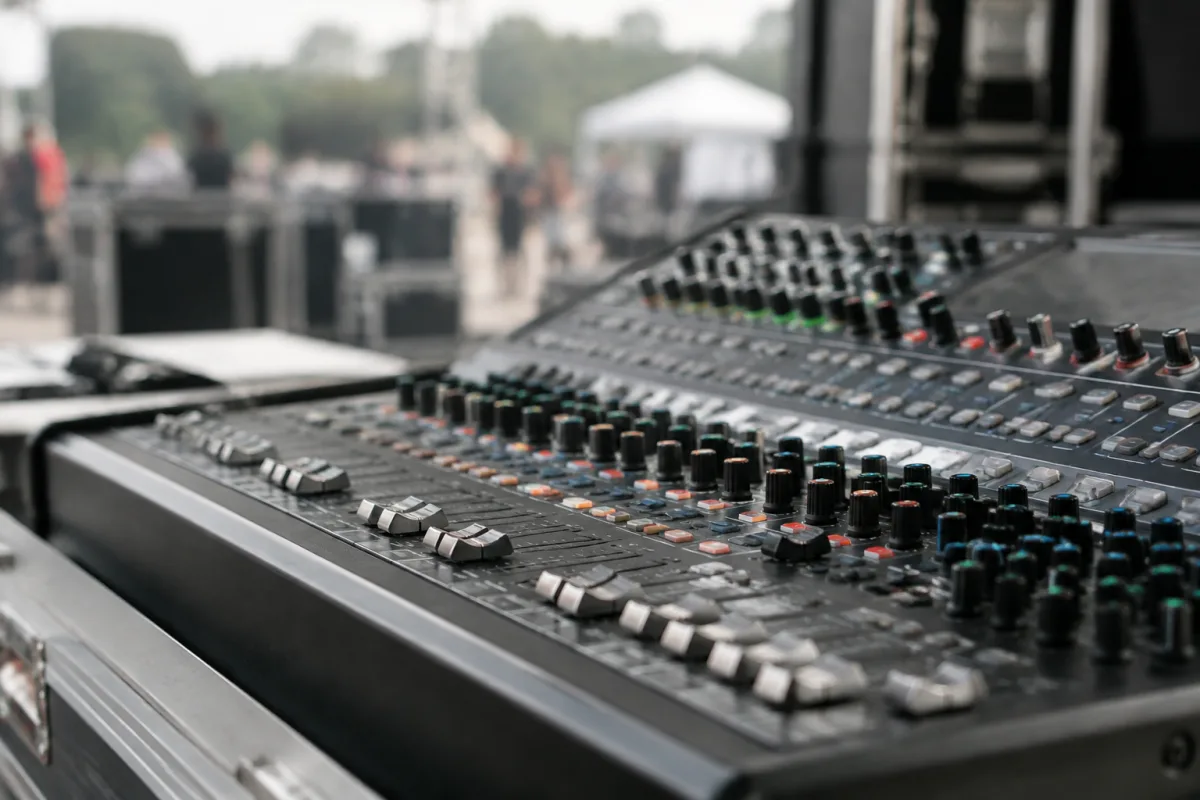
Selecting a compact mixer requires understanding which features matter for your application and which ones waste budget. Compact mixers range from £50 portable units to £500+ professional models, and price alone doesn't indicate suitability for your needs. This buying guide explains critical specifications, identifies common mistakes, and helps you match features to realistic applications without overpaying or sacrificing essential functionality.
Input Channel Count: Start With Your Actual Needs
Compact mixers range from 4 channels to 16+ channels. Most buyers overestimate their needs and purchase more channels than they'll actually use.
Assess your realistic configuration: How many microphones will you use simultaneously? How many instruments? How many audio playback sources? Add these together honestly. This is your minimum channel requirement.
Adding two extra channels is reasonable insurance: You might add a device later or want flexibility. But buying a 16-channel mixer when you need 4 is wasteful investment and operational overhead.
Consider splitting duties: A 4-channel mixer handling multiple tasks through channel sharing often outperforms larger mixers used inefficiently. Fewer channels you understand well beat more channels you won't use.
Audio Input and Output Quality
Build quality and component selection directly impact sound fidelity.
Preamp quality matters significantly. Budget mixers use low-noise amplification that struggles with quiet sources like ribbon microphones. Professional preamps handle delicate sources without noise or distortion. If you're using quality microphones, invest in quality preamps.
Input impedance specifications tell you about microphone compatibility. Balanced XLR inputs should be 40-60 ohms (if specified as "low Z"). Unbalanced inputs vary more. Know your microphone requirements and verify mixer compatibility.
Output options matter. Do you need main stereo outputs? Monitor sends? Auxiliary outputs? Digital outputs? List your actual connections before purchasing. Unused outputs represent wasted features.
Test audio quality if possible. Run a known good microphone through budget and mid-range mixers. Listen for noise floor, distortion, and overall character. This tactile comparison is impossible from specs alone.
Fader and Control Quality
Faders on budget mixers feel cheap and sometimes fail after months of use. Quality matters, particularly if you're moving faders during performances.
Fader type affects longevity directly: Professional faders from companies like Behringer or Icon last years. Generic faders fail within months. Research reviews specifically mentioning fader durability and longevity.
Rotary encoders and potentiometers vary in quality too. Budget models sometimes have scratchy, inconsistent controls. Higher-end versions feel smooth and precise. This affects both user experience and durability.
EQ controls worth evaluating: Parametric EQ (adjustable frequency) offers more control than fixed-frequency shelving EQ. For serious mixing, parametric is worth the extra cost. For casual use, shelving EQ suffices.
Phantom Power Availability
If you're using condenser microphones, you need phantom power (typically 48V).
Verify phantom power specifications carefully: Some mixers provide it globally (all channels together). Others offer it per-channel. Many budget mixers lack phantom power entirely, making them incompatible with condenser mics.
Test phantom power stability: Cheap implementations sometimes introduce noise when phantom power is engaged. Professional versions engage cleanly without artefacts. Read user reviews about phantom power quality specifically.
Ground lift switches matter. Hum-inducing ground loops plague many setups. Ground lift switches on professional mixers solve this problem elegantly. Budget models often lack this feature.
Integrated Features vs Standalone Quality
Compact mixers increasingly integrate effects, wireless microphone receivers, and other features. Decide whether this integration serves you or dilutes core functionality.
Built-in effects are sometimes useful, often unnecessary. Can you achieve the same effects from external processors or your DAW? If yes, skip integrated effects and save money. If you genuinely need reverb always available, built-in effects are worthwhile.
Integrated wireless receivers divide quality concerns. A mixer handling both mixing and wireless reception sometimes compromises both. Standalone wireless systems often perform better. Assess whether integration is convenience or compromise for your application.
USB audio connectivity is increasingly standard. If you're recording to computer, USB direct connectivity streamlines workflow. Verify driver stability and compatibility with your recording software before purchasing.
Price Tiers and Real-World Value
Budget tier (£50-150): Plastic construction, basic functionality, questionable fader durability. Suitable for learning or casual use. Expect limitations in preamp quality and output options. Examples: basic Behringer or generic models.
Mid-range tier (£150-400): Metal construction, professional-grade preamps, reliable faders, flexible I/O. Satisfies most serious hobbyists and semi-professional applications. Generally excellent value. Examples: Behringer Xenyx series, smaller Soundcraft models.
Professional tier (£400-1000): Premium components throughout, exceptional sound quality, extensive routing options, reliable components for daily use. Worthwhile investment for venues and touring applications. Examples: Yamaha MG series, professional Soundcraft.
Premium tier (£1000+): Cutting-edge technology, professional-grade construction, extreme flexibility. Rarely justified unless earning significant fees from performances. Overkill for hobby use.
Critical Mistakes When Buying Compact Mixers
Buying channel count you'll never use. A 12-channel mixer for a 4-channel application creates operational overhead and wastes budget. Purchase what you'll actually use, not aspirational capacity.
Ignoring preamp quality. Budget preamps make quality microphones sound mediocre. Invest here if microphone quality matters to your application.
Assuming integrated features reduce external gear needs. Integrated effects rarely match dedicated processors. Integrated wireless rarely matches professional wireless systems. Integration is convenience, not replacement quality.
Neglecting fader durability reviews. Some models develop fader problems within months. Read user reviews specifically addressing this. It's a leading failure point.
Skipping the specs sheet.** Feature-by-feature comparison takes time but prevents purchase regrets. Verify impedance, phantom power, output options, and preamp specifications against your needs specifically.
Specifications Checklist
For any compact mixer you're considering, verify these specs:
- Number of input channels (match to actual needs)
- Input type (XLR, 1/4", RCA) and impedance if specified
- Phantom power availability and per-channel control
- Output options (main, monitor, auxiliary, USB)
- EQ type (parametric or shelving)
- Preamp noise specifications if available
- USB connectivity for computer recording
- Built-in features (effects, wireless receivers, etc.)
- Warranty and support availability
- User reviews specifically addressing fader durability
Making Your Purchase Decision
Test mixers side-by-side if possible. Run a quality microphone through budget and mid-range models. Listen critically to preamp quality and overall character. This live comparison often influences your decision more than specifications alone.
For comprehensive technical details and specific model recommendations, see the complete compact mixer guide.
Purchase from retailers offering returns if possible. You might discover a mixer sounds different in your actual environment than expected. The ability to return or exchange reduces financial risk.
Final Recommendation
Buy mid-range mixers from established brands. They balance quality, reliability, and cost effectively. Verify phantom power, preamp quality, and fader durability through reviews. Match channel count to your actual needs plus one or two extras. Test before purchasing when feasible. This approach yields satisfaction and years of reliable service without overpaying for unnecessary features.


Comments