


Bose S1 Pro article
Bose S1 Pro for Beginners: A Complete Guide
The Bose S1 Pro is a popular portable PA for beginners and solo performers. This guide explains what the S1 Pro actually does, how to get the best from it and when you might need something larger.
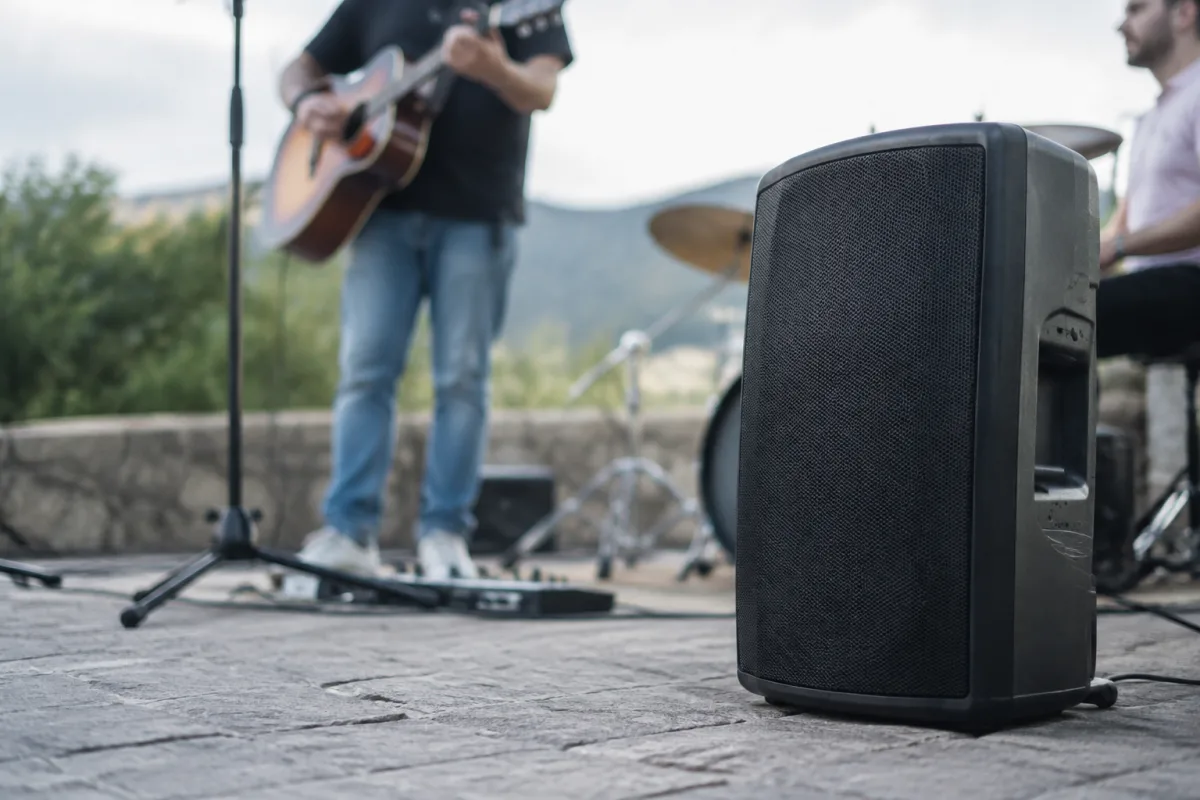
If you're buying your first portable PA system for busking, small events or rehearsal, the Bose S1 Pro keeps coming up in discussions. And for good reason—it's compact, it sounds disproportionately good and it "just works" out of the box. But is the Bose S1 Pro the right choice for you, and what do you actually need to know before buying one? This beginner's guide cuts through the marketing and tells you what the Bose S1 Pro genuinely offers.
What the Bose S1 Pro Actually Is
The Bose S1 Pro is an all-in-one portable speaker system. It combines an amplifier, a speaker and battery power in a single package roughly the size of a shoe box. Unlike a full PA system with separate mixers, microphones and speakers, the Bose S1 Pro is intentionally simple: plug in a microphone or instrument, turn it on and you have sound. For beginners and solo performers, this simplicity is the whole appeal.
The Bose S1 Pro is not a full PA system. It's designed for one person performing to a small crowd (50–150 people depending on the venue), street performers, rehearsal spaces and intimate venues. If you're amplifying a five-piece band or filling a 500-capacity room, you need something bigger.
Why Beginners Choose the Bose S1 Pro
The Bose S1 Pro appeals to beginners for several reasons:
- Simplicity: Plug in a microphone, an instrument or an auxiliary device and you're ready. No mixing desk, no cables to manage, no technical knowledge required.
- Portability: The Bose S1 Pro weighs under 4 kg and fits in a gig bag. Carrying it to a venue or busking spot is genuinely easy, unlike rolling a full PA stack.
- Quality sound: For its size, the Bose S1 Pro sounds shockingly good. Bose's engineering means it punches well above its weight class. A beginner won't outgrow its sound quality quickly.
- Battery power: No need to find electrical outlets. The Bose S1 Pro runs for hours on internal batteries, making it perfect for outdoor performances.
- Reliability: Bose has been making speakers for decades. The Bose S1 Pro is built to last and has excellent customer support if something goes wrong.
What You Get With the Bose S1 Pro
Inside the box, you'll find:
| Component | What It Does | What to Know |
|---|---|---|
| Speaker system | Produces sound; built-in amplifier | The Bose S1 Pro has excellent midrange; less bass than larger systems |
| Microphone input | Accepts standard XLR microphones | The Bose S1 Pro includes a basic microphone; upgrade to something better if needed |
| Auxiliary input | Accepts guitar cables, 3.5mm headphone jacks | Plug in a guitar, keyboard or music player |
| Bluetooth connectivity | Streams audio from phones or tablets wirelessly | Useful for backing tracks or audio playback |
| Rechargeable battery | Powers the Bose S1 Pro for 2–3 hours per charge | Brings USB charger; modern batteries are reliable |
| Physical controls | Volume knob, input selector, mic level | Simple and intuitive; no learning curve |
Common Beginner Questions About the Bose S1 Pro
- Will the Bose S1 Pro amplify my acoustic guitar to a crowd? Yes. Plug an acoustic guitar pickup or microphone into the Bose S1 Pro and you'll have good coverage for 50–100 people in an acoustic venue. Louder venues need more power.
- Can I use the Bose S1 Pro for a rehearsal band? It depends on the band size. For a solo rehearsal space or two-person rehearsal, yes. A full five-piece band needs more power.
- What microphone should I use with the Bose S1 Pro? Any standard XLR microphone works. The included microphone is basic but functional. For busking or performance, upgrade to a Shure SM58 (industry standard).
- How long does the battery last on the Bose S1 Pro? Approximately 2–3 hours of continuous use at moderate volume. Battery life decreases at high volume. Always carry a charger for a full day of busking.
- Is the Bose S1 Pro loud enough for a venue? For intimate venues (coffee shops, small bars, 20–50 people), absolutely. For a 200-person venue or larger, you'll need additional speakers.
Common Beginner Mistakes With the Bose S1 Pro
Avoid these pitfalls:
- Expecting unlimited volume: The Bose S1 Pro prioritises sound quality over sheer volume. At maximum, it's loud enough for small venues; it won't fill a stadium. Know your performance space.
- Ignoring the microphone quality: A weak microphone will make the Bose S1 Pro sound worse than it should. Invest £50–£80 in a proper vocal microphone; it transforms the Bose S1 Pro's performance dramatically.
- Running the battery flat during a gig: Always arrive with the Bose S1 Pro fully charged. If your performance might exceed 2 hours, bring a power bank or portable charger. A dead battery mid-performance is a disaster.
- Cranking the volume to maximum and adding feedback: The Bose S1 Pro is sensitive to feedback (that awful squealing). Keep volume at a reasonable level, point the speaker away from microphones and manage your gain carefully.
- Not testing everything before a performance: Arrive 20 minutes early and do a sound check. Test the microphone, adjust levels, listen to your own sound. This catches problems before they become embarrassing.
Setup Checklist for Your First Bose S1 Pro Gig
Before you perform with the Bose S1 Pro:
- Fully charge the battery the night before.
- Bring a backup USB charger and cable (just in case).
- Arrive 20 minutes early for a sound check.
- Use a microphone clamp or stand (the Bose S1 Pro doesn't include one).
- Keep the speaker pointed toward the audience, away from the microphone.
- Start at moderate volume and increase only as needed.
- Test Bluetooth connectivity if you're using backing tracks.
Is the Bose S1 Pro Worth the Money?
At roughly £300–£350, the Bose S1 Pro is more expensive than budget alternatives. But you're paying for Bose's engineering, reliability and the fact that you won't outgrow it quickly. For busking, rehearsal or small performances, the Bose S1 Pro is a sensible investment that will serve you for years.
Cheaper alternatives exist but often compromise on sound quality or durability. If you're serious about performing, the Bose S1 Pro is worth the extra cost. If you're just experimenting, rent one before committing.
When to Upgrade Beyond the Bose S1 Pro
As your performance needs grow, you'll outgrow the Bose S1 Pro. Signs you need something larger: your venues consistently exceed 100 people, you're amplifying multiple musicians, or you need multiple microphone channels. At that point, a traditional PA system becomes more appropriate than a portable speaker.
For deeper technical details about the Bose S1 Pro's specifications, real-world performance in different venues and comparisons with other portable PA systems, see our complete guide to the Bose S1 Pro and portable sound systems.
The Bose S1 Pro is an excellent beginner's step into portable amplification. It's reliable, it sounds good and it encourages you to perform without getting bogged down in technical complexity. Start here, learn the fundamentals and upgrade when you need more power.



Comments