


Allen and Heath Sq5 article
Everything You Need to Know About Allen and Heath Sq5
48 channels, 25 faders, 96kHz processing and serious expansion capability — here is everything you need to know about the SQ-5.
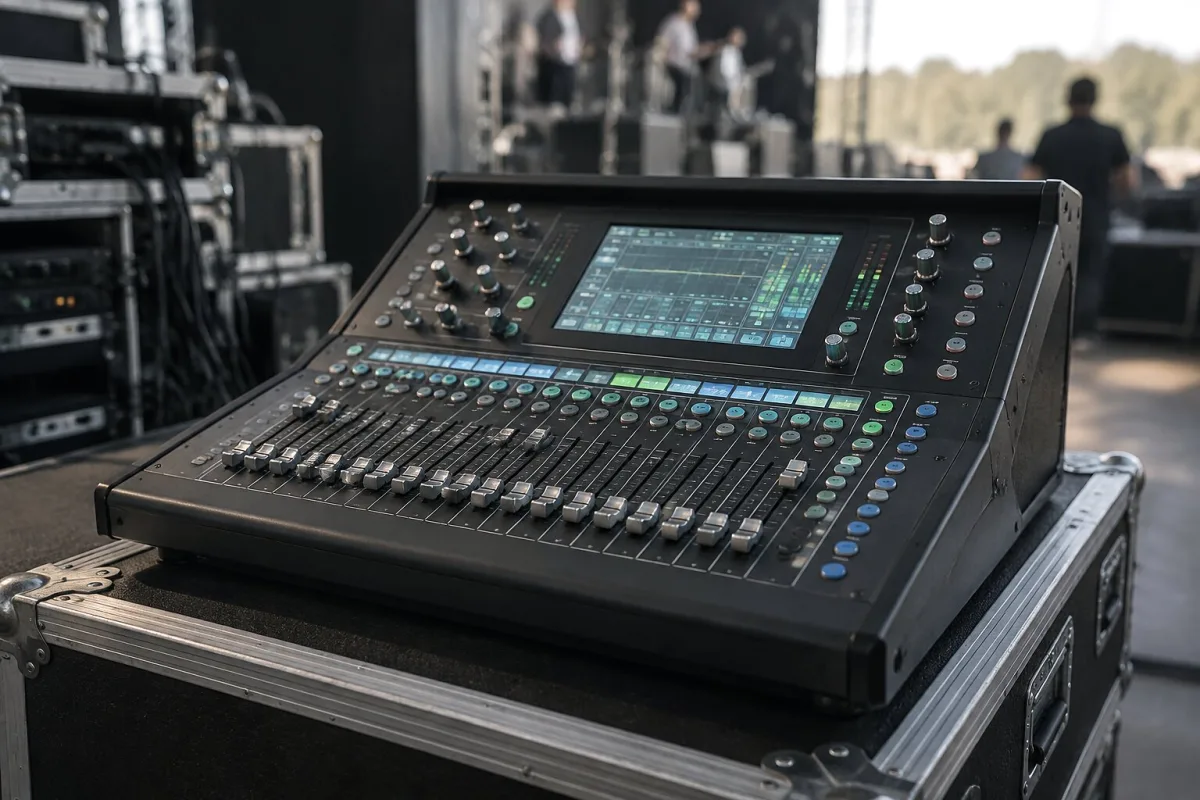
The Allen and Heath SQ5 sits at the compact end of the SQ range — a 48-channel digital mixing console with 25 motorised faders, 96kHz internal processing and a feature set that competes well above its size. It's designed for engineers who need serious capability in a package that fits venues and touring situations where rack space and weight matter.
What the SQ-5 Is
The Allen and Heath SQ5 is a 25-fader digital mixer with 48 channels of simultaneous processing at 96kHz. Its input section accepts up to 16 local XLR mic/line inputs, with the full channel count available via expansion through Allen & Heath's SLink and XCVI expansion ports, which support DX, GX and SQ stagebox units. The mixer runs at 96kHz throughout its processing chain — a significant specification that contributes to its headroom and sonic transparency compared with consoles operating at 48kHz.
Every input channel gets a full processing suite: a high-pass filter, four-band parametric EQ, gate and compressor. Every mix bus gets a full parametric EQ and GEQ. There are 22 mix busses — 12 mono, 3 stereo, 4 main output configurations — alongside 8 DCA groups. Four stereo on-board FX engines run reverb, delay, chorus and modulation effects simultaneously without affecting DSP budget.
The Processing Architecture
The SQ range runs a 160 × 64 audio processing matrix. This means up to 160 sources can be routed to up to 64 destinations, giving significant flexibility for complex multiband routing, monitor mixing and recording outputs. The architecture supports direct outputs from every channel for multitrack recording — standard over USB or via an option card for Dante or AVB networked audio.
The surface is built around a 7-inch touchscreen in the centre of the meter bridge, which provides access to channel parameters, the FX rack, routing and system settings. Navigation is consistent and well-organised once learned, though new users will need time with the workflow. The SQ architecture rewards engineers who take time to understand how it structures its routing and layers.
Expansion and Connectivity
Local I/O provides 16 XLR inputs, 12 XLR outputs and 4 AES digital outputs on the rear panel. The SLink port expands this significantly — connecting an Allen & Heath DX168 stagebox, for example, adds 16 inputs and 8 outputs on stage, with all audio running over a single Cat5e cable. A second option card slot accepts Dante or AVB cards for integration into larger networked audio environments.
dSNAKE and Waves SoundGrid integration are also available via option card. USB audio is built in and supports multitrack recording and playback without additional hardware — 32 channels at 96kHz directly to a DAW or to a USB drive for standalone recording.
Control Options
The SQ-MixPad app provides full mixing control over Wi-Fi from an iPad or Windows tablet. Multiple devices can connect simultaneously at different permission levels — useful for monitor engineers controlling their own mixes from stage while a FOH engineer manages the main output. A secondary full-surface remote is also possible with a second SQ-5 or SQ-6 connected over SLink as an expander.
Who It's For
The Allen and Heath SQ5 suits engineers who need a capable digital console in a compact format: mid-size venues, touring support, houses of worship and corporate events where setup time and portability matter alongside professional capability. It handles both front-of-house and monitor mixing without compromise, which makes it useful for smaller touring setups where a single console does both jobs.
For a full comparison with alternatives and specific buying advice, see our buyer's guide. For first-time users, see our beginner's guide.




Comments