


Hi-Fi Speakers Buying guide
Hifi Speakers: A Complete Buyer's Guide
Purchasing hifi speakers requires understanding speaker types, key specifications, and proper listening techniques. This buying guide covers everything from active designs to room placement and budget tiers.
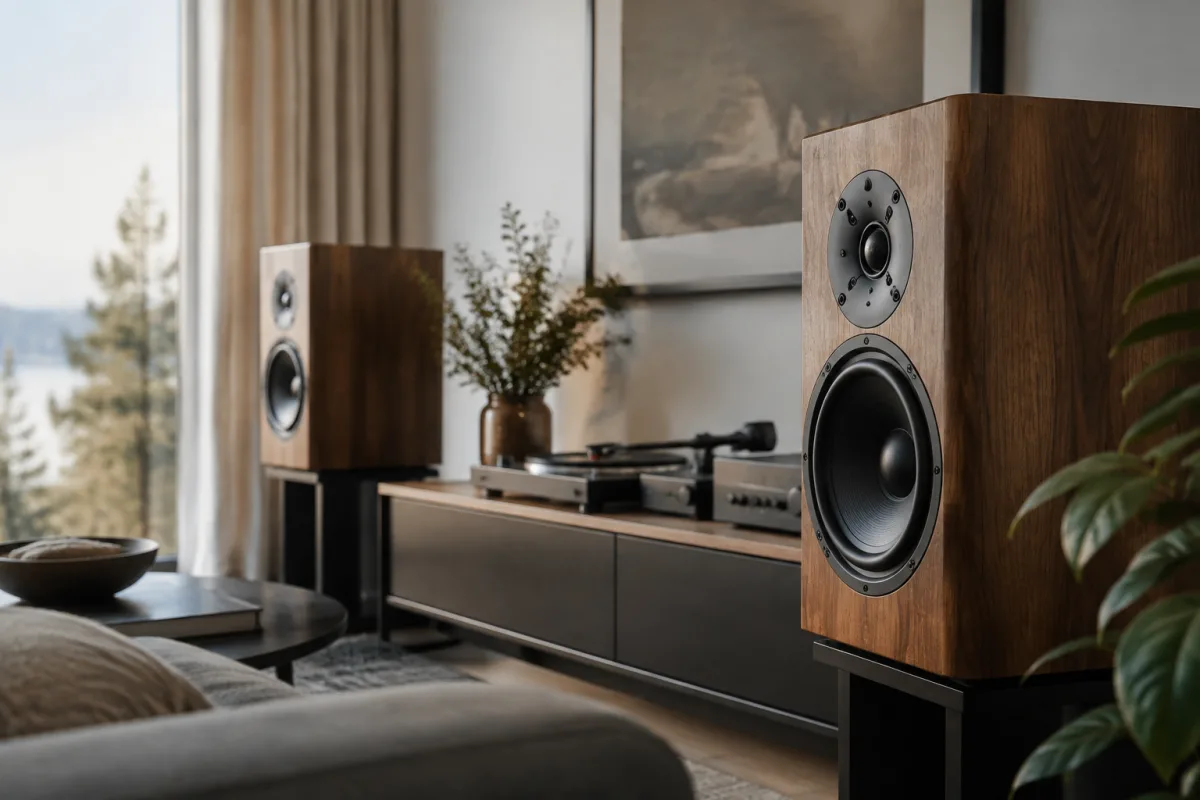
Buying hifi speakers is one of the most personal audio investments you'll make, yet most people have no framework for making the decision. Walk into an audio shop or browse online and you'll encounter conflicting advice, bewildering specifications, and price tags ranging from £100 to £10,000+. This guide cuts through the confusion by focusing entirely on the buying side—the practical considerations that separate good choices from expensive mistakes when purchasing hifi speakers.
Active or Passive: The First Decision
Every pair of hifi speakers falls into one of two categories, and this choice affects everything else. Passive hifi speakers require a separate amplifier to function; active hifi speakers have a built-in amplifier inside each speaker cabinet. For most buyers new to hifi, active hifi speakers are simpler—you connect them directly to a source and plug them in. Passive hifi speakers demand a quality amplifier, adding cost and complexity but offering flexibility if you already own good electronics or want to upgrade components separately.
The hifi speakers you choose will define your sound for years, so take this first decision seriously. Active models work best in smaller rooms or apartments where you can't house a separate amplifier. Passive hifi speakers suit larger spaces and audiophiles who enjoy experimenting with different amplifiers.
Understanding Speaker Types and Designs
Hifi speakers come in three main form factors, each with distinct advantages:
- Bookshelf Speakers: Compact passive or active hifi speakers designed to sit on stands or shelving. They're space-efficient, ideal for smaller rooms, and often excellent value. Most entry-level and mid-range hifi speakers are bookshelf designs.
- Floorstanding Speakers: Tall cabinet hifi speakers with multiple drivers that reach lower frequencies naturally. They suit larger rooms and excel at reproducing bass-heavy music. Floorstanding hifi speakers are often pricier but deliver deeper, more immersive sound.
- Studio Monitors: These are active hifi speakers designed for audio production, offering flat frequency response ideal for critical listening. Many audiophiles use studio monitors as hifi speakers, especially in smaller spaces.
Choose based on your room size and music taste. Small apartments favour compact bookshelf hifi speakers; larger rooms benefit from floorstanding hifi speakers or multiple bookshelf pairs.
Critical Specifications When Buying HiFi Speakers
Knowing what specs matter separates informed buyers from those wasting money on meaningless numbers. Focus on these core specifications when comparing hifi speakers:
- Frequency Response: All hifi speakers publish a frequency response range (e.g., 40 Hz–20 kHz). Lower numbers mean deeper bass; hifi speakers rated 20 Hz handle bass better than those starting at 50 Hz. Match the lower end to your room and music—jazz and classical need less deep bass than electronic music.
- Impedance: Passive hifi speakers typically rate at 4, 6, or 8 ohms. This must match your amplifier's output—an amplifier rated for 8 ohms will strain driving 4-ohm hifi speakers, causing heat damage. Always cross-check impedance before pairing components.
- Sensitivity (dB SPL): This shows how loudly hifi speakers play at a given power input. Higher sensitivity (85 dB+) means the hifi speakers play louder with less amplifier power, reducing noise and heat. Lower sensitivity hifi speakers demand more powerful amplification.
- Driver Size and Configuration: Larger woofers move more air, aiding bass reproduction. A quality two-way hifi speaker (woofer + tweeter) often outperforms a cheap three-way model. Driver size alone doesn't determine quality—implementation matters more.
- Crossover Design: Hifi speakers use crossovers to split audio frequencies between drivers. Better hifi speakers employ higher-order active or passive crossovers that prevent driver overlap and distortion.
How to Actually Listen Before Buying
Specifications tell only half the story. Buying hifi speakers without hearing them is like choosing a car by horsepower alone. If you're purchasing bookshelf hifi speakers, try to audition them in a shop setting with music you know well. Bring a familiar album—something with vocals, instruments you understand, and varied frequency content.
Listen for clarity, soundstage width, and bass response. Do vocals sound natural, or shouty? Can you locate individual instruments in the mix? Does bass feel integrated or boomy? Good hifi speakers should disappear into the room—you hear the music, not the speakers themselves. With floorstanding hifi speakers, focus on whether bass feels tight and controlled rather than muddy.
Room acoustics matter enormously. The best hifi speakers sound mediocre in a bad room and mediocre hifi speakers can sound excellent in a well-treated space. Never judge hifi speakers based on one listening session—take at least 30 minutes, and ideally hear them in multiple tracks.
Budget Tiers and Value
Budget hifi speakers under £200 exist, but represent poor value for serious listening. Entry-level hifi speakers (£200–£500) from reputable brands offer genuine hi-fidelity at affordable prices. Most buyers find excellent speakers in this range.
Mid-range hifi speakers (£500–£1,500) represent the sweet spot for many enthusiasts. Here, build quality improves, driver technology advances, and you finally encounter serious research investment from manufacturers. This is where most great-sounding hifi speakers live.
Premium hifi speakers (£1,500–£5,000) offer refinement, exceptional soundstaging, and sometimes exotic materials. These hifi speakers suit larger rooms and listeners with significant budgets.
Ultra-premium hifi speakers (£5,000+) pursue diminishing returns. The jump in sound quality from £1,500 to £3,000 hifi speakers is substantial; from £5,000 to £8,000, far less so. Most buyers achieve 90% of the possible sound quality spending under £3,000.
Common Mistakes When Buying HiFi Speakers
Avoid these purchasing pitfalls that trap newcomers:
- Buying without hearing them: Online shopping is convenient, but buying hifi speakers sight-unseen is risky. Check return policies and plan to return speakers that disappoint.
- Ignoring amplifier requirements: Passive hifi speakers need a capable amplifier. Weak amplification will make even excellent speakers sound thin and lifeless. Budget for quality amplification when calculating hifi speaker costs.
- Underestimating room size effects: Hifi speakers rated 40 Hz may only reach 50 Hz in a large room. Small rooms can make compact hifi speakers sound boomy. Listen in a room similar to yours if possible.
- Confusing maximum SPL with quality: Loud doesn't mean good. Hifi speakers that can play at 110 dB aren't necessarily more musical than those rated 90 dB. Most people listen well below maximum levels.
- Neglecting placement: Hifi speakers placed in corners sound boomy; those too far from walls sound thin. Budget for speaker stands for bookshelf models, and plan proper positioning before buying.
- Choosing aesthetics over acoustics: Beautiful hifi speakers with poor sound remain beautiful but unpleasant to listen to daily. Sound quality must come first.
Brand Reputation and Resale Value
Established hifi speaker manufacturers—Klipsch, Paradigm, Dali, Monitor Audio, KEF—maintain resale value and have strong service networks. Budget hifi speakers from unknown brands often drop 40–50% in value within a year, while quality models maintain 60–70%. This matters if you're a serial upgrader or want insurance against buyer's remorse.
Conclusion
Buying hifi speakers thoughtfully means understanding active versus passive designs, knowing which specifications actually matter, and prioritising listening tests over price tags or brand prestige. Match speaker type to your room size, cross-check amplifier compatibility for passive models, and listen for at least 30 minutes with familiar music before deciding. Start in the £300–£800 range where genuine quality emerges, and resist the temptation to spend beyond your means. For more context on how hifi speakers fit into a complete audio system and their history in high-fidelity reproduction, explore our comprehensive hifi speakers overview.


Comments