


JBL Bookshelf Speakers Buying guide
Jbl Bookshelf Speakers: A Complete Buyer's Guide
JBL bookshelf speakers deliver quality sound in compact spaces. This buying guide covers what specs matter and how to choose for your room.
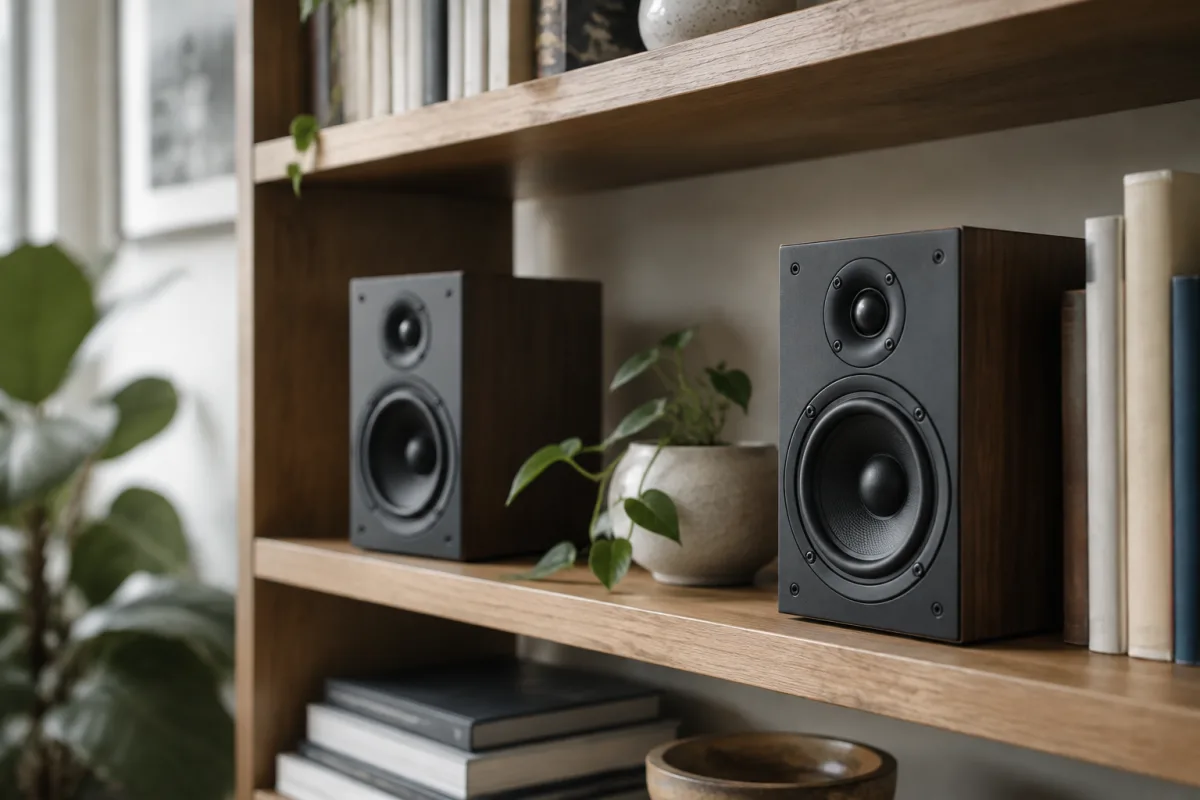
JBL bookshelf speakers suit rooms where full-size floor speakers won't fit, delivering quality sound from a compact footprint. Buying the right JBL bookshelf speakers means understanding what to prioritise at your budget, how room size affects your choice, and whether passive or powered models suit your setup.
JBL's Reputation in Bookshelf Speakers
JBL is an American brand with decades of speaker expertise, trusted in studios, venues and homes. JBL bookshelf speakers are known for clean, balanced sound and solid construction. Buying JBL bookshelf speakers means investing in a name that delivers reliably across price points.
Passive vs Powered JBL Bookshelf Speakers
JBL makes both types, and the choice matters:
- Passive JBL bookshelf speakers: No amplifier built-in. You connect them to a separate amplifier, giving you more flexibility to upgrade or customize. Better for hi-fi enthusiasts. Most require dedicated amplification, so factor in amp cost.
- Powered (active) JBL bookshelf speakers: Amplification built-in. Connect them straight to your audio source or mixer. Simpler setup, ideal for small rooms, apartments and studios. No separate amp needed.
For most homes and studios, powered JBL bookshelf speakers are simpler. For serious hi-fi listening, passive models with a good amplifier offer more sonic refinement.
Size and Room Fit
JBL bookshelf speakers typically stand 6–12 inches tall, fitting on shelves, desks or small stands. Before you buy, confirm they'll fit your space and that you can position them at ear level (sound quality depends on this).
Smaller rooms (under 20 square metres) suit compact JBL bookshelf speakers (6–8 inches). Medium rooms (20–40 square metres) need larger models (10–12 inches). Oversizing is fine; undersizing leaves you wanting more volume.
Key Specs to Check Before Buying
When evaluating JBL bookshelf speakers, focus on these:
- Power handling (watts): 50–100W is typical for powered JBL bookshelf speakers. Higher watts mean potential for louder volume and cleaner sound at high levels.
- Sensitivity (dB SPL): Higher sensitivity (85dB+) means louder sound from the same power. A sensitive JBL bookshelf speaker feels more vivid.
- Frequency response: Aim for 50Hz–20kHz. Lower (50Hz) means deeper bass; higher (20kHz) means extended treble. Most JBL bookshelf speakers hit this range.
- Driver size: Tweeter (treble) typically 1 inch; woofer (bass) 4–6 inches. Larger woofers deliver deeper bass.
JBL Bookshelf Speaker Models for Different Budgets
JBL offers entry to premium options:
- Budget (£100–250): Entry-level powered models good for desks, small rooms and starter hi-fi. Build quality is honest but basic.
- Mid-range (£250–600): Better drivers, more refined sound, nicer finish. JBL bookshelf speakers here suit serious listening and smaller studios.
- Premium (£600+): Audiophile-grade JBL bookshelf speakers with premium drivers, high-quality amplification (if powered) and meticulously engineered. Costly but genuinely excellent.
For most homes, mid-range JBL bookshelf speakers offer the best value. Premium models suit professionals and dedicated audiophiles.
Room Treatment Matters
JBL bookshelf speakers in an untreated room sound worse than they should. Hard walls, windows and bare floors create reflections that muddy bass and colour midrange. Before buying the most expensive JBL bookshelf speakers, budget for a few absorbent panels or bass traps. Treatment transforms the sound more than expensive speakers alone can.
Common Buying Mistakes
Avoid these when shopping for JBL bookshelf speakers:
- Oversizing for the space: Huge JBL bookshelf speakers in a tiny room overwhelm the listener. Match size to room size.
- Prioritising power over sensitivity: A sensitive JBL bookshelf speaker (85dB+) sounds louder and cleaner than a less sensitive model with higher wattage. Check both.
- Placing them incorrectly: JBL bookshelf speakers at ear level and equidistant from your listening position sound best. Mounting too high, low or asymmetrically ruins the image.
- Ignoring passive vs powered decision: Passive JBL bookshelf speakers need a quality amplifier. If you buy without a good amp, you're not hearing their potential.
- Assuming expensive = better: A £400 mid-range JBL bookshelf speaker often sounds better in practice than a £800 model in an untreated room. Room and placement matter as much as the speaker.
Placement for Best Sound
Position JBL bookshelf speakers 6–12 feet apart and at ear level when you're sitting. Angling them slightly toward your listening position improves imaging. Keep them 1–2 feet from walls to avoid bass buildup (placing them right against walls boosts bass but muddies it).
Experiment with placement before settling on a permanent location. Move the JBL bookshelf speakers around and listen to the same music from different positions. Small changes make surprisingly big sonic differences.
Your JBL Bookshelf Speaker Choice
Start by deciding passive or powered. If simplicity matters, choose powered JBL bookshelf speakers in the mid-range (£300–500). For serious listening, invest in passive models paired with a quality amplifier. Position them at ear level, treat the room and let them breathe. JBL bookshelf speakers perform best with attention to basics, not exotic tweaks. For deeper context on speaker design and hi-fi systems, explore our complete guide to JBL bookshelf speakers.



Comments