
Guitar Amplifier Head article
The Complete Guide to Guitar Amplifier Head
A guitar amplifier head is the beating heart of your tone, combining preamp, power amp and tone-shaping circuitry in a portable, flexible package. Learn what makes it essential.
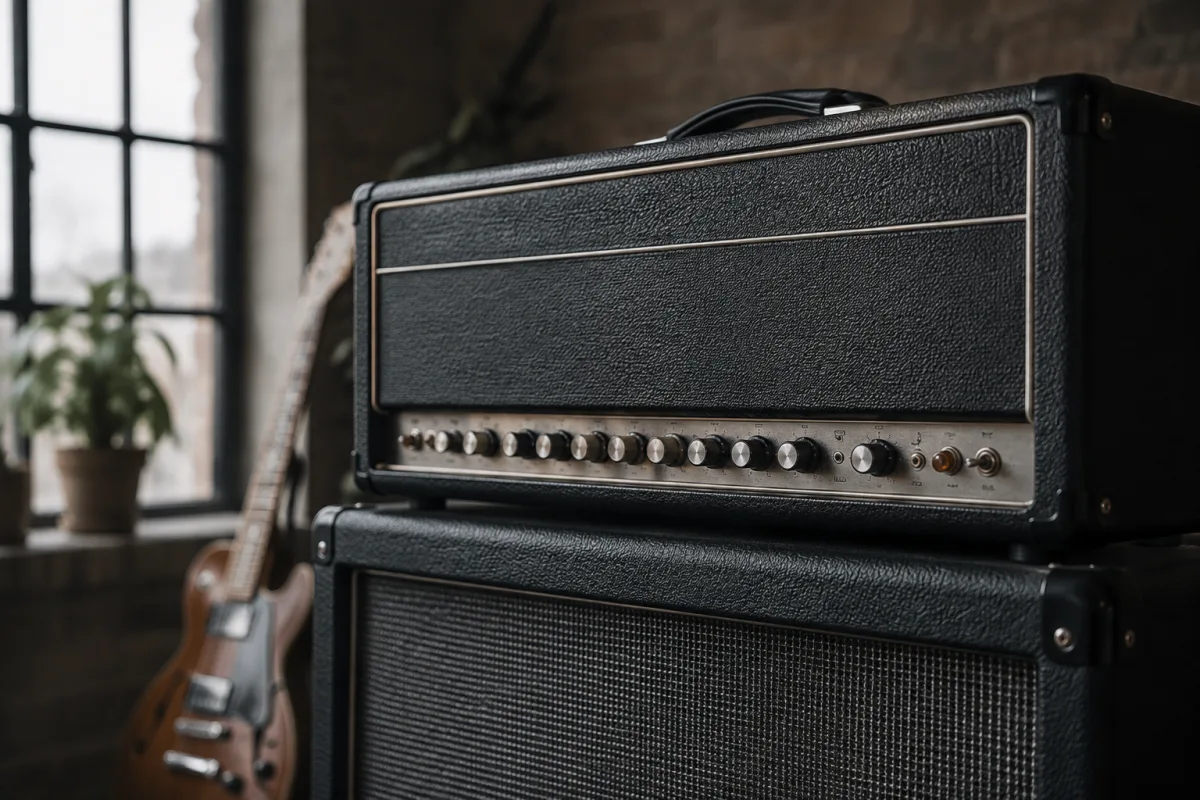
A guitar amplifier head is the core of any professional guitar rig, delivering your tone, power and responsiveness in a compact, transportable unit. Whether you're a touring musician, studio player or serious home enthusiast, understanding what an amplifier head offers—and how to choose the right one—is essential to building a rig that serves you for years.
What Is a Guitar Amplifier Head?
A guitar amplifier head is the amplification and control centre of your guitar setup, containing the preamp, power amp and tone-shaping circuitry in a single chassis. Unlike combo amps (where the amp head and speaker are combined into one unit), a guitar amplifier head is a separate device that connects to external speaker cabinets, giving you flexibility in your tone-shaping options and performance setup.
The amplifier head sits on top of your speaker cabinet (hence the name), and its lightweight, road-ready design makes it ideal for gigging musicians. A typical guitar amplifier head might weigh 20–50 pounds, depending on wattage and whether it uses tubes or solid-state circuitry. That makes it far more portable than a full combo amp, especially when you're loading out of a van night after night.
The Key Sections of a Guitar Amplifier Head
Every guitar amplifier head contains several essential stages. The input stage accepts the signal from your guitar, usually offering a trim knob to set the gain level. From there, the preamp colours and shapes your tone—this is where distortion, drive and dynamics live. Most heads include EQ controls (bass, mid, treble) to sculpt your sound further.
The power amp section is the muscle behind the tone. It takes the weak signal from the preamp and amplifies it to line-level power, typically measured in watts (15W, 30W, 50W, 100W, 200W or beyond). Finally, an output transformer couples the power amp to your speaker cabinet. Some amplifier heads include a built-in impedance selector or load switch so you can safely match your cabinet's impedance.
Tube vs Solid-State Amplifier Heads
Tube amplifier heads use vacuum tubes in both the preamp and power amp stages. They're revered for their natural compression, harmonic richness and responsive feel. Turn them up, and they produce organic power-tube saturation. They also run warm—literally—and require occasional maintenance (tube replacement, biasing). That said, many players consider the tone-per-pound of a good tube amp impossible to replicate.
Solid-state amplifier heads use transistors and integrated circuits instead of tubes. They're lighter, more reliable, produce less heat, and require virtually no maintenance. Modern solid-state designs sound excellent and are especially favoured in aggressive genres where clarity and power are priorities. The trade-off: some players feel they lack the natural compression and bloom of tubed amplifiers, though this is increasingly subjective as solid-state technology improves.
Power Rating and What It Means
An amplifier head's wattage determines its headroom and volume potential, but it doesn't tell the whole story. A 50-watt tube head often sounds louder than a 100-watt solid-state amp because tube watts and solid-state watts don't translate directly. Additionally, perceived volume depends heavily on speaker efficiency: a sensitive speaker (high dB output per watt) will sound louder than an insensitive one, all else equal.
For home use and rehearsals, 15–30 watts is plenty. For small venues and recording, 30–50 watts is standard. Large clubs and outdoor gigs may demand 75–100+ watts. Beyond wattage, consider whether an amplifier head has a built-in power attenuator or switchable wattage settings; many modern heads let you drop from, say, 100 watts to 50 or even 15 watts at the flick of a switch, giving you flexibility without buying multiple amps.
Key Features to Look for in a Guitar Amplifier Head
- Preamp and power amp tubes (if tube): Look for quality tube selection and easy access for replacement. Ask the manufacturer about tube lifespan and cost.
- Effect loop: A send/return loop lets you place effects pedals after the preamp but before the power amp, preserving your gain structure and tone.
- Built-in reverb or delay: Spring, digital or tape reverb adds space and character. Not essential but highly valued in many genres.
- Footswitching: Some heads offer optional foot controllers to switch between channels, enable reverb, or control gain in real-time during a performance.
- Impedance selector: Choose 4, 8 or 16 ohms to match your cabinet safely and optimally.
- Direct output (XLR): Lets you send your amp's tone to a mixing desk or recording interface without a microphone.
- Power switching: Selectable wattage (e.g. 100W / 50W / 25W) lets you find the sweet spot for your venue without buying a new head.
Choosing the Right Amplifier Head for Your Needs
| Use Case | Recommended Wattage | Tube or Solid-State? | Key Consideration |
|---|---|---|---|
| Home Practice | 15–30W | Either (tube preferred for tone) | Power attenuator or low-wattage setting essential |
| Studio Recording | 15–50W | Tube preferred | Effect loop and XLR output useful; mic'd tone is paramount |
| Small Venues | 30–50W | Either | Reliability and gig-readiness; footswitching helpful |
| Large Clubs | 50–100W | Either | Headroom and tone projection under stage volume; ventilation critical |
| Festival/Outdoor | 100W+ | Solid-state often preferred | Raw power and portability; less heat dissipation |
Amplifier Head Maintenance and Care
Tube amplifier heads need occasional tube replacement—preamp tubes every few years, power tubes every 2–5 years depending on use. They also benefit from regular biasing (a technician adjusts the power amp's idle current) to keep the power tubes happy and safe. Solid-state heads are largely maintenance-free; just keep them cool and dry.
All amplifier heads should be properly ventilated. Never cover the cooling vents or place the amp in an enclosed space during use. Check your cable connections—loose speaker cables can cause crackling or signal loss. And always match your amp's impedance to your speaker cabinet to avoid damage.
Summing Up
A guitar amplifier head is a long-term investment that shapes your tone, powers your rig and becomes part of your musical identity. Whether you opt for a tube amplifier head or a solid-state design, wattage and features should match your actual needs—home player versus touring pro, small venues versus festival stages. Invest time in listening to candidates, understanding their controls, and imagining them in your rig. The right amplifier head is the foundation of everything else you plug in.


Comments