
Fender Bass Amplifier article
The Complete Guide to Fender Bass Amplifier
Fender bass amplifiers blend reliability with professional tone at accessible prices. Learn about the Rumble, Bassman, and Champion series, understand power ratings, and discover which Fender amplifier suits your playing style and venues.
Why Choose a Fender Bass Amplifier
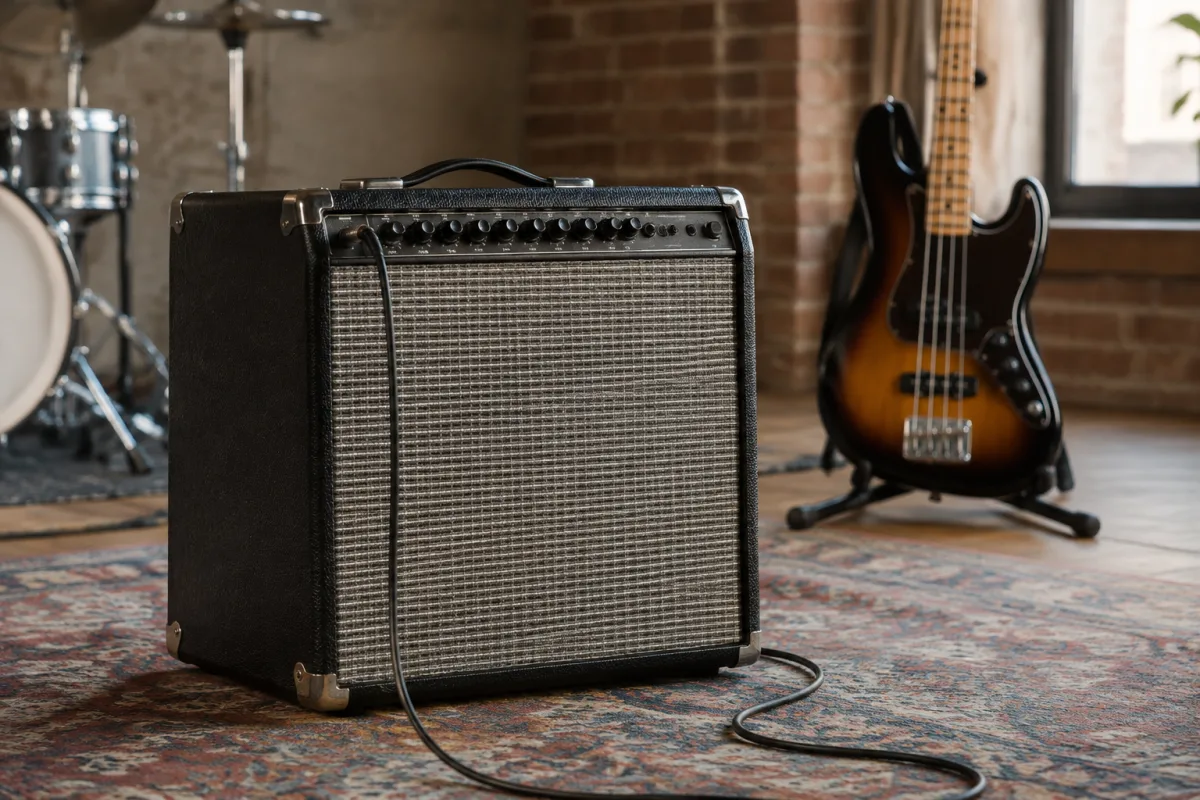
Fender has built bass amplifiers for decades, earning a reputation for reliability and tone. A Fender bass amplifier sits at the intersection of affordability and professional quality—serious enough for gigging musicians yet accessible to players starting out. Whether you're playing small clubs, rehearsal spaces, or recording at home, Fender offers models matching various needs and budgets.
The Fender range covers everything from compact practice amps to powerful rigs capable of filling large venues. Each model reflects Fender's philosophy: straightforward features, solid construction, and tone that translates your playing style faithfully through a sound system. If you've played Fender instruments, you'll find a similar reliability in their amplifiers.
Understanding Wattage and Power
Fender bass amplifiers range from 25 watts for practice and recording to 500 watts or more for touring rigs. Understanding wattage helps you choose appropriate power. A 25-watt Fender bass amplifier suits bedroom practice and quiet recording. A 100-watt model handles most rehearsals and local gigging. Above 200 watts, you're entering touring territory where you're likely running through larger sound systems anyway.
Wattage isn't the only loudness factor. Amplifier efficiency, cabinet design, and speaker size all influence perceived volume. A 100-watt Fender amplifier with efficient speakers sounds considerably louder than 100 watts of poorly designed equipment. Fender's engineering means their wattage ratings translate reliably into practical on-stage volume.
Don't confuse wattage with quality. A well-designed 50-watt amplifier outperforms a poorly engineered 150-watt competitor. Fender's consistency means you're getting honest specifications and proportional performance across their range.
Fender Bass Amplifier Models
The Rumble series is Fender's flagship line, specifically engineered for bass tone. The Rumble 25 (practice), Rumble 100 (rehearsal), and Rumble 500 (gigging/touring) represent the core options. Each delivers the warm, articulate bass tone Fender is known for. The Rumble amplifiers use Class-D power amplification, which runs cool and efficiently—important for solid reliability during hours-long rehearsals and gigs.
The Bassman series carries Fender's historic name, connecting to Leo Fender's original bass amplifier designs. Bassman amplifiers often feature tube circuitry, delivering warmer tone than solid-state designs at the cost of heavier weight and more maintenance. Professional session musicians and recording artists favour the Bassman for its distinctive character.
The Champion series offers budget-friendly options without significant tone compromise. A Champion bass amplifier gives you Fender reliability at entry-level pricing—perfect for learning and bedroom practice without major financial commitment.
Cabinet Choices and Flexibility
Some Fender bass amplifiers come as complete combo units—amplifier head and speaker cabinet integrated into one box. Combos are convenient for practice, rehearsal, and small gigs. Others sell the amplifier head separately, letting you choose your own cabinet for maximum flexibility and customisation.
Fender manufactures matched cabinets designed to complement their amplifier heads. A Fender amplifier paired with a Fender cabinet ensures sonic compatibility and optimised performance. Mixing brands works fine, but Fender combinations represent the designers' intent.
Cabinet size matters. A single 15-inch speaker suits rehearsals and small clubs. Dual 10-inch speakers offer faster transient response ideal for picking-heavy styles. Multiple cabinets provide power and flexibility for larger venues. Consider your likely venues when choosing cabinet size.
Key Features in Fender Bass Amplifiers
Most Fender bass amplifiers include straightforward tone controls—bass, middle, and treble—letting you shape your sound quickly without obscure settings. Some models add parametric EQ for surgical tone crafting. The controls are intuitive; you can achieve usable tone immediately without deep technical knowledge.
Built-in effects are increasingly common. Compressor, overdrive, and reverb integrated into modern Fender bass amplifiers reduce the need for separate pedals. These effects are professional-quality and controllable via onboard knobs or footswitch.
Auxiliary input ports let you plug in a phone or MP3 player for jamming along with backing tracks. USB connectivity in newer models enables direct computer recording, bypassing the need for additional audio interfaces. These practical features reflect modern playing realities.
Tone Characteristics of Fender Bass Amplifiers
Fender tone tends toward warmth and clarity—your low notes stay focused rather than muddy, whilst high-end remains articulate. This tonal balance suits almost every bass playing style. Whether you play fingerstyle, pick, or slap, a Fender bass amplifier faithfully reproduces your technique without colouration.
Breakup characteristics—how the amplifier responds when pushed—vary by model. Class-D models stay clean until driven hard. Tube models break up gradually and musically, adding harmonic complexity many players prefer. Knowing your intended use guides this choice.
Headroom—the amplifier's ability to handle dynamic peaks without distortion—is generous in Fender designs. You can play dynamically, letting your technique shine, without surprise clipping and distortion.
Gigging with a Fender Bass Amplifier
Live venues present challenges: stage noise, inconsistent monitors, and audience feedback. Fender bass amplifiers are engineered for real-world gigging. The direct output lets you send your signal to a larger sound system whilst monitoring yourself through your amp. This flexibility means your tone reaches the audience clearly whether gigging small clubs or larger halls.
Reliability is paramount on stage. Nothing ruins a gig worse than amplifier failure mid-set. Fender's warranty and service network provide confidence that if something fails, repair options exist. Their reputation means most venues have someone familiar with Fender amplifiers.
Portability varies. A Rumble 100 combo is manageable for most players. Larger setups require multiple trips to load vehicles. Plan your rig accordingly, balancing power needs with practical transport limitations.
Recording with Fender Bass Amplifiers
Recording engineers appreciate Fender bass amplifiers because they translate well. A Fender amplifier's tone through a quality microphone sounds clean and present in the mix. The warmth translates without needing excessive EQ correction. This makes engineering sessions faster and produces better final results.
Direct output to recording interfaces provides an alternative to miking the amplifier. Some engineers blend amplifier microphone signal with direct output for hybrid tone combining amplifier character with direct clarity. Fender amplifiers accommodate both approaches.
At home, a modest Fender bass amplifier works fine for demo recording. The Rumble 25 combo serves many home recordists perfectly, providing usable tone without dominating a modest room or disturbing neighbours.
Maintenance and Reliability
Class-D Fender bass amplifiers require minimal maintenance. Keep ventilation clear so they don't overheat during extended use. Tube models need occasional tube replacement as they wear out—a manageable expense. Check connections annually for corrosion, especially if gigging regularly or storing in damp environments.
Fender's warranty covers manufacturing defects, and their extensive service network means repairs are available worldwide. This support network is valuable—if something breaks, solutions exist readily. Fender amplifiers hold value secondhand because reputation creates sustained demand.
Proper cable care extends amplifier life. Use quality cables to avoid intermittent connections causing noise. Keep input jacks clean. Treat your Fender bass amplifier respectfully and it will serve you reliably for years.
Price and Value Proposition
Fender bass amplifiers range from approximately £200 for compact practice models to £1,000+ for professional touring rigs. This pricing reflects build quality and feature sets. Compared to boutique amplifier makers, Fender offers exceptional value. Compared to cheap no-name brands, you're paying for reliability worth the investment.
Consider total cost of ownership. A Fender amplifier holds value, making resale realistic if your needs change. Cheap amplifiers rarely resell; you're essentially buying disposable equipment. Fender represents smarter economics long-term.
Conclusion
Fender bass amplifiers represent straightforward quality built on decades of experience. Choose your power level based on your actual playing venues, whether you prefer combo convenience or head-and-cabinet flexibility, and decide which colour and finish appeals to you. A Fender amplifier focuses on doing one job well—delivering your bass tone clearly and reliably. That simplicity and consistency make Fender worth seriously considering for your next amplifier purchase.


Comments