
Bass Speaker Amplifier article
The Complete Guide to Bass Speaker Amplifier
Bass speaker amplifiers deliver powerful, controlled low-frequency reproduction that partnerships with subwoofers to create authoritative bass across audio systems, from home theatre through professional touring rigs.
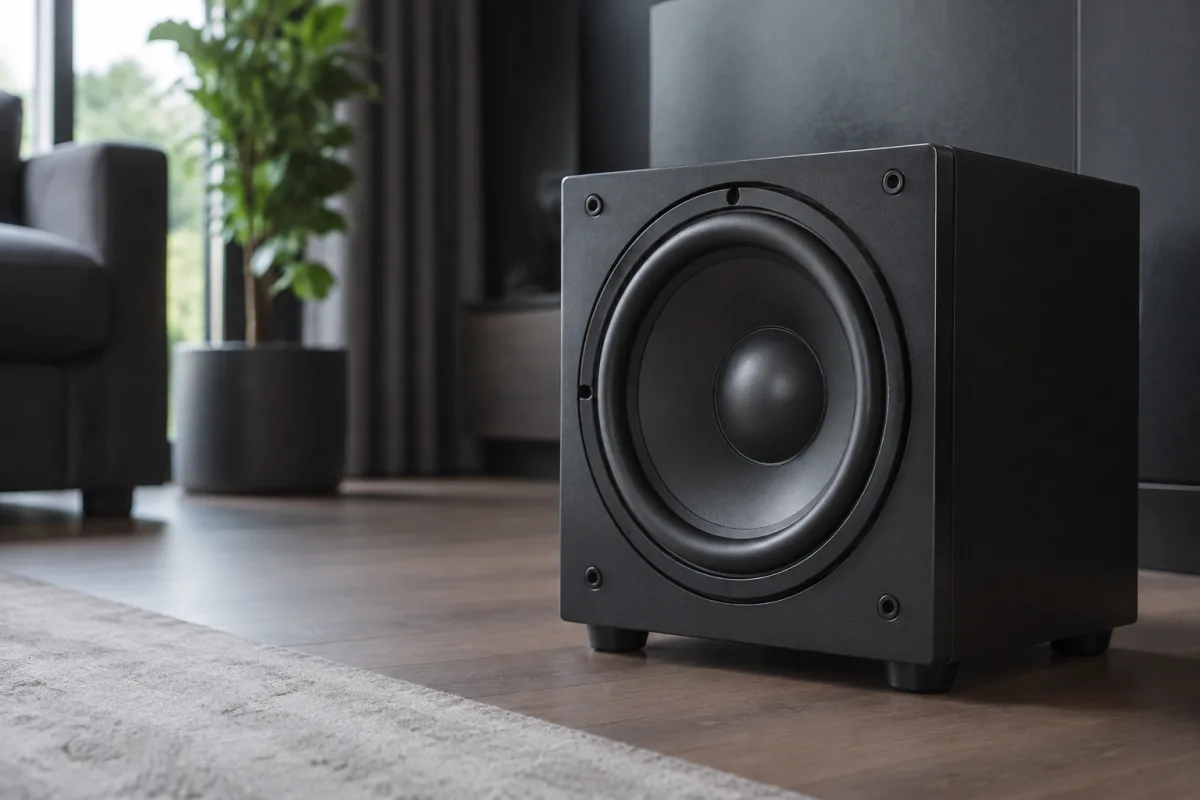
Bass speaker amplifiers represent a crucial component in any serious audio system, whether amplifying live bass guitar, reinforcing low-end frequencies in DJ setups, or delivering room-filling low-frequency response in home theatre installations. A bass speaker amplifier works in partnership with subwoofers to produce the deep, controlled low-end frequencies that smaller speakers cannot effectively reproduce. Understanding the technical specifications and practical considerations surrounding bass speaker amplifiers helps you select an amplifier that genuinely complements your audio system and performance requirements.
Understanding Bass Amplification Needs
A bass speaker amplifier differs from general-purpose audio amplifiers through specialised frequency response optimisation, typically emphasising the 20 Hz to 200 Hz range where low-frequency percussion, bass guitar, and subwoofer output concentrate. Standard audio amplifiers often exhibit flat response across audible frequencies but inadequate power reserves at critical low frequencies where acoustic demands escalate dramatically.
The inefficiency of low-frequency reproduction creates substantial amplifier demands. Producing 100 dB of bass response requires significantly more electrical power than achieving equivalent volume at midrange frequencies. A bass speaker amplifier must deliver exceptional power reserves whilst maintaining clean, undistorted signal reproduction even when driven hard across extended frequency ranges. This specialised capability justifies the cost premium associated with quality dedicated bass amplifiers over general-purpose audio electronics.
Power Output Specifications
Power output represents one of the most misunderstood bass speaker amplifier specifications. Manufacturers sometimes quote peak power—brief maximum output spikes—rather than continuous power that the amplifier sustainably delivers. A bass speaker amplifier rated at 200 watts RMS (continuous) genuinely delivers more usable power than one claiming 500 watts peak output.
Real-world power requirements depend on your system's acoustic demands, speaker efficiency, and listening distance. Small home theatre setups with efficient subwoofers typically require 50–100 watts of bass speaker amplifier power. Larger installations, live performance applications, or inefficient speaker designs may demand 200–500 watts or more. Professional touring systems sometimes incorporate bass speaker amplifiers exceeding 1000 watts, providing the power reserves essential for cutting through atmospheric noise in outdoor festival environments.
Frequency Response Characteristics
A quality bass speaker amplifier provides extended low-frequency response down to 20 Hz, matching the lower boundary of human hearing. Some bass speaker amplifier designs intentionally limit response below 40 Hz, prioritising midrange clarity over extreme low-end extension. This approach suits certain applications—small room installations where deep bass becomes problematic, or budget-conscious buyers seeking adequate performance without full spectral extension.
The amplifier's frequency response characteristic influences how low-frequency content sounds. Linear response—equal amplification across all frequencies—reproduces bass content precisely as recorded. Some bass speaker amplifier designs incorporate presence peaks or gentle boost regions that emphasise certain low-frequency ranges, adding perceived warmth or impact to the output. Understanding your personal preference between precise linear response and coloured amplification helps identify the bass speaker amplifier style matching your aesthetic expectations.
Amplifier Topology Considerations
Bass speaker amplifiers employ various amplification circuits, each offering distinct advantages. Class D amplifiers—based on switching technology that converts audio into high-frequency pulse patterns—have become increasingly popular, delivering exceptional efficiency and compact designs. A Class D bass speaker amplifier generates minimal heat, enabling smaller chassis and lower electrical consumption compared to traditional designs.
Class AB topology—the traditional approach blending Class A and Class B amplification—offers reputation for warm, musical sound characteristics and effortless power delivery. Class AB bass speaker amplifiers typically cost more and generate more heat than equivalent Class D designs, yet many experienced listeners prefer their subjective sonic character, particularly for music reproduction applications.
Integrated switching power supplies within modern bass speaker amplifiers replace older transformer-based designs, dramatically reducing size and weight. This advancement proves particularly valuable for portable bass speaker amplifiers used in live performance or DJ contexts where transport logistics constrain equipment specifications.
Input Connectivity and Signal Management
Professional bass speaker amplifiers incorporate multiple input options accommodating diverse signal sources. XLR balanced inputs—the industry standard for professional audio—offer noise rejection superior to unbalanced alternatives, critical when running signal cables across lengthy distances in large venues or complex installations. RCA unbalanced inputs suit consumer applications and shorter cable runs where noise isn't a primary concern.
Many bass speaker amplifiers incorporate variable input sensitivity controls, enabling proper gain staging when connecting sources with vastly different output levels. A bass speaker amplifier accepting line-level signals from mixing consoles, DAWs, or pre-amplifiers requires different sensitivity calibration than one receiving line-level output directly from audio interfaces or phono preamplifiers.
Low-pass filtering—built into quality bass speaker amplifiers—removes high-frequency content above a user-adjustable frequency threshold, typically between 40 Hz and 250 Hz. This filtering enables the bass speaker amplifier and connected subwoofers to reproduce exclusively low-frequency content, preventing muddiness and freeing full-range speakers to focus on midrange and treble reproduction. The flexibility to adjust crossover frequencies proves invaluable when integrating bass speaker amplifiers into varied system configurations.
Thermal Management and Reliability
Extended operation at high power levels generates substantial heat within amplifier electronics. Quality bass speaker amplifiers incorporate robust thermal management—oversized heatsinks, quiet cooling fans, or advanced switching designs minimising dissipation—to maintain stable operation during prolonged use. An undersized heatsink forces amplifiers into thermal shutdown, interrupting performance at critical moments during live events or important listening sessions.
Professional-grade bass speaker amplifiers typically employ redundant protection circuits safeguarding against speaker short circuits, excessive DC offset, or other fault conditions that could damage expensive subwoofers or amplifier electronics. These protective systems automatically disconnect the amplifier output when abnormal conditions arise, preventing cascading damage to interconnected equipment.
Size and Installation Flexibility
A bass speaker amplifier's physical dimensions significantly influence installation options. Compact amplifiers—small enough to fit within subwoofer enclosures—enable integrated subwoofer systems eliminating the need for separate equipment racks or installation complexity. These integrated designs suit home theatre installations, recording studios, or performance venues where aesthetic considerations and minimal visual footprint matter.
Larger rack-mounted bass speaker amplifiers provide superior cooling, greater power reserves, and more comprehensive control interfaces. These systems suit professional installations, touring operations, or situations where centralised equipment racks simplify infrastructure management. The larger format also accommodates dual-channel designs enabling independent control of multiple subwoofers or complex crossover configurations.
Purchasing Considerations
Identifying genuine system requirements prevents costly over-specification. Home theatre applications typically require modest bass speaker amplifier power; rooms naturally limit volume, and efficiency-optimised subwoofers operate effectively with 50–150 watts of amplification. Live performance bass amplification demands depend on venue size, system configuration, and desired output volume; professional touring systems justify significant power investment, whilst casual performers managing smaller venues operate effectively with moderate amplifier power reserves.
Budget allocation should reflect system usage intensity and reliability expectations. Consumer-grade bass speaker amplifiers costing £150–£400 offer adequate performance for casual application environments. Semi-professional equipment at £500–£1500 delivers durability and features suited to serious musicians or demanding installations. Professional touring amplifiers exceeding £2000 incorporate top-tier components, comprehensive warranty support, and reliability expectations necessary for revenue-generating operations.
Ensure your bass speaker amplifier's connectivity matches your intended signal sources and system architecture. Verify input impedance and sensitivity specifications align with your pre-amplifier or mixing console outputs, preventing impedance mismatches or excessive gain-staging requirements.
Conclusion
A bass speaker amplifier represents a critical component in complete audio systems, enabling controlled, accurate reproduction of low-frequency content that smaller speakers cannot effectively deliver. Contemporary bass speaker amplifiers offer exceptional value across diverse price points, from budget-conscious consumer options through to professional touring specifications. Whether you're enhancing home theatre impact, amplifying bass instruments in live performance contexts, or delivering authoritative low-end response in DJ setups, selecting a quality bass speaker amplifier suited to your genuine system requirements ensures satisfying sound reproduction for years of reliable operation across your favoured applications.


Comments