
Bass Amplifier Head article
The Complete Guide to Bass Amplifier Head
A quality bass amplifier head delivers the power and tone definition that modern bass playing demands. Discover tube, hybrid and solid-state options for your needs.
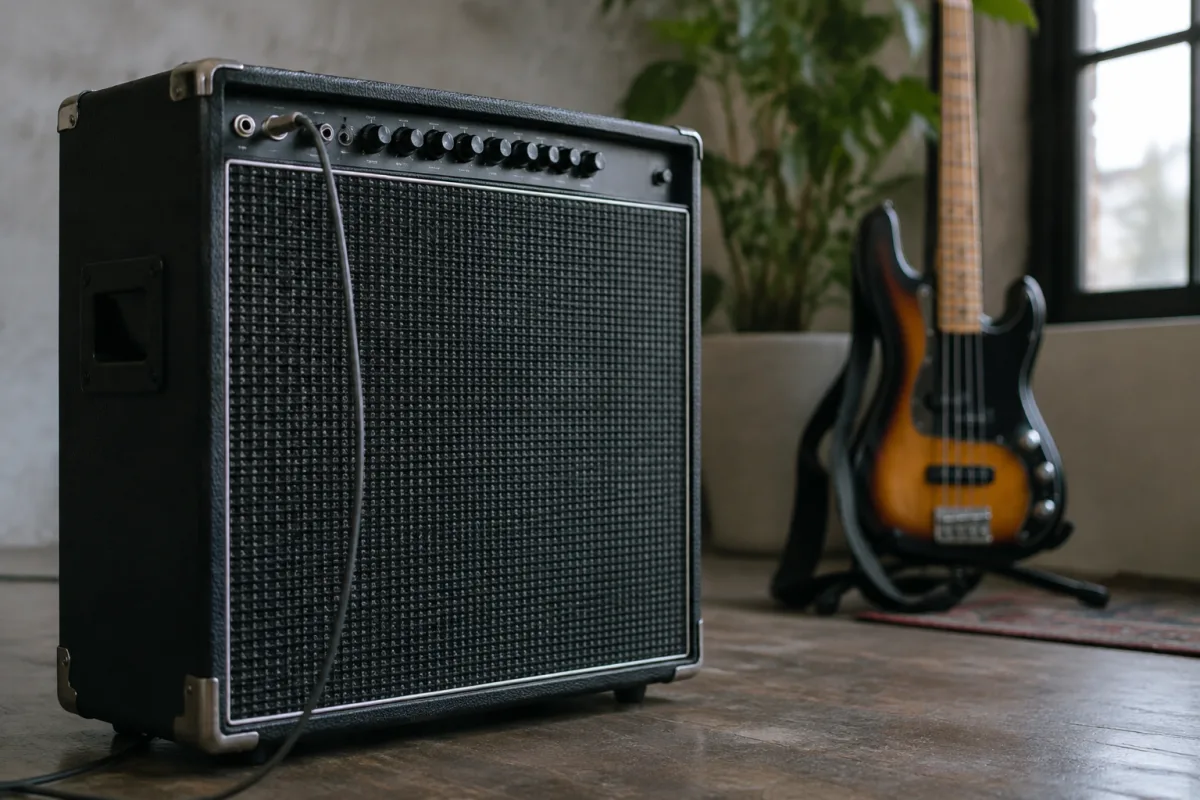
Bass Amplifier Heads: Power and Tone for Bass Players
A dedicated bass amplifier head is the engine of any serious bassist's rig. Unlike guitar amps designed for treble and midrange clarity, these units are engineered to reproduce low frequencies with authority—punch, definition, and the ability to cut through a mix at volume. This guide explores what defines a quality unit, how to choose one for your playing style, and how to get the most from it.
What Is a Bass Amplifier Head?
A bass amplifier head is the power and tone-shaping component of a bass amplification system. It contains the preamp (input stage with EQ and controls), the power amplifier (which drives speakers), and related circuitry. Unlike a combo amplifier (which includes speakers), a head requires external speakers to produce sound.
This modular design offers flexibility. You can pair the head with different speaker cabinets depending on your needs—a 1x15 cab for deep lows, a 2x10 for articulation, or a combination for tonal balance.
Valve vs Solid-State Bass Amp Heads
Valve (tube) units: These use vacuum tubes in the preamp and power stage, producing warm tone and natural compression. Tube designs respond dynamically to pick attack and sustain bloom when driven. They require more maintenance and run hot, but tone is unmatched for serious studio and gigging work.
Solid-state heads: These use transistors in the power section, offering reliability, cooler operation, and affordability. Solid-state designs lack the harmonic saturation of tubes but are practical for touring and high-volume applications.
Hybrid models: These combine a tube preamp with solid-state power. This approach captures some tube character whilst offering solid-state reliability and practicality. Many professional players favour this compromise.
Key Features to Understand
Wattage rating: Bass heads range from 100W (adequate for rehearsal and small venues) to 500W+ (for large stages without microphone reinforcement). Wattage translates to perceived volume differently in bass than guitar because low frequencies require more power.
EQ controls: A quality bass amp includes at least a 3-band EQ (bass, mid, treble). Many add parametric mid controls, allowing you to shape tone in real time. Some include high-pass filters (removing rumble below a certain frequency) and other tone-shaping tools.
Preamp gain: Input sensitivity matters. A good preamp handles both active (hot) and passive (quiet) basses comfortably without requiring excessive gain compensation.
Direct output: A low-impedance XLR or 1/4" direct out lets you send the signal to a mixing console or recording interface independently of the power amp. This is essential for recording and live reinforcement.
Effects loop: A send/return circuit allows patching external effects (compression, reverb, delay) between the preamp and power amp. Useful for serious tone crafting.
Choosing the Right Power Level
100–150W: Adequate for rehearsal, studio recording, and small venues with moderate PA reinforcement. Light and portable.
200–300W: The sweet spot for working bassists. Enough power for medium venues and gigging without excessive weight.
400W+: For large venues, touring, or demanding live situations where the bass amp operates as part of the main sound system. Heavier and more expensive.
More wattage offers headroom, allowing you to maintain clean tone at lower volumes. However, bass players can achieve impressive volume with 200W through efficient speakers, so extreme wattage is not always necessary.
Speaker Cabinet Matching
A bass amplifier head must be paired with suitable speaker cabinets. Impedance matching is critical: the total cabinet impedance (often 4, 8, or 16 ohms) must fall within the head's operating range (typically 2, 4, or 8 ohms).
Speaker configurations vary. A 1x15 cabinet emphasizes deep lows; a 2x10 prioritizes midrange and articulation. A 4x10 offers balanced tone. Combining cabinets (e.g., 1x15 + 2x10) allows blending lows and mids for professional tone.
Efficiency (measured in dB/watt) also matters. A more efficient cabinet plays louder from the same wattage, offering practical advantages in venues where volume matters.
Tone Shaping Techniques
EQ controls shape tone fundamentally. Boosting bass adds warmth and weight; cutting it tightens definition. Mids are critical for cutting through a mix and defining the bass character. Treble adds articulation and string attack.
Many bassists employ a subtle approach: mild bass boost (3–5dB), midrange scooped or peaked depending on the desired tone, and treble added for finger noise and clarity. Experimentation is key—different basses, styles, and venues demand different EQ curves.
Compression (via an external pedal or built-in circuit if present) evens out dynamic inconsistencies, tightening the tone and reducing perceived volume swings between quiet and loud passages.
Practical Setup and Performance
Gain staging is crucial. Set the input gain so the loudest note peaks just below clipping. Use the master volume to control overall output. This approach ensures dynamic range and prevents distortion.
Positioning matters. Place the speaker cabinet on the stage facing the bassist so you can hear yourself accurately. In larger venues, ask the sound engineer to send a monitor mix so you hear the full band.
If using a direct out for the PA, communicate with the engineer about your tone. They may wish to compress or EQ your signal further, and understanding their workflow ensures cohesion.
Maintenance and Care
Tube heads require periodic maintenance. Have a professional technician check bias and replace power tubes every 2–5 years depending on use. Preamp tubes last longer (5–10 years).
Solid-state and hybrid heads are lower-maintenance but still benefit from occasional inspection. Keep ventilation clear to prevent overheating, especially during long gigging nights.
Check speaker cables and connectors regularly for corrosion or loose connections that could cause crackling or hum.
Budget and Value
Entry-level solid-state bass amp heads start around £300–£600. Hybrid and quality solid-state models range £600–£1200. Professional tube units cost £1200–£2500+.
A reasonable investment for serious playing is £800–£1200: enough to get quality tone and reliability without excessive cost. Boutique and vintage models command premiums.
FAQs on Bass Amplifier Heads
- Q: Do I need a tube bass amplifier head or is solid-state OK?
A: Solid-state heads are practical and reliable. Tube designs offer superior tone but require maintenance. Hybrid models compromise well between both. - Q: What wattage bass amp head do I need for gigging?
A: 200W is a solid baseline for small-to-medium venues. 300W+ offers headroom for larger rooms. With efficient cabinets, 200W can be surprisingly loud. - Q: Can I use a guitar amplifier for bass?
A: Not recommended. Guitar amps are designed for treble emphasis and lack the low-frequency handling of bass-specific designs. Bass through a guitar amp sounds thin and can damage the amp. - Q: What's the difference between a head and a combo amplifier?
A: A head is separate from speakers; a combo includes integrated speakers. Heads offer flexibility in cabinet choice; combos are more portable. - Q: How do I know if my cabinet impedance matches my head?
A: Check the cabinet's impedance (usually printed on the back) and ensure it falls within the head's range (often 2–8 ohms). Mismatches can damage the amplifier. - Q: Do I need a direct output for recording?
A: It's very useful. A direct out lets you send tone to a mixer or audio interface independently, capturing professional-quality signal without microphone positioning issues.


Comments