
Telecaster Custom article
The Complete Guide to Telecaster Custom
Discover the Fender Telecaster Custom: the sophisticated evolution of the classic Telecaster with dual-pickup versatility. Learn about its tone, features and how it compares to other Fender models.
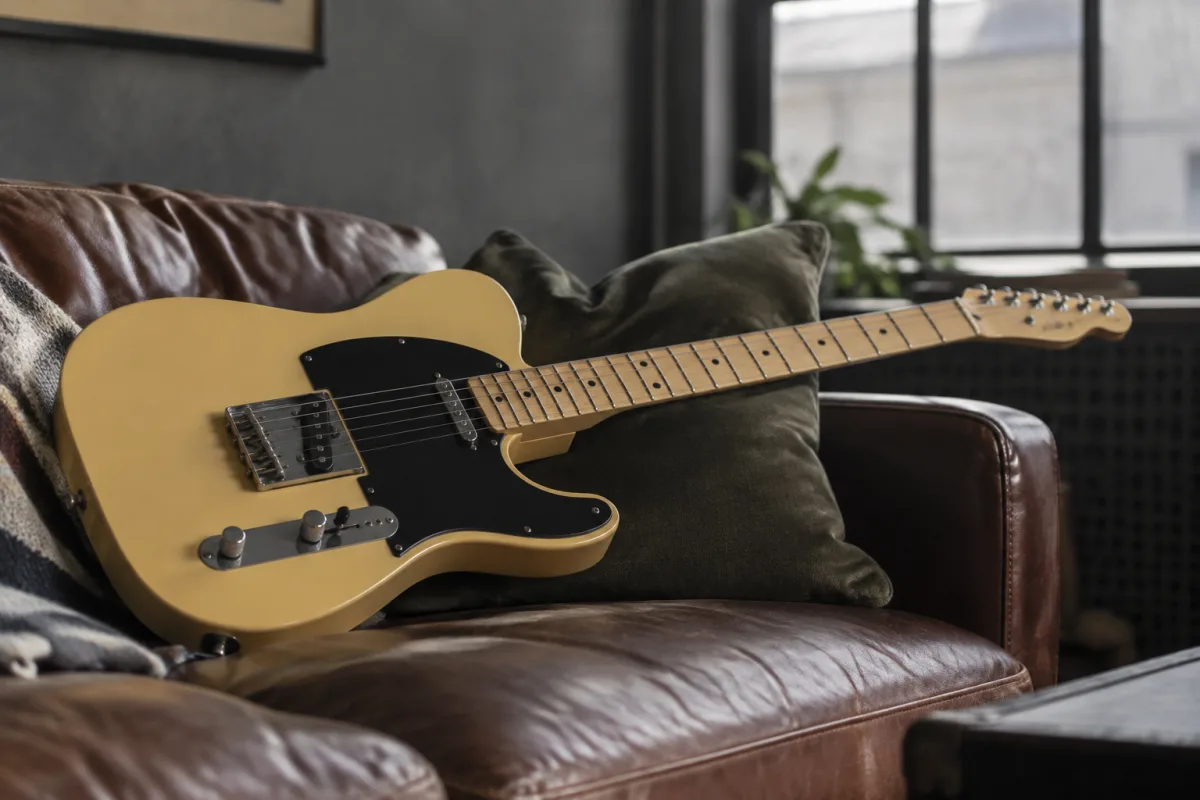
The Fender Telecaster Custom has occupied a unique position in the electric guitar market since its introduction in 1959—a sophisticated evolution of the classic Telecaster that adds versatility without sacrificing the model's fundamental character. Whether you're a session musician, gigging performer or collector of vintage Fenders, understanding what distinguishes this particular version can help you decide whether it fits your playing style and musical needs.
Understanding the Telecaster Custom
A Telecaster Custom is fundamentally a Telecaster with enhanced tonal range through the addition of a second pickup and selector switch, allowing players to engage a neck pickup alongside or instead of the characteristic bridge pickup. The original Telecaster was a single-pickup design—its simplicity and raw tone were its strengths. The Custom adds flexibility whilst retaining the instrument's essential sonic character.
Early models, introduced in 1959, featured a Fender Jazzmaster-style offset body shape. Later versions reverted to the standard slab body, adding the second pickup and switching system instead. Modern iterations reflect Fender's current interpretation of this design philosophy.
Key Specifications and Features
The typical model shares most specs with a standard Telecaster, but with notable additions:
- Dual pickups — A neck humbucker or single-coil pickup combined with the signature Telecaster bridge pickup, giving access to three distinct tonal palettes: neck alone, bridge alone, and both together.
- Three-way selector switch — Most versions use a standard three-way toggle or a master volume with kill-switch arrangement to select pickup combinations.
- Slab body — The solid ash or alder body typical of Fenders, finished in classic nitrocellulose or modern polyester depending on production era and price point.
- Maple or rosewood neck — Typically 21 frets on vintage models, 22 on modern iterations. The neck is bolted on, allowing easy replacement or adjustment.
- Hardtail bridge — The classic Fender bridge with individual saddle adjustments for intonation and action.
- Passive electronics — No batteries required; a master volume and tone control (sometimes two) provide simple, reliable operation.
Pickup Arrangements and Tonal Character
The defining characteristic of any Telecaster Custom is its pickup configuration. Fender has offered several arrangements over the decades:
Humbucking neck pickup — The most common modern setup pairs a warm, thick humbucker in the neck position with the punchy bridge single-coil. This combination offers surprising versatility, from fat, articulate lead tones to warm, singing neck-pickup progressions.
Single-coil neck pickup — Some versions use a single-coil neck pickup instead of a humbucker. This configuration preserves more of the original character while still adding neck-position tonal options.
Regardless of pickup type, these instruments maintain the classic Fender bright, cutting edge that defines the model—ideal for country, rock, pop and funk where clarity and presence matter.
Vintage vs. Modern Examples
Vintage Telecaster Custom guitars from the 1950s and 1960s are highly collectable and expensive. These early instruments are prized for their lightweight ash bodies, period-correct hardware and the particular character of vintage Fender pickups and electronics. A genuinely original 1959-1960s model in good condition can fetch £4000-8000 or more.
Modern examples, produced by Fender in Mexico or the USA, cost from around £600-2500 depending on series and finish. Squire (Fender's budget brand) offers entry-level models starting under £300. These contemporary instruments offer excellent value—reliable intonation, comfortable playability and authentic character.
Tone, Playability and Use Cases
This design suits session and gigging musicians who value tonal flexibility and reliability. The dual pickups and switching allow smooth transition between bridge-pickup snap and neck-pickup warmth, making the instrument equally at home in a blues context, a pop arrangement or a classic rock band.
Players accustomed to traditional Telecasters may find the added humbucking neck pickup transforms the character somewhat—it's warmer and less raw, which some purists view as compromise rather than enhancement. This is purely a matter of taste; many modern players prefer the added versatility.
Vintage enthusiasts and collectors value these models as intermediate instruments in Fender's evolution—they represent a transitional moment between the spartan original and the feature-laden guitars of today.
Positioning in the Fender Lineup
The Telecaster Custom sits between the bare-bones original (single bridge pickup, minimal controls) and more elaborate models like the Telecaster Deluxe or Telecaster Plus (additional electronics, active circuitry, routed bodies). This version offers a practical middle ground: expanded tonal range without the complexity or expense of more modern alternatives.
Conclusion
The Telecaster Custom remains a respected choice for guitarists seeking a versatile Fender-built instrument that combines Telecaster character with practical dual-pickup flexibility. Whether you're considering a vintage original, a reissue or a contemporary production model, the design rewards close listening and hands-on evaluation. It's an instrument that works well for players who appreciate Fender's design philosophy but desire expanded sonic possibility.


Comments