


Telecaster Bass article
Telecaster Bass for Beginners: A Complete Guide
The Telecaster bass is one of the most forgiving instruments for beginners. This guide walks you through setup, first practice sessions, and how to build real skills from day one.
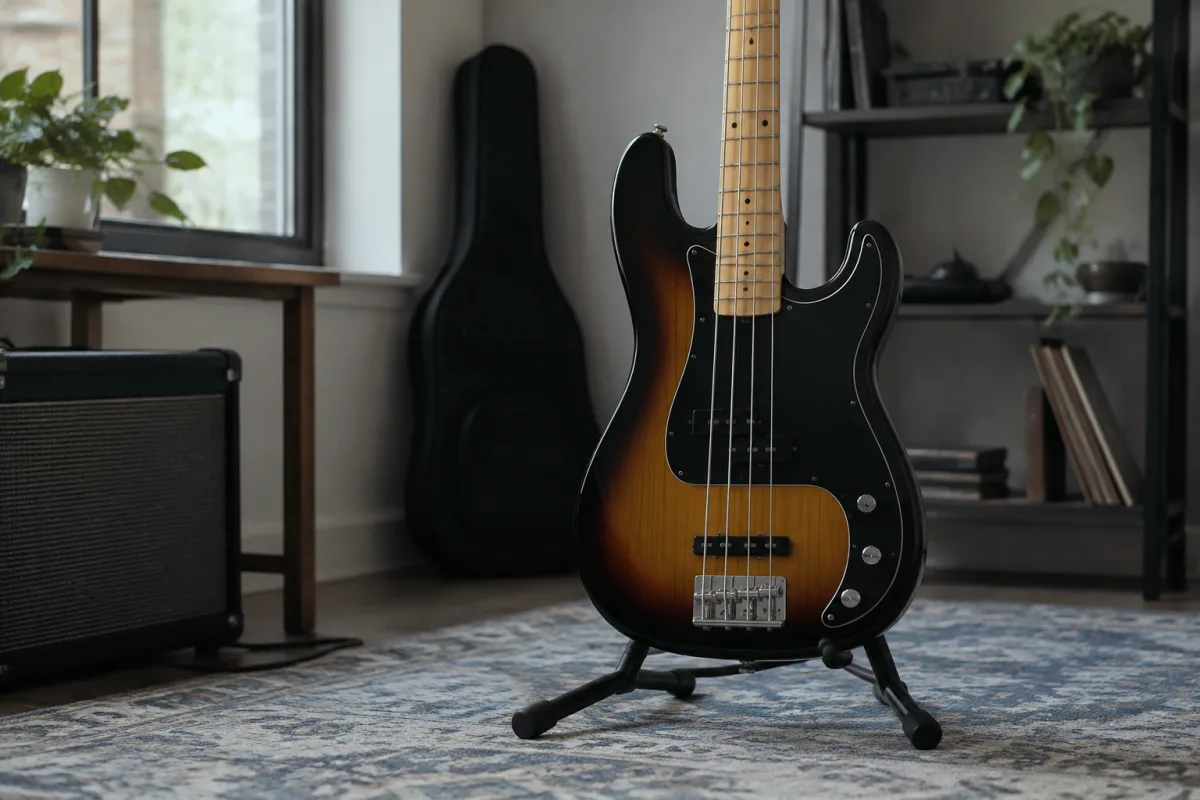
Welcome to the Telecaster Bass
If you're just picking up a bass guitar for the first time, or you've been curious about the Telecaster bass specifically, you've come to exactly the right place. The Telecaster bass might seem like it has a lot of history and mystique around it, but it's genuinely one of the most forgiving and fun instruments a beginner can start with. A Telecaster bass is an excellent choice for learning because of its straightforward design and responsive playability. I'm going to walk you through what makes this particular bass special, why so many people love it, and how to get the most out of yours if you've just bought one.
What Makes It Different?
The Telecaster bass is the bass version of the Fender Telecaster electric guitar—a design that dates back to the 1950s and has barely changed since. Unlike some designs that look intimidating or feel uncomfortable, this instrument has a sleek, no-nonsense look and a body shape that feels genuinely nice in your hands.
The most important thing to know is that this bass sounds bright and direct. It's got a single-coil pickup configuration, which means it produces a punchy, cutting tone that sits well in a mix without needing to fiddle endlessly with amplifier settings. This is fantastic for beginners because what you hear is what you get—no complicated electronics to wrestle with while you're learning.
Your First Day: Setup and Getting Comfortable
When you first hold this bass, it should feel balanced and not too heavy. The neck is relatively thin, which is one reason beginners often gravitate toward it. Your fingers shouldn't feel like they're stretching too far. If the action—the height of the strings above the fretboard—feels too high when you first play it, that's fine. A small adjustment from a repair person or experienced musician makes it dramatically easier to play.
Spend your first few hours just getting familiar with the weight and feel. Sit down with it, stand up with it, and find a comfortable strap height. There's no rush to sound good right away. Many beginner players make the mistake of diving into complex songs before they've simply learned to be comfortable holding the instrument.
Make sure your amplifier is turned down to a sensible volume before you plug in. This instrument can surprise you with how loud it is, and you don't want to startle yourself or anyone nearby. A small practice amplifier—anything between 20 and 50 watts—is more than enough for bedroom practice.
Learning the Basics Without Frustration
A Telecaster bass is incredibly encouraging for learning fundamentals because it responds immediately to what you do. Press a note, and it sounds. This directness means you'll quickly notice if your finger placement is right or slightly off, which teaches you good technique without the instrument fighting back.
Start by learning to play in one position—the first position on the lower frets—and get genuinely comfortable there before you move around the neck. Its thin neck actually makes this easier than on some other basses. Your hand position matters more than speed at this stage. Good hand position now prevents bad habits later.
If you're learning from videos or books, focus on songs with simple, repetitive bass lines. Many classic soul and funk songs—the foundations of bass playing—use the exact kind of direct, punchy tone this instrument was built to deliver. This is not a coincidence. The design was created to sit in the pocket exactly this way.
Common Beginner Mistakes and How to Avoid Them
The biggest mistake beginners make is fretting too hard. You don't need to squeeze the neck. Press firmly enough that the note rings clearly, then let go of that tension. Your hand will tire much faster if you're gripping, and you'll develop tension that makes playing harder, not easier. With its relatively light string tension, you need less force than you'd think.
Another early mistake is changing strings before you understand how they work. A brand-new set of strings sounds different from old ones and takes a few hours to settle and hold their tune. This is normal and not a sign something is wrong. If you're learning to play, keep what you've got on for at least a month before replacing them. You'll learn faster with consistent-sounding strings.
Don't assume you need to buy expensive gear right away. This bass, a practice amplifier, and a cable are genuinely all you need to start learning. Pedals, fancy cables, and premium amplifiers are things you'll understand whether you want later, once you know what you're doing. Starting simple keeps the focus on learning bass, not on equipment.
Tuning and Basic Maintenance
Learn to tune your bass with a tuner app or a dedicated chromatic tuner—they're cheap and make life easy. Tune it at the start of every practice session. After a month, you'll develop an ear for when it's slightly out of tune, but for now, trust the tuner.
The single-coil pickup and simple electronics mean there's very little that can go wrong. Wipe down the neck and body after you play so sweat doesn't corrode the frets. Every few months, check that the strap buttons haven't loosened. That's genuinely it for basic care as a beginner.
If the strings sound dull or lifeless after a few months of regular playing, that's the normal time to change them. A new set costs £10 to £20 and makes the instrument sound fresh again. This is a sign you're progressing, not that something is broken.
Building Confidence and Moving Forward
The Telecaster bass is patient with beginners because it's a straightforward design. It rewards good technique, sounds good without fiddling, and has been played by legends—from Fender's studio musicians in the 1950s to modern bassists in every genre. That's not marketing; it's a fact that says something about how well a Telecaster bass works for learning.
Practice a little bit every day rather than long sessions once a week. Your fingers and hand need time to build the small muscles and calluses that make playing comfortable. Two weeks of daily 30-minute sessions will teach you more than one four-hour marathon. Its forgiving feel makes daily practice genuinely pleasant, not a chore.
Join a community or find a friend who plays bass. One of the best things about this particular style is that so many players have owned one at some point. You'll find people to play with, trade tips with, and learn from. Music is fundamentally a collaborative thing, even if you're learning alone right now.
Why It Never Goes Out of Style
One reassuring thing about choosing this instrument as your first is that you're choosing something time-tested. This is the same design that was played on countless hit records over seven decades. If you ever get frustrated or doubt whether you're learning on the right instrument, remember that doubt is about your playing skill, not the design. It will grow with you from day one through to playing in front of an audience.
That bright, direct tone is actually an advantage as you learn because it doesn't hide poor technique under digital effects or complex electronics. Every note you play, you own. That honesty is uncomfortable at first—every mistake is clear. But it's also the fastest way to actually improve.
Your Next Steps
This is the beginning. You've got an instrument, and you know that it's built for exactly this moment—learning from scratch. Find a teacher or a good online course, join a local music community, and set a small goal. Maybe it's playing a song you love, or playing with a friend, or simply getting comfortable enough that holding it feels natural instead of awkward.
This design has a long history of supporting players at exactly this stage. You're in good company. For a deeper dive into this instrument's heritage and features, see our complete guide which covers everything from the bass's history to technical specifications.


Comments