


PRS Telecaster article
Prs Telecaster for Beginners: A Complete Guide
A PRS Telecaster is a genuine musician's instrument ideal for beginners. This guide covers setup, technique fundamentals, and how to build real playing skills from day one.
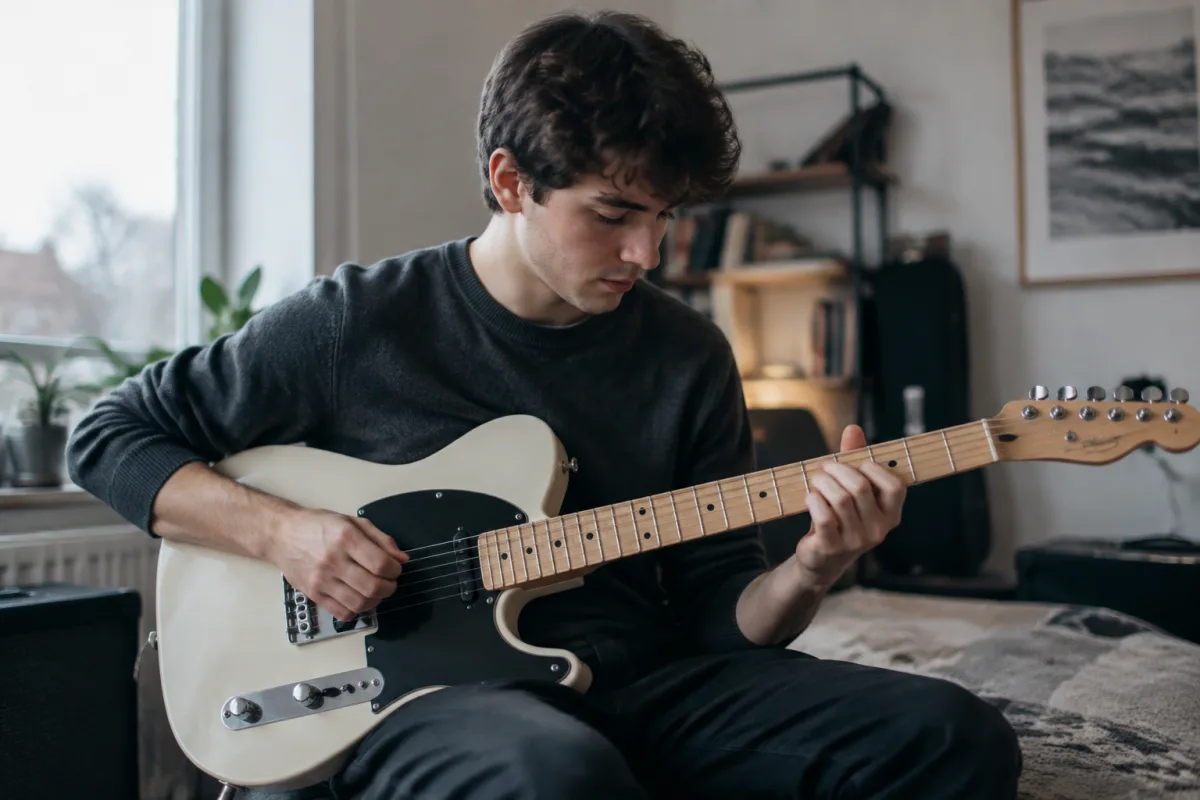
Starting electric guitar on a PRS Telecaster is an inspired choice that gives you a genuine working musician's instrument rather than a temporary learning tool. The PRS Telecaster combines the legendary simplicity and tonal character of the Telecaster design with PRS's modern craftsmanship, creating an instrument that rewards careful playing and remains capable of expressing serious musical ideas as you develop.
Why a PRS Telecaster Works for Beginners
The Telecaster body design is deceptively simple — a slab of wood with elegant contours that sit comfortably against your body whether sitting or standing. There's no elaborate cutaway to complicate access to upper frets, and the straightforward balance means you're not fighting the instrument's weight during practice. This simplicity allows you to concentrate on technique rather than managing awkward ergonomics.
A PRS Telecaster maintains the original Telecaster's brilliant tonal character — bright, cutting, and immediately responsive to your touch. The single-coil pickups (or P90s on some variants) produce clear, definable tone that rewards clean playing whilst keeping mistakes obviously audible, which accelerates learning. There's nowhere to hide with a Telecaster; your technique improvements are immediately obvious in the tone quality.
The neck profile is comfortable and efficient. The relatively thin, fast-playing neck means you'll cover the fretboard more easily than on thicker designs. Your fingers won't tire as quickly, allowing longer practice sessions during those crucial early weeks. This practical comfort dramatically improves the beginner experience because you'll actually want to practise regularly.
Understanding Your PRS Telecaster's Setup
A well-set-up PRS Telecaster arrives ready to play, though you might adjust it to your preferences. The action height — how far the strings sit above the fretboard — directly affects playability. Too high and your fingers will fatigue quickly; too low and you'll get fret buzz. Most beginners prefer medium action initially. Request your retailer set it appropriately, or visit a technician to adjust it to your comfort level.
The bridge on a PRS Telecaster is typically a modern design offering better tuning stability than vintage Telecasters. This reliability is genuinely important for beginners because you'll spend practice time learning rather than constantly re-tuning. Proper intonation — having the guitar play in tune across all frets — means your ears develop correctly rather than learning to compensate for an out-of-tune instrument.
Developing Technique on Your PRS Telecaster
The single-coil or P90 pickups on your PRS Telecaster are gloriously honest about your playing. Strike a string clearly with proper muting and it sings beautifully. Rush a chord change or mute carelessly and it sounds obviously sloppy. This immediate feedback is actually your greatest teacher, revealing exactly which techniques work and which need refinement.
Start by learning open-position chords — Em, Am, E, A, D, and G form the foundation of countless songs. Practice switching smoothly between these chords repeatedly. A PRS Telecaster's bright tone makes smooth transitions obvious, motivating you to refine your technique. Once you can switch these chords cleanly, simple folk and rock songs become immediately playable.
Focus on proper muting technique from the start. Your right hand should mute strings you're not actively playing, preventing unwanted noise. This discipline transforms beginner playing from amateurish and chaotic to organised and intentional. A PRS Telecaster's responsive tone makes good muting technique rewarding to develop.
Common Beginner Mistakes to Avoid
The most frequent error is pressing strings with straight fingers instead of curved. Curved fingers allow clear string definition and prevent muting adjacent notes. Consciously curve every finger every time you play until this becomes automatic. A PRS Telecaster responds beautifully to proper technique, making the rewards for better form immediately obvious.
Another pitfall is neglecting finger strength development gradually. Avoid jumping into songs with complex finger patterns; your fingers simply aren't strong enough yet. Build strength through basic exercises and simple chord changes. This patient approach prevents hand pain and teaches the foundations that make advanced playing possible.
Many beginners also rush into fast strumming before mastering steady, rhythmic timing. A metronome becomes your best friend here. Start slowly, developing clean, even strumming patterns. Speed comes naturally once the pattern becomes automatic. A PRS Telecaster's bright tone makes timing imprecision obvious, creating motivation to improve.
Building Your Practice Routine
Aim for twenty to thirty minutes daily on your PRS Telecaster rather than sporadic longer sessions. Structure your practice: five minutes warming up with open-string exercises and simple chord transitions, ten to fifteen minutes working on specific techniques or songs, and five to ten minutes playing whatever sounds fun and motivating.
Use a metronome set to a comfortable tempo. This develops your internal sense of rhythm and prevents the common beginner problem of playing increasingly faster. Consistent timing is more important than speed; speed develops naturally from rhythmic accuracy.
Connect with beginner guitarist communities online or locally. Sharing your progress and hearing about others' experiences makes learning feel less isolated and keeps motivation high through frustrating periods.
Enjoying Your Progress on a PRS Telecaster
Within four to six weeks of consistent daily practice, you'll notice obvious improvements. Chord changes that felt impossible now happen smoothly. Simple folk songs become genuinely playable. This progress is profoundly motivating and proves to yourself that genuine skill is developing.
By a couple of months, you'll understand your PRS Telecaster's tonal character thoroughly. You'll know which strings ring when struck cleanly, how to coax different sounds through touch variations, and why this bright, straightforward design has inspired musicians for decades. This growing familiarity and control transforms playing from frustrating struggle to genuinely artistic expression.
A PRS Telecaster removes barriers to learning whilst providing enough quality and character to reward dedicated practice. This is an instrument you won't outgrow quickly; it's perfectly capable of expressing genuine musical ideas as your skills develop.


Comments