


Player Telecaster article
Player Telecaster for Beginners: A Complete Guide
Start your journey with confidence. Our beginner's guide to the Player Telecaster covers setup, controls, care, and building skills with quality gear.
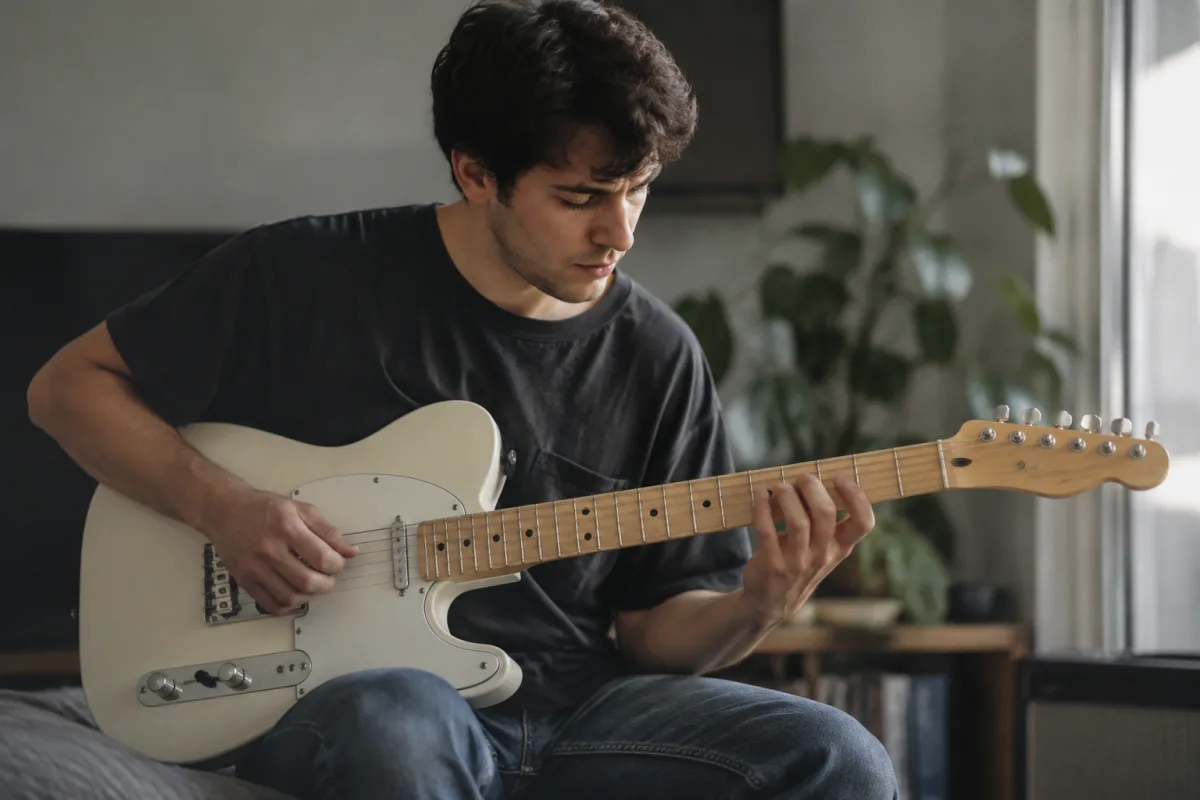
Thinking about your first serious guitar purchase? A Player Telecaster might be exactly what you need. Many beginners feel intimidated by guitar choices, worried they'll make expensive mistakes or choose an instrument that won't grow with them. Here's some reassuring news: a Player Telecaster is forgiving, inspiring, and genuinely brilliant for musicians starting their journey. This guide walks you through what makes a Player Telecaster special, what you should expect when you first play one, common misconceptions, and how to avoid typical beginner pitfalls. You've got this.
Why a Player Telecaster Matters for Beginners
The Telecaster is arguably the simplest, most honest guitar design ever created. A Player Telecaster removes complexity whilst preserving the essence—straightforward controls, reliable hardware, accessible playability. For a beginner, that simplicity is liberating. You're not fighting confusing electronics or excessive features; you're just playing guitar.
The Player Telecaster sits in a sweet spot for beginners willing to invest in quality. It's significantly better than budget instruments (which often feel cheap and frustrate learning), yet far more affordable than premium guitars. A Player Telecaster strikes the balance between affordability and real craftsmanship, meaning your investment rewards you immediately and lasts for decades.
Understanding the Player Telecaster's Appeal
The Player Telecaster inherited everything great about Telecasters—bright, cutting tone, legendary reliability, and a design so elegant it's barely changed since 1950. But the Player Telecaster version makes the guitar accessible. Fender engineered the Player Telecaster specifically for players beyond beginner stage but not yet ready for premium American models. That positioning is perfect for your first serious guitar.
Playing a Player Telecaster feels good. The neck is comfortable, the action is manageable out of the box, and the tone is immediately inspiring. Many beginners are shocked how quickly they gravitate to playing a Player Telecaster compared to cheaper alternatives—the guitar simply feels right.
What to Expect from Your First Player Telecaster
Opening your Player Telecaster box is thrilling, but don't immediately play. Take time exploring the guitar. Notice the craftsmanship—the wood grain, the hardware fit, the fretwork. A Player Telecaster represents quality, and that quality is visible and tangible.
Before plugging in, sit with your Player Telecaster acoustically. Play open strings and fretted notes. The Player Telecaster should feel balanced, the neck comfortable in your hand. Plug in afterwards and let the tone speak for itself. Your Player Telecaster's bright, articulate Telecaster voice cuts through effortlessly—exactly what makes Telecasters beloved by professionals worldwide.
Essential Controls on Your Player Telecaster
The Player Telecaster's simplicity extends to controls. You have two single-coil pickups, a 3-way pickup switch, and basic tone and volume controls. That's it. This simplicity is a strength—beginners often struggle when overwhelmed by options. Your Player Telecaster keeps things direct and intuitive.
- The 3-Way Switch: Position 1 engages your neck pickup (warm, mellow tone). Position 2 combines both pickups (the famous Telecaster twang). Position 3 uses your bridge pickup (bright, cutting tone). Spend time exploring all three positions—they're genuinely different and useful.
- Tone Control: Turn the knob clockwise for brightness; counterclockwise for warmth. Your Player Telecaster's tone control shapes character significantly. Every direction is musical.
- Volume Control: Straightforward—turn up for volume, down to quieten. Many beginners leave this maxed; explore rolling it back slightly for surprising harmonic changes.
Common Beginner Mistakes to Avoid
Learning to get the most from your Player Telecaster involves some trial and error. Sidestep these typical beginner pitfalls:
Ignoring setup: Your new Player Telecaster arrives properly set up from the factory, but setup is ongoing. As you play, your Player Telecaster's neck and action evolve. Have a technician check your Player Telecaster after your first 3 months of playing.
Neglecting the tone control: Many beginners ignore the Player Telecaster's tone knob, leaving it maxed. Explore this control—rolling it back shapes your Player Telecaster in musically useful ways.
Assuming the pickup switch is just on/off: The 3-way switch on your Player Telecaster offers three genuinely different sounds. Experiment regularly—different songs suit different positions.
Forgetting the Player Telecaster's neck pickup: Beginners often live in bridge pickup territory. Your Player Telecaster's neck pickup is beautiful for blues and jazz—give it genuine time before deciding it's not for you.
Overlooking string changes: New strings transform your Player Telecaster. Change them regularly (every 3–4 months if you play daily), and you'll be shocked at the tonal improvement.
Setup and Maintenance for Your New Player Telecaster
Your Player Telecaster ships ready to play, but understanding basic maintenance extends its life and keeps it playing beautifully. Keep your Player Telecaster in a case when not playing—temperature and humidity fluctuations warp necks. Wipe down your Player Telecaster after playing; sweat corrodes hardware. Change strings when they feel dull or sound tired.
Have a professional check your Player Telecaster's truss rod and frets periodically. This preventive maintenance catches issues before they become expensive. A well-maintained Player Telecaster literally lasts a lifetime.
Exploring Your Player Telecaster's Sonic Range
Many beginners see their Player Telecaster as a rock guitar, but that's limiting. Your Player Telecaster excels across every genre—blues players rely on Telecasters, country is built on them, and jazz legends chose Telecasters. Spend time discovering how your Player Telecaster responds to different playing techniques, pickup positions, and tone settings. That exploration teaches you about your instrument and your playing style simultaneously.
Building Confidence with Your Player Telecaster
The first few weeks with your Player Telecaster are about bonding. Play every day if possible, even briefly. Notice how the neck feels increasingly natural in your hands. Observe how your fingers find familiar positions intuitively. Your Player Telecaster becomes an extension of your musical intent—not an obstacle to overcome.
This confidence builds surprisingly quickly with a quality instrument like the Player Telecaster. You'll astound yourself with what feels possible after just a few weeks of regular playing.
Your Player Telecaster Journey Awaits
Congratulations on choosing a Player Telecaster. You've selected an instrument played by professionals worldwide, trusted by beginners for decades, and built to reward your growth. Play regularly, explore all the controls, maintain it properly, and trust your Player Telecaster. It's genuinely inspiring. For deeper exploration of Telecaster history, variations, and how different models suit different playing styles, explore our complete guide to Player Telecasters.



Comments