
Humbucker Pickup Telecaster article
The Complete Guide to Humbucker Pickup Telecaster
A humbucker pickup Telecaster trades the classic single-coil's bright twang for rich, warm sustain. Learn why players modify this iconic guitar, how to install humbuckers, and whether this upgrade suits your style.
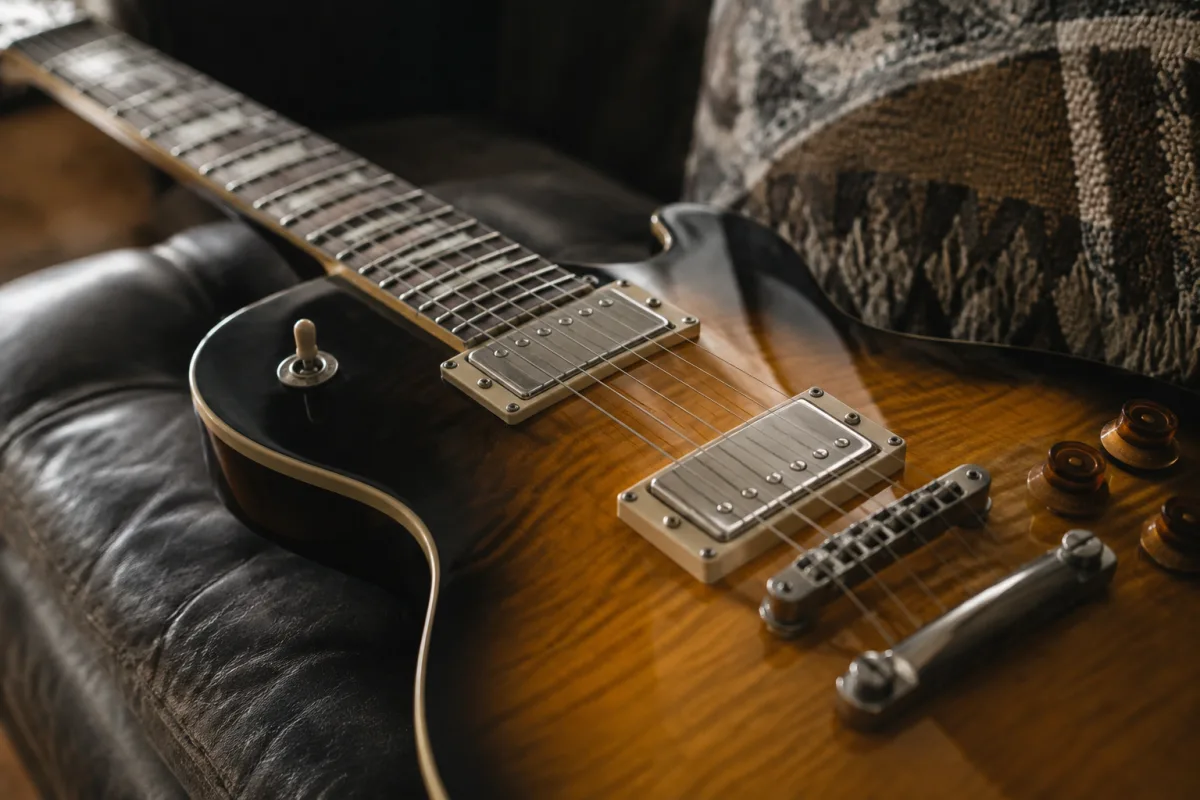
The Telecaster is an icon of electric guitar design, celebrated for its bright, cutting tones and timeless appeal. Yet modern players often explore modifications to shape its voice—and one of the most transformative upgrades is installing humbucker pickups. In this guide, we'll explore what makes a humbucker pickup Telecaster unique, how it changes the instrument's character, and whether this modification suits your playing style.
What Is a Humbucker Pickup Telecaster?
A humbucker pickup Telecaster is a Fender Telecaster fitted with one or both pickups replaced by humbucker-design pickups instead of the classic single-coil Telecaster pickups. Humbuckers are larger, dual-coil pickups that hum-cancel (hence the name)—a design that eliminates the electrical noise inherent in single-coil pickups. This modification gives the Telecaster a warmer, thicker, and more aggressive tone whilst maintaining the guitar's iconic slab-body design and playability.
The Tonal Character
Standard Telecasters are prized for their bright, twangy, and percussive sound. A humbucker pickup Telecaster trades some of that clarity for depth and sustain. The humbucker's thicker midrange and reduced high-end brightness make it ideal for blues, rock, and heavier genres where a rounded, full tone matters more than cutting through a mix with sheer treble. The lower output noise also makes the guitar quieter in high-gain amplifier settings, reducing feedback.
Players who favour warm tones with reduced noise often gravitate towards humbucker Telecasters. The shift is dramatic enough that the modified guitar feels like a different instrument in many respects—richer and more forgiving than the stock Telecaster's unfiltered clarity.
Common Configurations
There are several ways to outfit a Telecaster with humbuckers:
- Neck humbucker only—Retains the bridge single-coil for brightness; offers a balanced compromise between classic Telecaster snap and humbucker warmth.
- Bridge humbucker only—Keeps the neck single-coil's smooth, mellow tone; emphasises power at the bridge where attack matters most.
- Dual humbuckers—Both pickups replaced; the fullest reinvention of the Telecaster's voice, sometimes called a "Telecaster-body Les Paul" sound.
- Reverse configuration—A single-coil at the neck and humbucker at the bridge, mimicking a "reverse Telecaster" aesthetic whilst capturing a bright clean tone alongside driven bridge work.
Popular Humbucker Choices
Not all humbuckers suit a Telecaster equally. Successful swaps typically use:
| Pickup Type | Character | Best For |
|---|---|---|
| Alnico V humbuckers | High output, warm and thick | Blues, classic rock, metal |
| Alnico II humbuckers | Balanced, vintage-warm, articulate | Rock, soul, jazz fusion |
| Ceramic humbuckers | Very high output, aggressive | Hard rock, heavy metal |
| Noiseless/stacked humbuckers | Humbucker clarity with single-coil snap | Players wanting the best of both worlds |
Installation & Wiring
Fitting humbucker pickups to a Telecaster requires more than simply swapping them into the existing cavities. Humbuckers are physically larger than Telecaster single-coils and have a different wiring scheme (four-conductor leads versus the Telecaster's basic single and ground). Professional installation is strongly recommended.
The process typically involves:
- Enlarging the pickup cavities to accommodate the humbucker's wider footprint (routing).
- Running new wiring and possibly upgrading the control electronics for the humbucker's output level.
- Adjusting bridge alignment and action after routing, as internal cavity work can shift the neck.
- Testing and adjusting pickup height for optimal tone and magnetic balance.
A skilled luthier can complete the job in 2–4 hours; costs typically range from £150 to £400 for labour plus the price of the humbucker pickups themselves (usually £80–£300 per pickup).
Why Choose a Humbucker Pickup Telecaster?
This modification appeals to several types of players. Blues enthusiasts who love the Telecaster's playability but crave warmer sustain often gravitate towards humbuckers. Classic rock and hard rock players appreciate the reduced noise in high-gain rigs. Fusion musicians sometimes favour the Telecaster body with humbucker-driven versatility. And players who have owned both Telecasters and Les Pauls occasionally commission a hybrid—the lightweight, ergonomic Telecaster body married to a Les Paul's thick voice.
The Telecaster's bright reputation can also feel limiting in certain contexts. A humbucker modification lets you retain the guitar's iconic look, weight, and comfort whilst commanding a completely different sonic palette.
Considerations Before Upgrading
Converting a Telecaster to humbucker pickups is permanent and invasive. Before committing, consider:
- Is your Telecaster vintage or collectible? Original single-coil Telecasters are prized; modification destroys collector value.
- Do you genuinely need the tonal change, or might a different amplifier or effects setting serve the same goal without surgery?
- Can you live with the larger pickup cavity routed into the body (visible even if you later reverse it)?
- Will your playing style benefit enough to justify the cost and commitment?
Many players find success simply exploring amp settings, overdrive pedals, or complementing their Telecaster with a different guitar rather than modifying it. The choice depends on your priorities and budget.
Popular Artists & Examples
Several notable players have used or popularised humbucker Telecasters:
- Joe Satriani occasionally performs with modified Telecasters fitted with high-output pickups.
- Jerry Donahue's signature Telecaster, though not strictly humbucker, features modified single-coils with humbucker-like output.
- Session and studio musicians in rock and pop often favour Telecasters retrofitted for versatility, including humbucker upgrades.
These examples show that the modification thrives in professional hands—a testament to its viability for demanding players.
Alternative Approaches
If you love the Telecaster body but want a humbucker tone without permanent modification, consider:
- Piezoacoustic Telecasters—Some models feature built-in piezo bridges that blend the single-coil tone with a resonant, acoustic-like character.
- Modern Telecaster variants—Fender's own Telecaster Plus and similar models offer humbucker-like voicing from cleverly designed single-coils.
- Stacked or "noiseless" single-coils—These retain the Telecaster's characteristic voice whilst reducing hum, a middle ground between pure tradition and full reinvention.
- A second guitar—Owning both a classic Telecaster and a Les Paul (or other humbucker-equipped guitar) solves the dilemma without compromise.
Conclusion
A humbucker pickup Telecaster is a bold reinvention of an iconic instrument. It exchanges the Telecaster's signature brightness and twang for a warmer, thicker, more forgiving tone—and in doing so, opens the door to blues, rock, and heavier music that might otherwise leave the guitar feeling thin or shrill. The modification is not reversible, expensive, and requires skilled installation, but for the right player, it transforms the Telecaster from a single-purpose workhorse into a versatile powerhouse.
The decision to upgrade should rest on genuine sonic need, not fashion. If you've spent time with both single-coil and humbucker guitars and know that you prefer the humbucker's character, and if you value the Telecaster's body shape and comfort above all else, then the modification makes sense. For others, exploring alternative pickups, amps, or simply adding a humbucker-equipped guitar to the collection may prove a wiser investment.



Comments