
Left Hand Stratocaster article
The Complete Guide to Left Hand Stratocaster
Explore the left hand Stratocaster: what makes an authentic left-handed guitar, why it matters, and how to find the right model for your playing style.
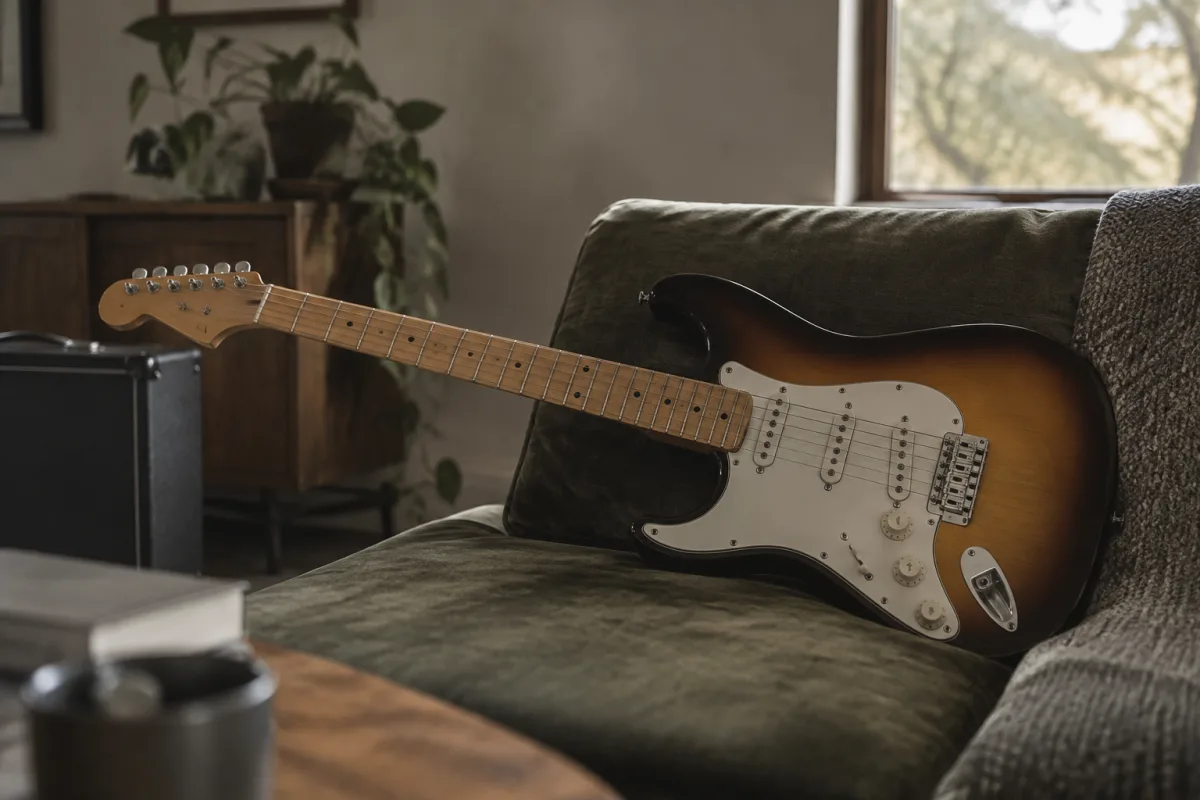
Left-handed guitarists have historically faced challenges finding instruments designed for their dominant hand. The Fender left hand Stratocaster addresses this reality, offering the brand's most popular electric guitar model in a true mirror configuration. Understanding what distinguishes genuine versions from compromises and alternatives helps you make an informed choice that respects your natural playing ability.
What Defines This Model?
A left hand Stratocaster is a complete mirror of the standard right-handed version. The body shape is flipped horizontally. The headstock faces the opposite direction. The pickups, controls and jack are all repositioned for left-handed access. The nut is cut for proper playing, with string spacing reversed so the high E sits on the left when playing.
This genuine mirroring distinguishes authentic instruments from compromises. Sadly, some retailers sell right-handed guitars to left-handers as a cost-cutting measure—restringing them backwards without proper nut work, bridge adjustment or hardware repositioning. These adapted versions feel awkward and play poorly.
The Challenge of Finding Suitable Instruments
Approximately 10% of the population is left-handed, yet many guitar manufacturers treat this demand as niche. This creates real problems for left-handed players shopping for Stratocasters or other sought-after models. Stock availability is often limited, especially in small music shops. Online options broaden access, but shipping costs and return policies become considerations.
Fender offers left-handed versions at nearly every price point and specification level—from budget Squire models to professional USA-made guitars. This is relatively generous compared to competing brands, which often offer limited or no alternatives.
Specifications and Features
Aside from the mirror configuration, such a guitar is mechanically identical to its right-handed counterpart:
- Three single-coil pickups — Neck, middle and bridge positions with the classic bright, cutting character.
- Five-way selector switch — Positioned for left-handed access, allowing tonal combinations through switch positions and volume/tone pedal manipulation.
- Contoured body — The iconic curves and horn design, mirrored for left-handed ergonomics.
- Synchronised tremolo or hardtail option — Depending on model and era. The bridge is mirrored accordingly.
- Reversed headstock — Tuning pegs face left for proper winding and natural playing geometry.
- Mirrored hardware — Bridge, strap buttons and all components are correctly positioned for a left-handed player.
Pricing and Availability
Such an instrument typically costs the same as its right-handed equivalent. Entry-level Squire models start around £150-250. Fender Mexico-made versions range from £400-700. American-made left hand variants cost from around £1000-1500. Vintage versions from the 1960s-1980s are rare and command premium prices, often £2000-4000+.
Availability is the real challenge. Most retail shops stock very few left-handed guitars. Specialist retailers and online shops offer broader selection but may require advance ordering. Patience and planning help secure the exact model you want.
Benefits and Considerations
The obvious benefit is that a genuine left hand Stratocaster feels natural and plays properly for a left-handed musician. Access to controls, ease of string bending, and comfortable strap positioning all favour left-handed ergonomics without compromise.
One consideration is resale value. A used left-handed version has a smaller potential buyer pool than a right-handed equivalent. If you eventually sell, expect a modest discount due to limited demand. This shouldn't deter purchase—you're buying an instrument for your own playing, not as an investment.
Alternatives and Compromises
Some left-handed players opt for right-handed models restrung in reverse as a workaround, especially for budget reasons or when authentic stock is unavailable. This approach has real downsides: the nut remains right-handed, creating awkward string spacing and intonation issues; the bridge may not adjust properly; and the ergonomics remain fundamentally compromised.
A better budget option is an authentic entry-level Squire version rather than an expensive right-handed model adapted backwards. A proper left-handed guitar, even at entry level, plays better and feels more natural.
Conclusion
A left hand Stratocaster is the correct choice for any left-handed guitarist who wants the iconic tone, reliability and feel of Fender's most popular electric guitar. The investment in finding and purchasing an authentic version is worthwhile, ensuring an instrument that respects your dominant hand and allows you to play at your full potential. Whether you choose a budget Squire or a professional USA-made model, a genuine left-handed Stratocaster offers decades of playing pleasure and rewarding musicianship.


Comments