
Bass Precision Squier article
Squier Precision Bass: A Complete Buyer’s Guide
The Precision is not one of many bass designs — it is the design. Here is what the Squier version gets you, tier by tier, and where the money actually goes.
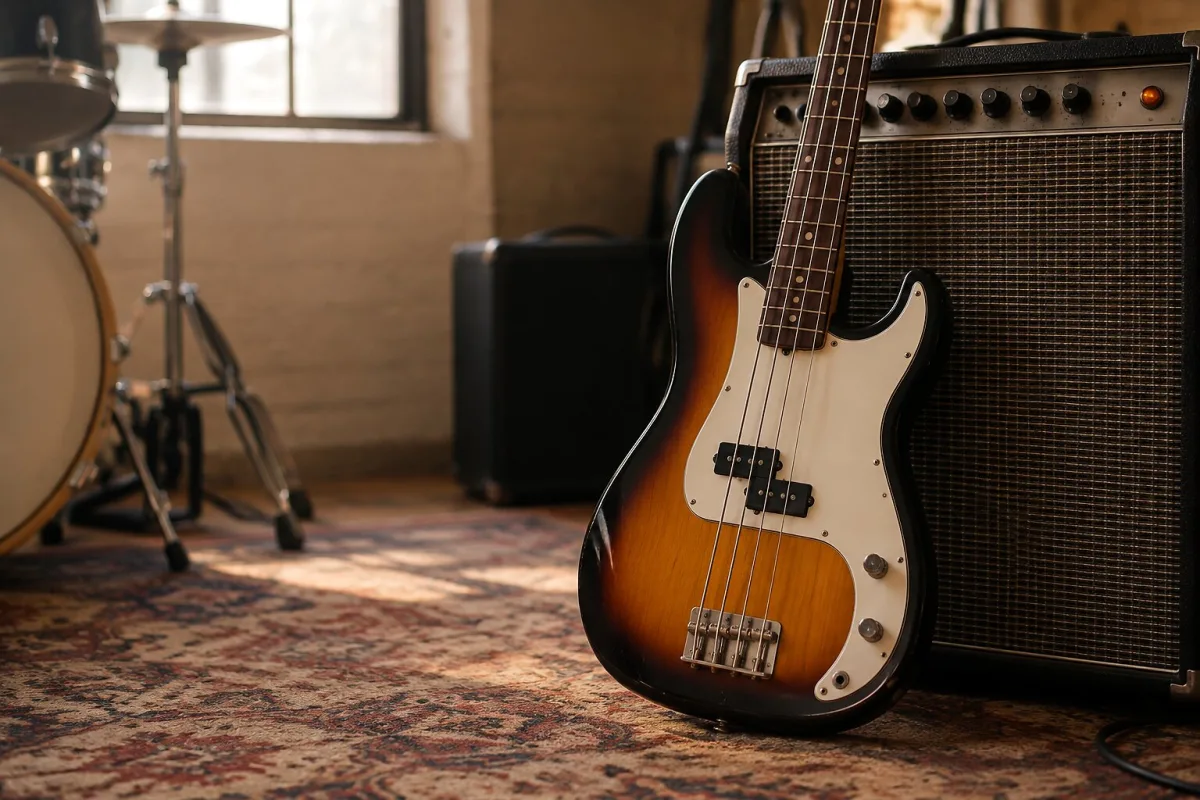
Here is the thing nobody tells you when you start looking at cheap basses: the Precision is not one of many designs, it is the design. Leo Fender brought it to market in 1951, gave it the split-coil pickup and Stratocaster-style headstock in 1957, and that 1957 instrument is essentially what you are still buying today. Seventy years of rock, soul, punk and metal have been played on it.
Which makes the Squier Precision Bass an unusually good deal, because what you are getting is not an imitation of a classic shape. It is the same shape, made more cheaply, by the company that owns it.
What a Squier Precision Bass actually is
Squier is Fender's affordable line, not a rival brand knocking off the design. The bodies, the scale length, the pickup layout and the headstock are Fender's own. What changes is where the instrument is built, what it is built from, and which parts got the budget.
That matters when you are comparing a Squier against a similarly priced bass from a brand with no lineage. You are not paying for the badge, you are getting a genuine version of the instrument the badge refers to.
The tiers, and what the money actually buys
There are three lines you will realistically be choosing between, and the differences are specific rather than vague.
| Sonic | Affinity | Classic Vibe | |
|---|---|---|---|
| Position | Entry level | Mid | Top of the mainstream lines |
| Pickup | Ceramic | Ceramic | Fender-designed alnico split-coil |
| Nut | Synthetic bone | Synthetic bone | Bone |
| Neck finish | Satin | Satin | Gloss |
| Frets | Medium jumbo | Medium jumbo | Narrow tall |
| Body | Thin | Thin | Standard depth |
Across every Squier Precision Bass, the single biggest jump is the pickup. Ceramic magnets give you a brighter, harder, slightly more brittle sound; alnico is warmer and rounder with more give in the midrange, which is the sound people actually mean when they say “P Bass”. If you only upgrade one thing, that is the thing.
The standard-depth body on the Classic Vibe is the second difference worth caring about. A thinner body is lighter on your shoulder but has less wood resonating, and on a bass that is audible.
In UK money, the gap between Affinity and Classic Vibe runs at roughly a hundred and thirty pounds. It is, in this writer's view, the best-spent hundred and thirty pounds in the entire budget bass market.
PJ or straight P?
Some Affinity models come as PJ: the usual split-coil in the middle plus a Jazz Bass single coil at the bridge. That gives you the classic thump and a brighter, more cutting option, blended however you like.
On a Squier Precision Bass that sounds like a free upgrade, and it is not quite. A straight P has one voice and commits to it completely, and that single-mindedness is exactly why the instrument has lasted. The PJ is more flexible; the P is more certain. Know which you want.
Which decade you are buying
Classic Vibe models come in '50s, '60s and '70s flavours, and these are not just paint jobs. They track real changes in the original instrument: different neck profiles, fingerboard materials, pickguard styles and hardware. A '50s model leans towards the earlier, rawer end; the '70s towards the fatter rock sound that dominated that decade.
Play them if you possibly can. Neck profile is the one specification that no review can decide for you, because it depends entirely on the size and shape of your hand.
What to check before you hand over money
- Neck relief. Sight down the neck from the headstock. A slight forward bow is right; a visible hump or a backbow is a job for a technician.
- Fret ends. Run a hand down the edge of the fingerboard. Sharp ends are common on budget instruments that have dried out in transit, and they are fixable but annoying.
- Every fret, every string. Play each note up the neck listening for buzz or a dead spot. Ten minutes now saves a return later.
- The electronics. Turn both knobs through their full sweep. Crackle usually means a cheap pot, which is a five-pound part and an hour's work, but you should know before you pay.
- Weight on a strap. Basses are heavy and shops let you stand up. Do it.
The upgrade path
The genuinely useful thing about buying into this design is that a Squier Precision Bass responds well to parts. The body geometry is standard, so pickups, bridges, tuners and pickguards from the wider Fender world drop straight in.
The sensible order, if you want it: a better pickup first, because it changes the sound more than anything else; then a proper setup by someone who knows what they are doing, which changes the playing feel more than any part; then hardware, which mostly changes tuning stability and looks.
Plenty of players never bother with any of it, and that is fine too.
The bottom line
If the budget stretches, buy the Classic Vibe. The alnico pickup and the full-depth body are the difference between an instrument you tolerate and one you keep. If it does not stretch, an Affinity is a perfectly good bass that has started thousands of players, and the pickup can be changed later when funds allow.
Either way a Squier Precision Bass puts seventy years of the most important electric bass ever designed in your hands, for less than the price of a decent amp. That is not a compromise. That is a bargain.


Comments