


PRS Semi Hollow Guitar article
Prs Semi Hollow Guitar for Beginners: A Complete Guide
PRS semi-hollow guitars are warm, responsive, and beginner-friendly. This guide walks you through your first month, explains the feedback issue, and shows you why semi-hollow guitars are excellent for nervous newcomers.
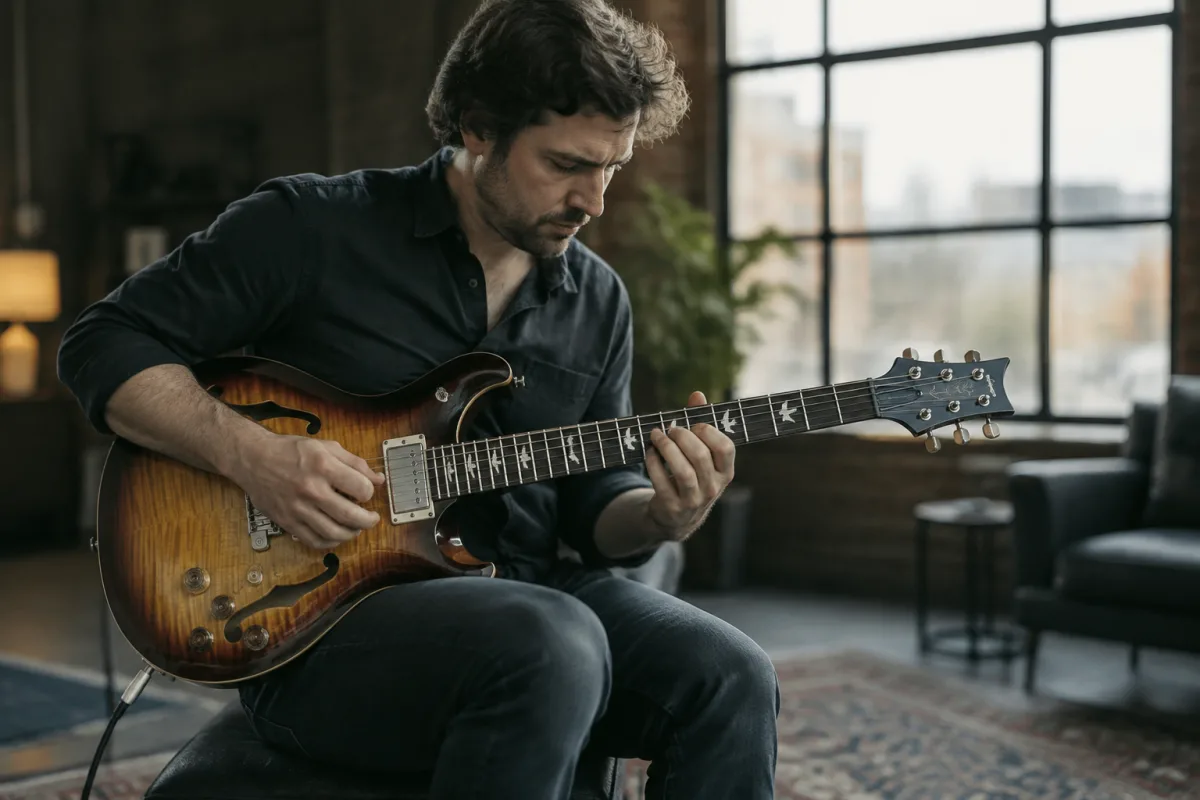
If you've watched videos of jazz musicians, blues players, or indie rock stars playing semi-hollow guitars and felt a pull toward that warm, woody tone, you're not alone. PRS semi-hollow guitars are beautiful instruments that inspire genuine enthusiasm in beginners. But they're also different from solid-body guitars in subtle ways that affect how you'll learn, how you'll play, and how you'll experience your first months as a guitarist. This guide walks you through what makes them special, helps you understand whether one suits your journey, and steers you away from beginner frustrations.
What Makes a Semi-Hollow Guitar Different
A semi-hollow PRS guitar looks like a thin electric guitar—it has a body that appears relatively flat and solid from the front—but inside, it's partially hollow like an acoustic guitar. This cavity lets the wood vibrate naturally, producing a warmer, more resonant tone than a solid-body electric. The result is a guitar that sounds less brittle and more "singing" than traditional electrics, without requiring amplification like an acoustic.
For beginners, the appeal is immediate. Semi-hollow guitars sound great at low volumes, so bedroom practice doesn't need to be loud. They also reward different playing dynamics—pressing strings gently produces a softer tone; digging in produces a brighter attack. This responsiveness makes playing feel more expressive from day one.
The Beginner Appeal: Why Semi-Hollow Guitars Matter to Newcomers
Most beginner guitarists start on solid-body electrics or acoustics. Semi-hollow guitars occupy a unique middle ground that benefits nervous first-timers. They're physically smaller and lighter than full-sized acoustics, making them less fatiguing to hold for extended practice. They're also less physically demanding than acoustics—steel acoustic strings require more finger pressure, which causes genuine pain in the first weeks. Semi-hollow strings feel similar to solid-body electrics—easier on fingers, faster to build calluses.
Sound-wise, semi-hollow guitars keep beginners motivated. Playing a few simple chords on a semi-hollow produces a warm, pleasant tone that sounds "intentional" rather than thin or scratchy. This encourages practice; playing an instrument that sounds good, even at beginner level, makes you want to pick it up again tomorrow.
First Steps: What to Expect in Your First Month
Your first experience with a PRS semi-hollow follows the same basic path as any electric guitar, with a few specifics worth knowing.
Acoustically, They're Responsive: Unlike solid-body guitars, your semi-hollow will produce meaningful tone even unplugged. This is genuinely useful for learning—you can practice quietly without plugging into an amplifier, and you'll hear whether your fretting technique is clean (clear notes) or sloppy (muted or buzzing strings). This feedback is educational and motivating.
Plugged In, They Sound Warm: When you connect to an amp, the semi-hollow's natural warmth combines with amplification to produce a tone that sounds professional and intentional. Beginners often feel shocked by how good they sound plugged in—this is the semi-hollow's advantage over solid-body guitars.
They're Sensitive to Feedback: A specific beginner challenge: semi-hollow guitars feed back (create a howling sound) more easily than solid-body guitars when played at volume near an amplifier. This isn't dangerous or difficult to manage, but it's surprising if you're not expecting it. Simply angle your guitar away from the amp speaker and adjust volume down slightly. By week two, managing feedback becomes automatic.
Physical Comfort and Ergonomics for Beginners
PRS semi-hollow guitars come in different sizes. The most common beginner-friendly option is the Standard Semi-Hollow, which has a body width around 2–2.5 inches—thinner than a solid-body and far thinner than an acoustic. For beginners with smaller frames, this is genuinely important. A thinner body is less fatiguing during the first months when your forearm and shoulder aren't conditioned for holding a guitar.
Weight is also a consideration. A semi-hollow's hollow interior reduces weight compared to a solid-body of the same size, again making extended practice sessions less tiring. If you're under 5'6" or have a slight build, the physical comfort advantage of semi-hollow guitars versus acoustics is significant.
Common First-Timer Mistakes With Semi-Hollow Guitars
Semi-hollow guitars open up specific beginner pitfalls. Knowing them in advance prevents frustration.
Mistake One: Expecting Zero Feedback Some beginners buy semi-hollow guitars expecting them to play like solid-bodies. When they encounter feedback for the first time, they panic, assuming something is wrong. Nothing is—it's just how semi-hollow guitars behave. Angling the guitar and managing distance from the amp fixes this instantly.
Mistake Two: Playing Too Softly Out of Fear Semi-hollow guitars vibrate noticeably when played. Some nervous beginners interpret this vibration as damage and play tentatively, barely pressing strings. This produces a worse tone than confident playing. Press the strings firmly, bend them when appropriate, and let the guitar do its job. The vibration is normal and desirable.
Mistake Three: Assuming Semi-Hollow Guitars Are Harder to Learn On They're not. The warm tone, responsive feedback, and lighter weight actually make semi-hollow guitars excellent for beginners. The only barrier is the feedback issue, which is trivial to manage once you're aware of it.
Mistake Four: Neglecting Basic Setup and Maintenance Semi-hollow guitars require proper humidity levels because the wood inside is more exposed to air. Keeping your guitar in a consistent environment (not near heating vents or air conditioning, maintaining moderate room humidity) prevents problems. Beginners often ignore this and then experience fret buzz or action problems that aren't actually the guitar's fault.
First-Month Learning Path
Start with basic open chords (A, D, G, E, C) and don't worry about tone quality yet—just focus on making the strings ring clearly without buzz. Semi-hollow guitars will reward clean fretting immediately with a pleasant tone. Practice strumming patterns gently and gradually increase confidence. Play unplugged for the first week so you can hear whether your fretting is clean without amplification distraction.
In week two, plug into an amplifier and discover the semi-hollow's character. Keep volume modest to avoid feedback, and experiment with angles and distance. By week three, managing feedback becomes second nature. You'll also discover which chord shapes feel good on the semi-hollow's neck and which create unexpected warmth or resonance.
Is a PRS Semi-Hollow Right for Your Journey?
A PRS semi-hollow is excellent if you're drawn to warm tones, play primarily blues, jazz, rock, or indie music, have a smaller frame, or want an instrument that sounds intentional even at beginner level. It's less ideal if you're planning to play primarily heavy metal, punk (which favours solid-body brightness), or if you need an ultra-portable instrument.
For a deeper exploration of PRS semi-hollow guitars, playing techniques, and how to get the best tone from this instrument category, see our complete guide to PRS semi-hollow guitars, which covers advanced techniques, tone shaping, and long-term ownership considerations.
Your Permission to Start
A semi-hollow PRS guitar is a genuinely good beginner instrument. The tone is warm and encouraging. The physical demands are manageable. The feedback issue is easily managed once you're aware. Your job for the first month is simply to play often, practice basic chords, and let yourself enjoy the instrument's character. The guitar will teach you—through its responsiveness to your technique—whether you're fretting cleanly. The tone will encourage you to practice more. And in six months, you'll look back at these first weeks as the moment you fell in love with playing.



Comments