


Left Handed PRS Guitars article
Left Handed Prs Guitars for Beginners: A Complete Guide
A left-handed PRS guitar is an excellent choice for beginning guitarists. Discover setup, learning strategies, and how to navigate resources as a left-handed player.
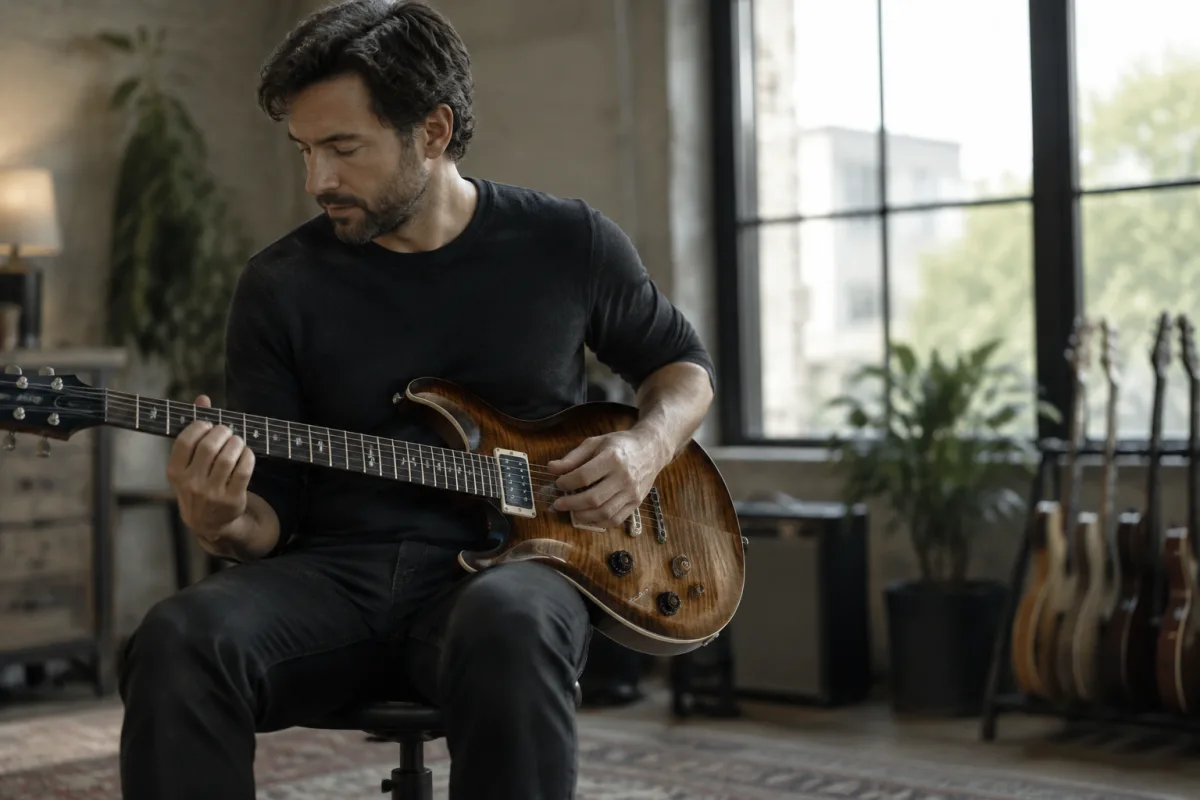
You're left-handed, and you're starting guitar. You've found a left-handed PRS guitar, and you're wondering if it's a good choice. The honest answer: yes, but with important caveats that only left-handed players understand. This guide walks you through ownership, setup, and developing confidence as a left-handed guitarist with a premium instrument.
The Left-Handed Advantage: Why a PRS Makes Sense
Left-handed guitar players face challenges right-handed players never encounter. One of those challenges is finding quality instruments. PRS—Paul Reed Smith—takes left-handed players seriously. Here's why that matters.
- Genuinely left-handed, not reversed—Many cheap guitars sold as "left-handed" are simply right-handed guitars with strings reversed. That's uncomfortable and wrong. PRS left-handed models are true left-handed instruments.
- Mirror-image precision—Your PRS left-handed guitar has the controls, pickups, and hardware positioned correctly for left-handed playing. Everything is where your left hand naturally reaches.
- Balanced ergonomics—Left-handed PRS guitars are designed for left-handed bodies. The cutaway, controls, and weight distribution suit left-handed technique.
- Professional build quality—You're not buying a gimped version. PRS left-handed guitars have the same build standards as their right-handed counterparts.
- Long-term value—Learning on a quality left-handed instrument means you won't outgrow it or regret your choice later. This is an investment that lasts.
Understanding Your Unique Challenges as a Left-Handed Player
Before diving into learning, acknowledge what makes left-handed guitar different.
- Finding instructors who understand you—Many guitar teachers learned right-handed and teach right-handed students. Finding one who understands left-handed mechanics matters. This isn't insurmountable but worth planning for.
- Accessing resources—Most tutorials, YouTube lessons, and guitar books teach right-handed positions. You'll have to mirror everything mentally. It's doable but requires adaptation.
- Playing with others—Jam sessions with right-handed players mean you see mirrored finger positions. Over time, you learn to translate, but initially it's confusing.
- Restring your guitar carefully—Left-handed guitars have strings in reverse order (from your perspective). Be absolutely sure your PRS is correctly left-handed before stringing it. Mistakes here are expensive and frustrating.
None of these challenges should stop you. Left-handed guitarists absolutely thrive. You just need to be aware that your path differs slightly from right-handed players.
Your First Session: Getting Acquainted
When you first hold your left-handed PRS guitar, here's the proper sequence:
- Check the orientation—Confirm that your PRS is genuinely left-handed. The headstock should angle toward your right shoulder. The cutaway should be on your left side. The controls should be on the right side of the body (from your perspective).
- Get comfortable with the strap—Adjust the strap so the guitar hangs at chest height, slightly angled for comfortable fretting. This matters more than right-handed players realise.
- Tune it up—Use a tuner. If your PRS is correctly strung left-handed, standard tuning is EADGBE (low to high). If it feels wrong, check the string order.
- Play open strings—Pluck each string individually. Listen to the tone of your new PRS. Get used to the weight and feel.
- Practice holding comfortably—Sit with the guitar. Stand with the guitar. Move around. Find your comfort zone before attempting actual playing technique.
The PRS Advantage: Sound and Feel
Your left-handed PRS guitar has characteristics worth understanding.
- Tone quality—PRS guitars are known for balanced, articulate tone. Your left-handed model has the same tonal character as right-handed versions. You're not compromising sound.
- Responsive pickups—PRS pickups are responsive to playing dynamics. Even simple finger movements produce expressive variations. This is wonderful for beginners because your playing sounds more sophisticated than it is.
- Comfortable action—PRS guitars typically arrive with playable action (string height). You might want a professional setup, but your guitar is ready to practice on immediately.
- Build quality you can see—Look closely at your guitar. Note the frets, finish, and hardware. Quality is visible. This builds confidence that you made the right choice.
Setup and Maintenance: Care Specific to Your Needs
Your left-handed PRS requires the same maintenance as any guitar, plus awareness of specific left-handed issues.
- Professional setup worth considering—A £50-£100 investment in professional setup ensures your action is comfortable and intonation is accurate. For left-handed players, working with someone who understands left-handed ergonomics is worthwhile.
- String replacement direction—When you change strings, be meticulous about direction. Left-handed strings go opposite to right-handed strings. One mistake, and you're correcting for weeks.
- Fretboard conditioning—Every 3-4 months, condition the fretboard with lemon oil. This keeps the wood healthy and responsive. Your left hand will thank you.
- Neck care—Check your PRS's neck monthly for warping or bowing. A straight neck is crucial for comfortable, accurate playing.
- Hardware tightening—Check tuning posts, bridge, and strap buttons regularly. Tight hardware ensures stability and prevents tuning issues.
Learning: Your First Month as a Left-Handed Guitarist
Here's a realistic progression:
- Week 1—Get comfortable with the instrument. Understand open string notes. Develop finger calluses. Don't worry about speed or accuracy yet.
- Week 2—Learn simple finger placements. Practice pressing strings cleanly. Work on consistent, even tone. Your PRS will reward clean technique immediately.
- Week 3—Learn basic chords. They'll feel awkward initially; this is normal. Spend time with each chord until it feels natural.
- Week 4—Play simple songs. Search for left-handed tutorials or mirror right-handed ones. Experience the joy of playing actual music on your new PRS.
Dealing With Reversed Tutorials and Resources
This is where left-handed guitarists face a unique challenge. Most resources assume right-handed playing.
- YouTube tutorials are your friend—Watch a right-handed lesson, then mirror it mentally. Your left hand does what their right hand does. With practice, this becomes automatic.
- Consider investing in left-handed tuition—A few lessons from someone who understands left-handed mechanics accelerates your progress. You're not just mirroring; you're learning biomechanically correct technique.
- Books and tabs work for everyone—Guitar tabs show which frets to press, not which hand plays them. Use the same resources as right-handed players; just adapt the hand assignments.
- Embrace the left-handed guitar community—Online forums and groups specifically for left-handed guitarists offer support, resources, and tips specific to your situation.
Common Beginner Mistakes for Left-Handed Players
Avoid these pitfalls:
- Stringing incorrectly—Before doing anything, confirm your PRS is correctly strung. A stringing error early on creates months of frustration.
- Comparing progress to right-handed players—Right-handed resources and tutorials are abundant. Accepting that your learning path is slightly different (but equally valid) prevents discouragement.
- Forcing yourself into right-handed learning—Some left-handed people learned right-handed guitar. They often wish they hadn't. Stick with left-handed; it's worth the effort.
- Neglecting proper strap adjustment—Incorrect strap height throws off your ergonomics. Spend time getting this right.
- Assuming all left-handed resources are equal—Some "left-handed tutorials" are just mirrored right-handed footage. Look for genuine left-handed instruction when possible.
Building Confidence: You Made an Excellent Choice
Left-handed guitarists sometimes feel like they're settling. You're not. Buying a quality left-handed PRS is a vote of confidence in your commitment. Your guitar is premium, specifically designed for left-handed playing, and capable of producing professional tone.
- Your sound is legitimate—A PRS guitar played left-handed sounds as good as one played right-handed. Zero compromise.
- Left-handed players are in good company—Jimi Hendrix, Kurt Cobain, Paul McCartney (though he famously learned right-handed)—legendary guitarists were left-handed. You're following in impressive footsteps.
- Your unique path becomes your advantage—Learning left-handed means developing your own approach. This individuality becomes stylistic strength over time.
Moving Forward
Your left-handed PRS guitar will serve you brilliantly for years. Play it consistently, maintain it carefully, and develop your technique patiently. The first few months feel challenging; that's universal for beginners. After a few months, everything clicks, and you'll be playing music you love.
For detailed specifications, model comparisons, and advanced techniques for left-handed PRS guitars, explore the complete guide to left-handed PRS guitars. For now, plug in and start playing. Your guitar is ready, and so are you.


Comments