


Mustang Guitar roundup
Mustang Guitar: A Complete Buyer's Guide
Buying a Mustang means knowing which version you want. Here's how to avoid the trap of buying a Mustang that isn't actually what it claims to be.
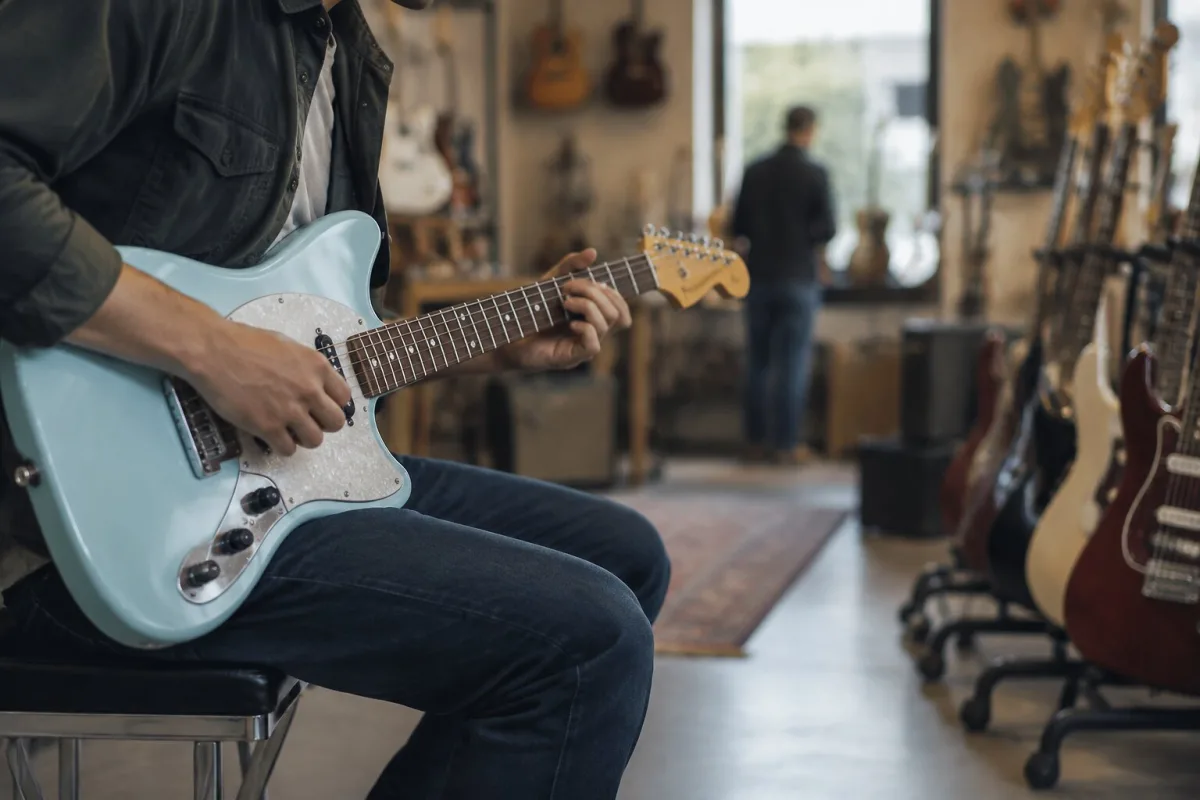
If you're hunting for a Mustang, you need to know which version you're actually looking at. The word "Mustang" now means several different things—a 1970s vintage original, a Japanese reissue, Fender's current Player II, or a heavily modified example that barely resembles the stock guitar. Specs and prices vary wildly between them, and knowing what separates them is the difference between a bargain and a regret.
Vintage Mustangs: What You Need to Inspect
A genuine 1960s or 1970s Fender Mustang is a serious investment, typically ranging from £800 to £2500 depending on condition and originality. The first thing to check is whether you're actually looking at an original Mustang and not a modified guitar wearing a Mustang disguise.
Neck straightness is critical. Sight down the fretboard from behind the headstock. Any twist or backbow means truss-rod work or worse. Play open strings, first fret and last fret on each string to spot dead spots or buzzing. Fret wear tells the history—a well-played 1960s Mustang might have shallow frets that still play great, but a refretted guitar loses some of its originality value.
Check the neck pocket for cracks, which are expensive to fix. Look at the bridge, saddle, vibrato plate and springs—original hardware often gets replaced, which matters to collectors but not to players. The pickups should be original Mustang singles, not humbuckers or modern replacements. If they've been rewound or upgraded, you've got a player's guitar, not a collector's piece, and that affects price legitimately.
Spend time on the electronics. Original pots and capacitors have date codes. The three-position switches on each pickup should all function smoothly. Scratchy switches mean oxidation, which can sometimes be cleaned, or they can mean worn contacts that need replacement.
Finally, ask for detailed photos of the serial number, headstock and neck pocket. Research what year that serial indicates. Mismatches between serial and apparent vintage are common, and they change value significantly.
Fender's Modern Player II Mustang
Fender's current Player II Mustang is the sensible choice for most players. It's roughly £500–700, comes with a warranty, and you know exactly what you're getting. The alder body is consistent, the Mustang-style pickups are reliable, and the six-saddle hardtail bridge is far more stable than the original floating vibrato.
The key question is whether you actually want a hardtail. The hardtail makes the guitar simpler and more stable—tuning stays put, intonation is straightforward, there's no spring noise or bridge movement to manage. You lose the vibrato's pitch effects, though. For most modern players, that's a reasonable trade.
Play one in person if you can. The 24-inch scale is genuinely different from a Strat, and some players love it immediately while others never adjust. The offset body is light and comfortable for most people, but it's not the same as a Strat's familiar contour. The way the pickups sound—bright, cutting, sometimes a bit thin—is part of the appeal, but it's worth hearing in context before committing to the price.
Japanese Reissues and Vintage-Style Moderns
Fender's made Mustangs in Japan since the 1980s. A Japanese 1980s or 1990s Mustang often costs less than a Player II, sometimes under £400, and many are genuinely excellent guitars. They're typically lighter and thinner-voiced than modern American models. Some have the original floating vibrato, which is appealing if you want the full original experience.
The catch is condition and seller reliability. A used Japanese Mustang might be a brilliant bargain or a project requiring neck work or electrical repair. If you're buying online, ask for detailed photos and video demos. If the seller seems vague about condition or can't answer technical questions, move on.
Some Japanese models came with hardtail bridges, some with vibrato. Check the listing carefully. Some have the original switching system, others have been simplified. Again, these details matter less to players than to collectors, but they affect price and usability.
Artist Signatures and Heavily Modified Guitars
Fender makes signature Mustangs associated with certain players. These typically cost more than a standard Player II and include specific pickups, hardware or cosmetic touches meant to match that player's aesthetic. Whether they're worth the extra money depends on whether you actually want those specific modifications or if you're paying for the name.
Vintage Mustangs heavily modified by professional setters (or famous players themselves) are a completely different category. A Kurt Cobain–style modified Mustang isn't a stock guitar anymore—it's a custom instrument. Those typically cost £1500+ and should come with documentation of the modifications. If the seller can't explain what's different and why, be cautious.
The Vibrato Decision
This matters more than most buyers realise. If you're buying a guitar with a floating vibrato, you need to budget for regular maintenance and professional setup. A vibrato that's set up incorrectly will make the guitar frustrating to play. If you want set-it-and-forget-it reliability, the hardtail is genuinely better.
Conversely, if you want the original Mustang character and don't mind learning to maintain a vibrato system, hunt for a well-maintained vintage example or a modern reissue with vibrato.
Budget Reality Check
A genuinely playable Mustang can be £250–400 used if you're patient and find the right deal. A newer or collector-grade vintage might run £1000–2500. Fender's modern Player II is £500–700 and immediately playable. Artist signatures sit between £700–1200. Heavily custom examples are £1500+. Decide your budget first, then hunt in that category. Stretching too far for "the one" vintage guitar often leads to repair bills that wipe out the savings.
Conclusion
Buying a Mustang means knowing what version of the Mustang you're after. A vintage original is a historical instrument that needs respect and maintenance. A modern Player II is a reliable, affordable guitar for players. A Japanese reissue or used modern model can be a brilliant bargain if you inspect carefully. Take time, play examples, ask detailed questions, and don't rush. The right Mustang will reveal itself when you're being specific about what you actually want.




Comments