


Martin Acoustic Guitar Buying guide
Martin Acoustic Guitar: A Complete Buyer's Guide
Martin acoustic guitars span entry-level to investment models. This guide covers body shapes, wood choices, playability checks, and price tiers to help you choose the right one.
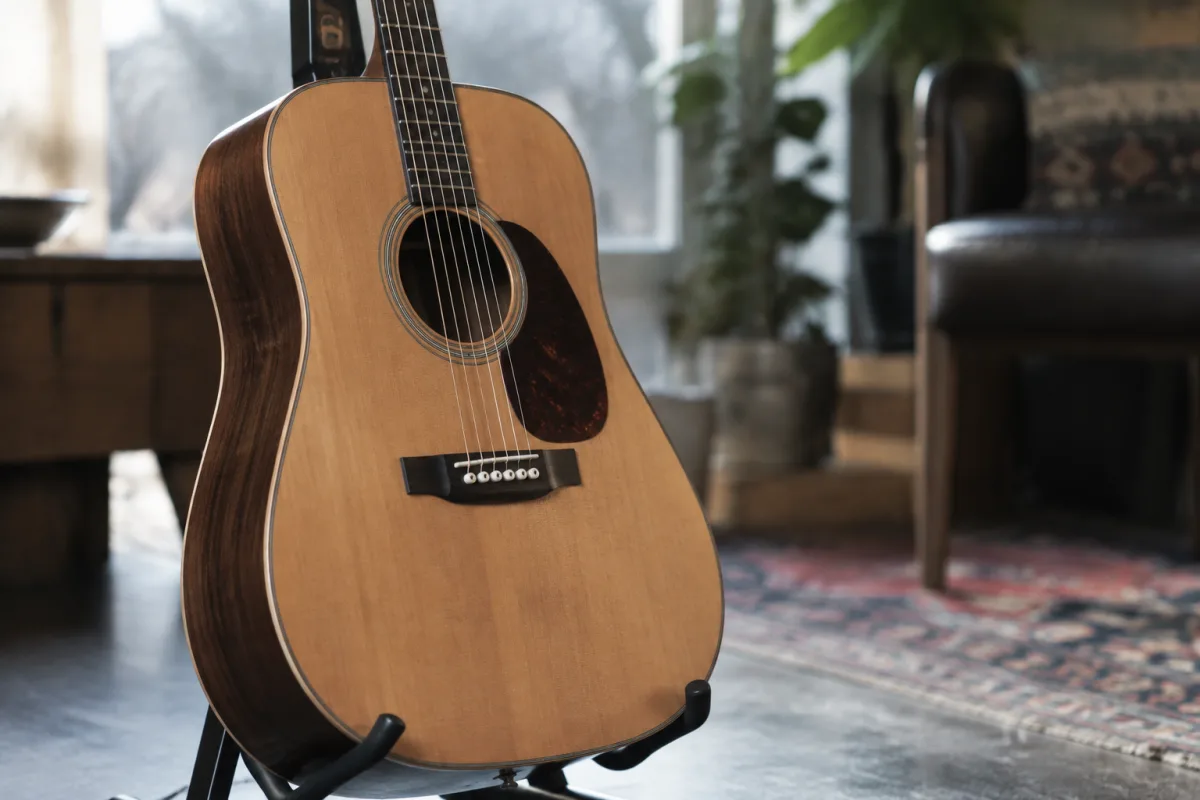
What to Look for in a Martin Acoustic Guitar
Martin acoustic guitars have a deserved reputation for quality, but the range is broad and the price tags run from affordable to investment territory. This guide covers the practical choices you'll face when buying a Martin acoustic guitar, from wood selections to body shapes to what you actually get for your money.
The Martin Lineup: Where to Start
Martin's modern range divides roughly into tiers. Entry-level Martin acoustic guitars like the DXM start around £300–400; these use laminated tops and are solid players for the money. The standard "D" and "000" models with solid tops sit at £800–2,000. Mid-range custom models run £2,500–5,000. High-end limited editions and vintage reissues push £5,000 and beyond. Know your budget first, because a Martin acoustic guitar at £400 and one at £4,000 are fundamentally different instruments.
Body Shape and Sound Character
The letter designation tells you the body shape. A "D" Martin acoustic guitar is larger, with more low-end punch—ideal for rhythm and fingerstyle players who want projection. "000" (triple-O) is slighter, with a quicker response and clearer treble—better for studios or players who don't need volume. "OM" is a compromise between the two. Test each if you can, because shape affects comfort and tone far more than most buyers expect.
Wood Tops: Solid vs Laminate
This is the biggest entry-point choice. A solid spruce top on a Martin acoustic guitar develops tone over time and responds more dynamically to your touch. It's also less forgiving of humidity swings and more expensive. Laminated tops (plywood-composite) are durable, stable, and cheaper, but tone doesn't age in the same way and the sound sits slightly thinner. At £300–600, a laminated Martin acoustic guitar is realistic. Above £800, expect solid.
Back and Sides
Rosewood (traditional) is warmer and darker. Mahogany is snappier and brighter. Walnut is increasingly common and sits between them. A Martin acoustic guitar with rosewood back and sides will feel richer; mahogany feels more articulate. Both are legitimate—it's taste, not hierarchy.
Playability and Setup Considerations
Before you buy, check these points on any Martin acoustic guitar:
- Action height — How far above the frets sit the strings. Too high is exhausting; too low buzzes. A decent Martin acoustic guitar should have action around 2.2–2.5 mm at the 12th fret. Adjustable saddles on some models let you get this right.
- Neck relief — Is there a slight forward bow or is the neck dead straight? Sight down the neck from behind the headstock. A tiny bow is normal; a hollow neck or too much forward bend causes buzz.
- Fret condition — Run your finger along the frets. They should feel even; unevenness means past refrets or a twisted neck. New Martin acoustic guitars don't suffer this, but check secondhand.
- Nut and saddle — Cheap replacements on a Martin acoustic guitar cheapen the sound. Original bone is standard. Plastic is a warning sign.
New vs Secondhand
A used Martin acoustic guitar often holds its value well and may already be played-in. The disadvantage: you can't inspect tomorrow's humidity shifts. If buying secondhand, demand photos of the headstock, neck, and body edges for cracks. A Martin acoustic guitar with a head crack (parallel to the grain) is a dodgy purchase; a body hairline crack that goes no deeper than the finish is liveable but should cost less. New Martins come with a warranty and known provenance, which matters if resale or future service is on your mind.
Price Tiers Explained
| Tier | Price Range | Top | Best For |
|---|---|---|---|
| Entry DXM/Jr | £300–500 | Laminated spruce | First-timers, travel, gigging backups |
| Standard D/000 | £800–1,500 | Solid spruce | Gigging musicians, home recording |
| Custom/Special | £2,000–4,000 | Solid premium woods | Serious players, collectors |
| Limited/Vintage | £4,000+ | Vintage-spec woods | Investment, professional session use |
Common Pitfalls to Avoid
Don't buy on brand name alone. A Martin acoustic guitar at the wrong price tier for your needs is still the wrong guitar. Don't assume louder is better—a smaller body with a hot pickup may suit you more than a booming dreadnought. Don't neglect humidity; a Martin acoustic guitar left in a dry room will crack. Don't ignore the setup—even a £1,000 Martin acoustic guitar benefits from a decent fret level and action adjustment (budget £100–150 for a proper setup from a tech).
Amplification and Electronics
Most intermediate and higher-tier Martin acoustic guitars come with an onboard pickup system or are easily retrofit. If you plan to gig or record, factor in £100–300 for a decent pickup and preamp. Cheaper electronics make a Martin acoustic guitar sound thin and brittle through amplification. A LR Baggs or Fishman system is the standard in the mid-range.
What You're Paying For
A Martin acoustic guitar's reputation rests on consistency and resale value. You're not just paying for the wood; you're paying for a name that holds its value, a warranty (usually two years), and a guitar that will likely play well out of the box. That premium is genuine, but it also means you're less likely to regret a secondhand purchase from a reputable dealer.
Bottom Line
The right Martin acoustic guitar depends on your budget, how you'll use it, and which body shape fits your hands and ears. For beginners with modest budgets, a DXM or junior model is honest and plays surprisingly well. For gigging musicians, a standard D or 000 with a solid top justifies its cost. For collectors and session pros, the custom and limited models reward the investment with tone and build quality that improves over decades. Play a few, sit with them for a few minutes, and trust your ears over marketing. If you're new to the topic, the Martin acoustic guitar overview covers the history and types in more depth.
FAQ
Is a Martin acoustic guitar worth the money?
Martin acoustic guitars hold their resale value better than most brands and tend to play well out of the box. If you're serious about guitar, yes—they're a solid long-term investment.
What's the difference between a Martin D and a 000?
The D (dreadnought) is larger with more bass and volume. The 000 is smaller, more comfortable, and has a quicker, brighter response. Choose based on your playing style and body comfort.
Can I use a Martin acoustic guitar for electric amplification?
Yes. Most modern models come with pickups installed or are easily retrofitted. Budget £100–300 for a quality aftermarket system if one isn't included.
Should I buy a Martin acoustic guitar new or secondhand?
Both are sensible. New guitars have a warranty and known condition; secondhand guitars are often cheaper and already settled sonically. Check for cracks and demand a trial period if buying used.
What's the minimum budget for a decent Martin acoustic guitar?
£300–400 for an entry laminate-top model (DXM). For a solid-top player that will last decades, budget £800–1,200.
Do Martin acoustic guitars need special care?
Keep humidity steady (40–50%). A humidifier in winter and dehumidifier in summer prevents cracks. Change strings every 6–9 months or after heavy use, and get annual setups if you gig.
What's the difference between solid and laminated tops on a Martin acoustic guitar?
Solid tops respond more dynamically and improve tonally over time. Laminated tops are more stable and cheaper but tone development is minimal. Most Martin acoustic guitars above £800 have solid tops.
Are limited-edition Martin acoustic guitars better than standard models?
Not necessarily better—different. Limited editions often use rarer woods and vintage-inspired specs, making them more collectible. Standard models offer better value for the working musician.


Comments