
Les Paul Studio article
The Complete Guide to Les Paul Studio
The Les Paul Studio delivers legendary Les Paul tone without collector pricing. Explore why this mid-tier model balances quality and affordability.
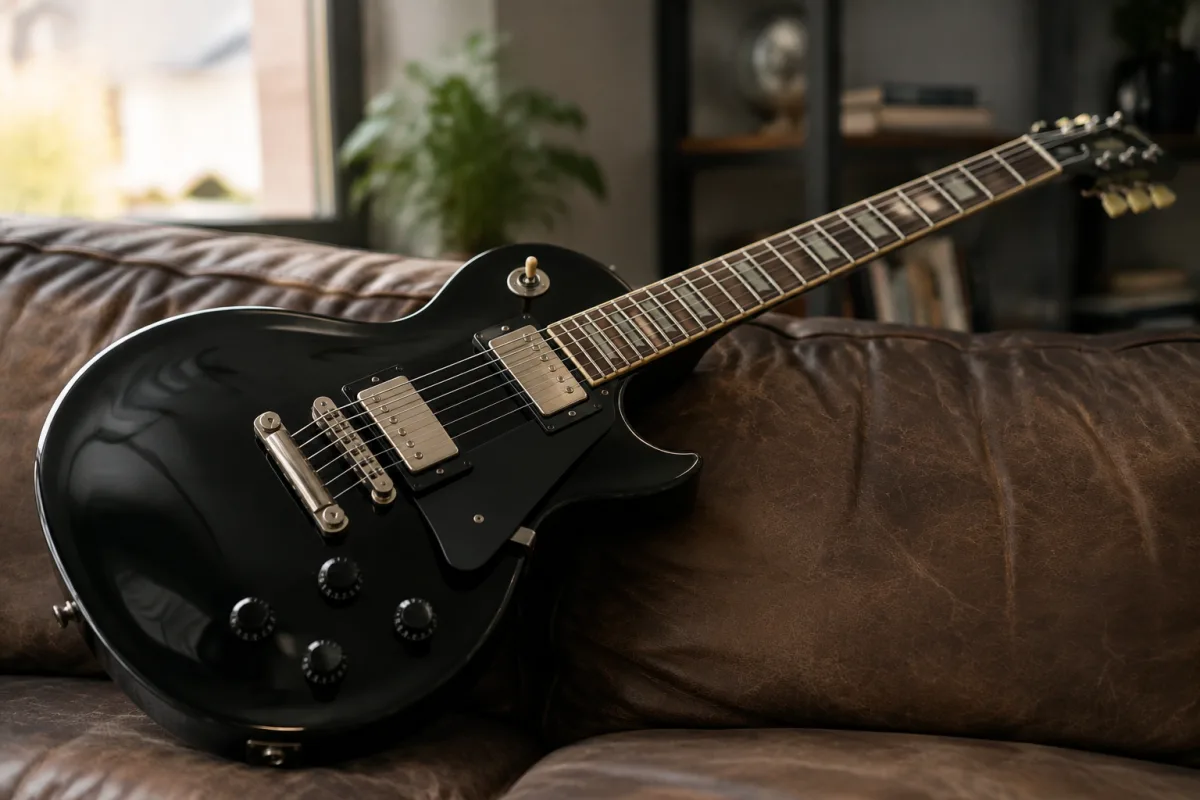
The Gibson Les Paul Studio represents an intelligent balance between the iconic Les Paul's legendary status and genuine affordability. For decades, the Les Paul Studio has introduced countless guitarists to the thick, warm tone and intuitive playability that made the original Les Paul an industry standard. Whether you're recording, performing live or simply seeking a guitar that sounds like it costs twice the price, the Les Paul Studio delivers professional-grade performance without vintage collectible pricing.
The Les Paul Studio's Place in Gibson's Lineup
Gibson's Les Paul range spans from the entry-level Les Paul Special up through the professional Les Paul Standard and exclusive Les Paul Custom. The Les Paul Studio occupies the crucial middle ground—retaining all the tonal excellence of expensive models whilst removing cosmetic features that drive up cost but don't affect sound.
The Les Paul Studio achieves this by using chambered mahogany bodies reducing weight slightly, simplified finishes instead of top-grain figured wood, and hardware that's excellent rather than collector-grade. For musicians prioritising tone and playability over rarity and investment value, the Les Paul Studio represents the sweet spot in the Les Paul family.
Professional studio musicians and touring guitarists frequently choose Les Paul Studio models precisely because they sound magnificent without carrying insurance obligations and theft anxiety that vintage-grade instruments demand. The Les Paul Studio offers legendary tone with practical, musician-first priorities.
Tonal Characteristics of the Les Paul Studio
The Les Paul Studio delivers the thick, warm midrange that defined rock and blues for generations. Compared to lighter semi-hollow designs, the Les Paul Studio's solid construction and heavy mahogany body produce immediately recognisable depth and sustain. This tonal character remains consistent whether playing cleans or heavily distorted.
The dual humbucker pickup configuration on a Les Paul Studio provides aggressive output and natural gain structure without shrill treble or weak bass. Clean tones through a Les Paul Studio exhibit harmonic richness that thinner-bodied guitars simply cannot achieve. Overdriven tones display definition and clarity despite the thick fundamental tone.
Recording engineers appreciate the Les Paul Studio's balanced frequency response. The guitar sits naturally in mixes without excessive high-end harshness or boomy low-end that would require extensive EQ work. This consistent, musical tone recording straightforwardly with minimal processing.
Construction and Materials
The Les Paul Studio features a mahogany body, typically chambered to reduce weight without sacrificing tonal depth. Chambering creates small air pockets within the body, making the Les Paul Studio noticeably lighter than solid mahogany Les Paul Standards whilst maintaining the tonal character that buyers expect.
Maple caps on Les Paul Studio models vary by year and finish—some feature figured maple tops typical of more expensive models, whilst others employ plain maple or no cap at all. The cap's aesthetic impact exceeds its sonic effect, making this the most noticeable area where the Les Paul Studio economises relative to Standards.
Mahogany necks on a Les Paul Studio feature traditional rosewood fingerboards or occasionally pau ferro depending on CITES regulations at production time. The neck profile, thickness and construction quality remain consistent with professional-grade instruments. A Les Paul Studio's neck feels solid and well-made, reflecting Gibson's reputation for neck quality.
Hardware and Electronics
The Les Paul Studio includes quality tuning machines, bridge and tailpiece hardware from reputable manufacturers. Whilst not vintage-grade components, the hardware functions perfectly and lasts decades with normal maintenance. Replacement parts remain readily available should any components require service.
Pickup options on Les Paul Studio models have evolved. Historically equipped with Gibson's own humbuckers, modern Studio models sometimes feature alternative high-output pickups expanding tonal range. The stock pickups on any Les Paul Studio remain more than adequate for professional work—upgrading is purely optional.
The electronics on a Les Paul Studio are straightforward and reliable—volume and tone controls, three-way pickup selector, and solid wiring employing quality components. The simplicity itself is an advantage, making troubleshooting and modifications straightforward without elaborate switching systems requiring specialised knowledge.
Playability and Comfort
The Les Paul Studio weighs more than thin semi-hollow guitars but less than heavier Standard models thanks to chambering. Most players find the weight entirely manageable, and many appreciate the substantial feel contributing to the guitar's tonal depth.
The thick body depth places strings further from the body than thin guitars, requiring adjustment if you're accustomed to ultra-thin electrics. Many players find this natural and intuitive; others need a practice period. Ergonomics vary individually, making hands-on playing essential before purchasing.
Access to upper frets on a Les Paul Studio is straightforward—the curved body and cutaway horn position the fretboard comfortably for soloing. Experienced lead players find the Les Paul Studio neck comfortable and responsive, with adequate fret access even in extreme upper register playing.
The Les Paul Studio in Professional Settings
Recording studios worldwide employ Les Paul Studio models, recognising their tonal versatility and recording-friendly characteristics. Professional session musicians choose Les Paul Studio instruments for work where the tone matters more than collectible status.
Live touring musicians often prefer Les Paul Studio models to more expensive variants, protecting expensive instruments from road wear and theft risk. A damaged Les Paul Studio remains replaceable without devastating financial loss that expensive Standards would cause.
Bedroom musicians and practice enthusiasts find the Les Paul Studio rewarding—the thick tone encourages musicality and expression even at low volumes. The guitar responds to subtle playing technique, rewarding thoughtful musicianship rather than merely amplification level.
Choosing a Les Paul Studio
Vintage Les Paul Studio models from the 1980s and 1990s offer exceptional value, delivering warm tone and proven durability at prices below newer instruments. Vintage Studios remain invisible to collectors obsessed with Standards and Customs, keeping prices reasonable for instruments of genuine quality.
Modern Les Paul Studio production models benefit from contemporary manufacturing consistency. Modern Gibsons exhibit reliable quality across the entire production run—rare defects that plagued some vintage instruments are largely eliminated.
Budget guitarists considering stepping up from budget instruments should seriously audition Les Paul Studio models. The jump in tone, playability and build quality justifies the investment, and the Les Paul Studio remains relevant for decades, improving tonally as wood seasons. A Les Paul Studio, chosen thoughtfully, becomes a lifelong musical companion.


Comments