
Les Paul Guitar Vintage article
The Complete Guide to Les Paul Guitar Vintage
Vintage Les Paul guitars represent a convergence of craftsmanship, tonal character, and historical significance — understanding their construction and authenticity is essential for players and collectors alike.
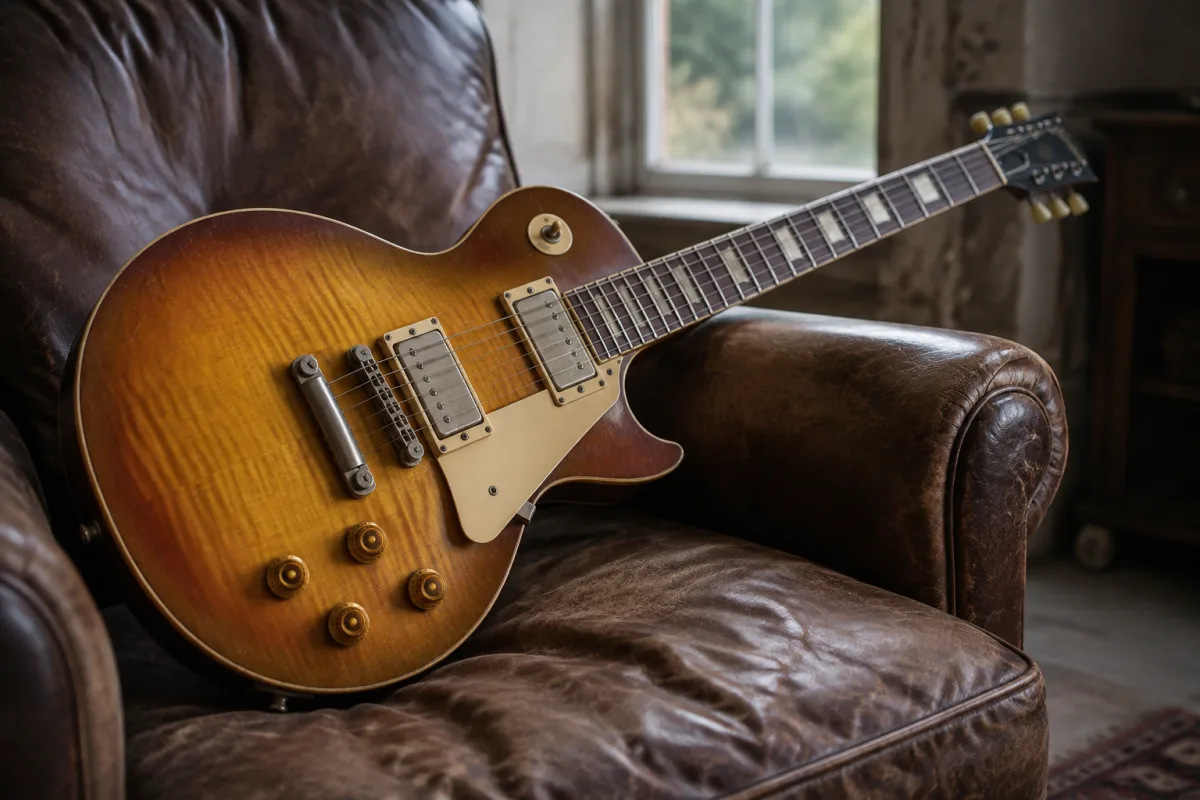
Vintage Les Paul guitars have become iconic symbols of electric guitar history, commanding prices that reflect their cultural significance and sonic character. Understanding what makes vintage Les Pauls different from modern instruments — and how to assess their quality and authenticity — helps collectors, investors, and players navigate a market where authenticity, condition, and year profoundly affect value and tone.
Historical Context and Design Evolution
Gibson introduced the Les Paul model in 1952, originally designed in collaboration with guitarist Les Paul himself. The early "Goldtop" models featured a solid mahogany body, carved maple top, and single-cutaway body — a design that fundamentally shaped electric guitar aesthetics. Throughout the 1950s and 1960s, the instrument evolved: sunburst finishes replaced Goldtop around 1958, pickup designs changed, and hardware was refined.
The years 1958–1960 define the "golden era" for collectors — guitars from this period command the highest prices, sometimes exceeding £100,000 for exceptional examples. The 1959 model, in particular, is considered the pinnacle: it features the combination of tonal perfection, aesthetic refinement, and historical significance that defines vintage value.
Body Wood and Construction
Vintage Les Pauls feature solid mahogany backs with carved maple tops. The maple carve is hand-done; variations in thickness and flame pattern influence tonal character. During the golden era (late 1950s), Gibson used premium-grade woods sourced from specific lumber mills — wood quality declined somewhat in later decades as suppliers changed and availability shifted.
The carved top is more than aesthetic; the carved arch creates acoustic mass and influences sustain and resonance. A heavily flamed top isn't inherently superior tonally (thin, tight flame often sounds as good as dramatic flame), but dramatic figure commands premium prices among collectors.
Pickups and Electrical Specifications
Early vintage Les Pauls used "P-90" single-coil pickups, then transitioned to the "PAF" (Patent Applied For) humbucker around 1957–1958. PAF humbuckers are considered sonically superior by many players — warmer, less susceptible to hum, and more responsive to playing dynamics than P-90s. Original PAF humbuckers are valuable components; a pair can cost £2,000–5,000 if genuinely original and working well.
The wiring, potentiometers, and capacitors also influence tone. Vintage components, particularly early Centralab potentiometers and wax-paper capacitors, contribute to the sought-after vintage tone. Some modern recordings attempt to replicate that character, but original parts retain something that recreations struggle to match.
Finish and Cosmetic Characteristics
Vintage Les Pauls show the wear of decades. Original finishes develop checking (fine cracks) as the lacquer ages. Heavy play wear, fretwear, and belt marks from years of playing are expected on genuinely vintage instruments. This patina matters to collectors; a pristine, unplayed example might actually be less valued than one showing honest playing history, as authenticity matters more than perfection.
The colour of the finish also reveals age. Sunburst finishes from the late 1950s display distinct characteristics: fading of the red dye, yellowing of the lacquer — patterns that are difficult to fake convincingly. Experienced collectors can often date a guitar by these subtle visual cues.
Fretwork and Neck Condition
The neck is often the first thing that deteriorates on a vintage guitar. Wood moves and shifts as it ages; frets wear, the truss rod stiffens, and the neck profile can warp. A vintage Les Paul requiring significant refret work loses value — a complete fret replacement might cost £1,500–3,000 and is considered restoration rather than maintenance.
Light fretwear is acceptable and expected; playability is the key factor. If the guitar plays well and sounds clear, minor fret wear doesn't diminish value significantly. Significant crowning issues, play-to-bridge problems, or severe warp require expert assessment.
Tone Characteristics and Play Experience
Vintage Les Pauls are renowned for tone: warm, full, responsive, with natural sustain and a rich harmonic palette. The combination of quality woods, PAF humbuckers, and circuit elements creates a character that many players find irreplaceable. Plugged into a quality tube amplifier, a vintage Les Paul can sing in ways modern instruments sometimes struggle to match.
The play experience is different too. The thick body (heavier than many modern guitars) sits differently on the body, the neck profile (typically thicker and chunkier) requires different hand positioning, and the overall instrument feels substantial in a way that appeals to some players and alienates others.
Market Pricing and Investment Considerations
Pricing stratifies sharply by era. A 1952 or 1953 Goldtop in excellent condition costs £80,000–150,000. A 1959 Sunburst ranges from £100,000 to well over £400,000 depending on condition and provenance. Even a 1965 example costs £15,000–30,000. More recent vintage (1970s models) are significantly more affordable, £3,000–10,000, while retaining genuine vintage character.
Rarity and condition drive value; a Goldtop with original finish and minimal wear commands multiples of a refinished example. Serial numbers, inspection stamps, and documentation help verify age and authenticity. Expert evaluation is essential before major purchases; forgeries and misrepresented reissues circulate regularly.
Playing Vintage vs. Collecting
A fundamental decision divides vintage Les Paul owners: are you playing it or investing in it? A £80,000 guitar played regularly faces cosmetic wear, potential accidents, and depreciation through damage. Playing a vintage instrument forces acceptance of this risk. Others buy for investment or collection, storing instruments in climate-controlled environments to preserve condition and value.
Both approaches are valid. Playing vintage instruments connects you to history and inspires creativity. Collecting preserves instruments as historical artifacts. Choose accordingly.
Authenticity and Counterfeits
The high prices of genuine vintage Les Pauls have spawned sophisticated counterfeits and misrepresentations. "Parts" guitars (assembled from original and non-original components) are common; identifying them requires expertise in serial numbers, construction techniques, and component dating. A guitar may look vintage and sound vintage but be a composite of original and modern parts, a significant factor in valuation.
Reputable dealers and expert appraisers are essential for significant purchases. Minor variations in routing, hardware, or finish can indicate a guitar's true origin and affect value by thousands of pounds.
Conclusion
Vintage Les Paul guitars represent a convergence of craftsmanship, historical significance, and tonal character that defines electric guitar culture. Whether you're a player seeking authentic vintage tone, a collector preserving history, or an investor capitalising on rarity, understanding construction, authenticity, and condition is essential. A genuine vintage Les Paul is an instrument and an artifact — worthy of respect, care, and informed decision-making.


Comments