


Jazzmaster Left Handed article
Jazzmaster Left Handed for Beginners: A Complete Guide
The Jazzmaster is an underrated gem for left-handed beginners. This guide explains what makes it special and walks you through your first month of playing.
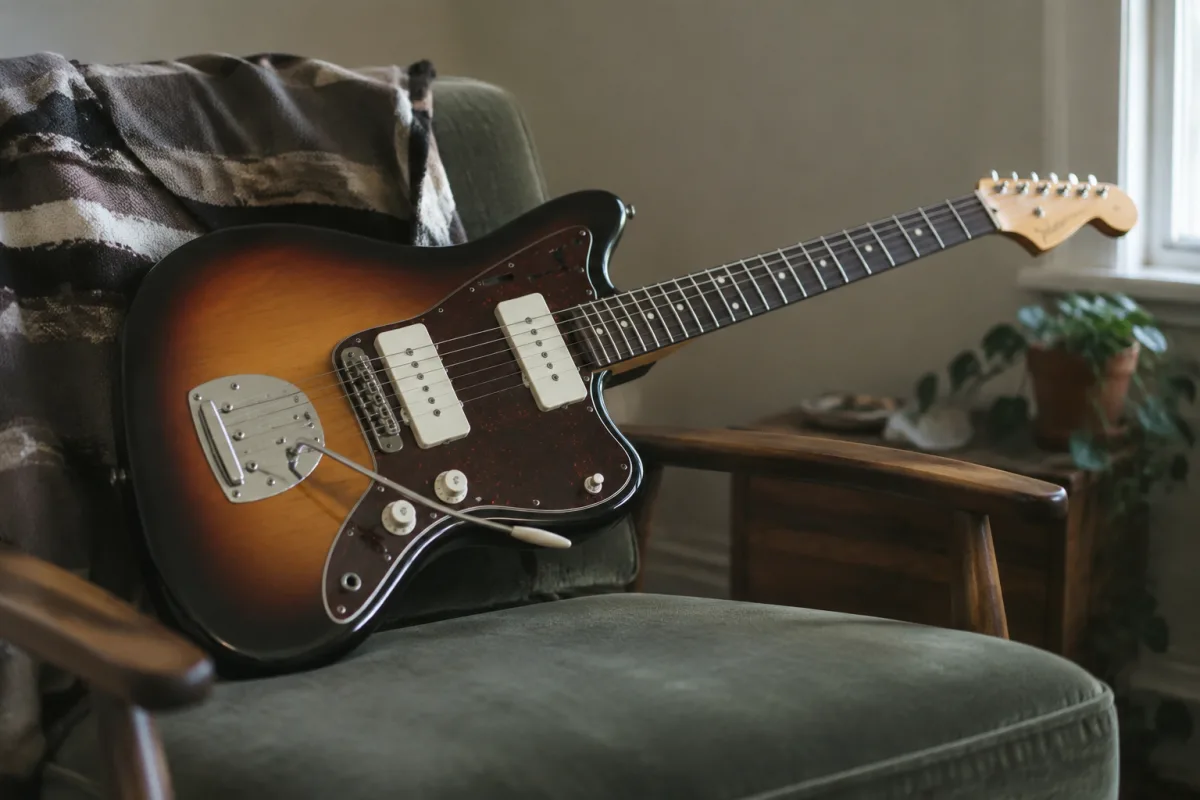
If you’ve just discovered the Jazzmaster and you’re left-handed, you’re in luck. The Jazzmaster is one of Fender’s most interesting and underrated guitars, and plenty of left-handed versions exist for players like you. But as a beginner left-handed guitarist, you might feel uncertain about whether a Jazzmaster is the right choice, what makes it special or how to approach getting started. This guide is written specifically for you.
What Is a Jazzmaster, and Why Should You Care?
A Jazzmaster is a Fender electric guitar that sits somewhere between a Stratocaster and a Telecaster in character and capability. It was originally designed in the 1950s for jazz players, though these days it’s equally beloved by indie rock, surf rock and alternative musicians. As a left-handed player, the Jazzmaster is genuinely worth exploring because Fender has made proper left-handed models for decades.
The Jazzmaster’s appeal lies in its tone (slightly darker and more resonant than a Stratocaster), its unique pickup configuration (offset single-coil pickups that sound distinctly warm), and its elegant, unconventional body shape. For left-handed beginners, it means you’re not compromising on design or capability — you get the full, intended experience.
Why Beginners Often Find the Jazzmaster Accessible
You might worry that the Jazzmaster is too specialised or complex for a beginner. Don’t. The Jazzmaster is actually wonderfully straightforward to learn on. The scale length (typically 25.5 inches, same as a Stratocaster) is comfortable for beginners. The neck is often slightly thinner than a Telecaster’s, making it easier to grip at first. And the body shape, whilst unconventional, distributes the guitar’s weight beautifully, so it never feels like a burden during long practice sessions.
Moreover, the Jazzmaster’s tone naturally encourages clean, articulate playing rather than heavy distortion. This is perfect for beginners because it trains your ear and fingers to develop control and precision. You’ll hear every note you play clearly, which accelerates learning.
Getting Started: Your First Week
If you’ve just acquired a left-handed Jazzmaster or you’re thinking of buying one, here’s how to ease into it:
- Tune it and verify the action. A well-set-up Jazzmaster has low action (close distance between strings and fretboard) that doesn’t buzz or rattle. If the action feels high or uncomfortable, have a technician adjust it. First impressions matter hugely.
- Play some clean tones first. Use a light overdrive or no effects initially. The Jazzmaster shines with clean tone, and you’ll learn faster without heavy processing masking your playing.
- Learn basic open chords and simple melodies. A Jazzmaster responds beautifully to fingerstyle playing, so spend time learning classical fingerpicking patterns alongside standard strumming.
- Get comfortable with the body shape. The Jazzmaster’s unconventional design feels odd at first but becomes incredibly comfortable once you adapt. Give yourself two weeks before deciding whether you like it.
- Explore the pickups and tone controls. A Jazzmaster typically has a three-way switch and tone controls that dramatically affect sound. Play around. Understanding how controls shape tone builds intuition that transfers to any guitar.
That’s genuinely all you need for week one. Don’t overwhelm yourself with theory or perfect technique. Focus on enjoying the instrument and its distinctive tone.
Avoiding Common Beginner Mistakes
Left-handed beginners with a Jazzmaster often make predictable stumbles. Don’t assume that the Jazzmaster’s tone requires expensive amplification. A modest solid-state combo amp reveals the Jazzmaster’s character beautifully. Don’t assume that because the Jazzmaster was designed for jazz, you must play jazz. That history means nothing. If you want to play indie rock or surf on a Jazzmaster, that’s utterly legitimate and plenty of players do exactly that.
Avoid using heavy distortion initially. The Jazzmaster really shows what you’re doing (good and bad) when played cleanly, so use that to your advantage as a learner. And don’t be discouraged if the body shape feels awkward at first. Virtually every Jazzmaster player found the shape odd initially, then grew to love it. Give it time.
Understanding Your Left-Handed Jazzmaster
A genuine left-handed Jazzmaster has the strap button repositioned for comfort, the output jack placed on the lower bout, and the entire instrument mirrored appropriately. Don’t settle for a right-handed guitar strung backwards — proper left-handed models exist and deserve your preference. The difference in playability and comfort is real.
Your Jazzmaster’s electronics (pickups, wiring, switching) work identically to right-handed versions. The only difference is the physical layout. Take time learning how the tone controls, pickup selector and other features behave so you develop genuine familiarity with your instrument.
Building Your First Month
By week two, you should be comfortable holding the Jazzmaster and playing simple melodies with reasonable accuracy. By week three, you can switch smoothly between open chords and sound like a genuine beginner musician (not chaotic). By the end of month one, you’ve genuinely internalised how this guitar responds to your hands, and that’s when exploring becomes natural and fun.
At this point, you might naturally gravitate toward fingerstyle technique (exploring the Jazzmaster’s resonance with fingerpicking), or you might discover that clean overdriven tone is your sweet spot. Both are valid. The Jazzmaster rewards whatever direction you choose.
Finding Community and Inspiration
Left-handed Jazzmaster players are a small but passionate group. Online communities focused on Jazzmasters are generally welcoming and generous with advice. Study recordings by famous Jazzmaster players — J Mascis (Dinosaur Jr.) is a legendary left-handed Jazzmaster player whose fearless approach to tone and playing style is deeply inspiring. Hearing what’s possible with a Jazzmaster in the hands of an experienced player builds confidence and motivation.
Next Steps Beyond Week One
Once you’ve settled into the basics and developed genuine comfort with your left-handed Jazzmaster, consider exploring its potential with an affordable effects pedal (a simple overdrive is enough). You might also invest in proper instruction from a teacher familiar with electric guitar. For deeper understanding of what your Jazzmaster offers and its place in music history, explore the complete guide to left-handed Jazzmasters, which covers heritage and the full range of playing styles this guitar supports.
Above all, remember that choosing a left-handed Jazzmaster means you’ve already made an interesting, thoughtful choice. The Jazzmaster rarely chooses you by accident. Trust your instinct, stay patient and enjoy the journey.
FAQ
Is the Jazzmaster harder to learn on than a Stratocaster?
Not at all. The Jazzmaster has a similar scale length and comparable ease of play to a Stratocaster. The main difference is tone and body ergonomics, not difficulty.
Why does my Jazzmaster’s tone sound so different from my friend’s Stratocaster?
The Jazzmaster’s offset single-coil pickups and slightly different body resonance create a warmer, darker character than a Stratocaster’s brighter sound. This is by design and it’s one reason players love Jazzmasters.
Can I play heavy music on a left-handed Jazzmaster?
Absolutely. Whilst the Jazzmaster was designed for jazz, it works beautifully for indie rock, grunge and heavier styles. The pickups can take distortion, and many classic rock records feature Jazzmaster-driven riffs.
Is a left-handed Jazzmaster more expensive than a right-handed one?
Generally, yes, because demand is lower and production runs are shorter. Budget perhaps 5–15 percent more for a proper left-handed model, though sales and secondhand markets can yield better value.
Should I get a Jazzmaster or a Stratocaster as a left-handed beginner?
The Stratocaster is more versatile and easier to find used. The Jazzmaster has more distinctive tone and arguably better ergonomics for beginners with smaller hands. Try both if you can; let your ears and hands decide.
What amp should I pair with my left-handed Jazzmaster?
A modest combo amp (20–40 watts) is plenty. A clean-headroom solid-state amp reveals the Jazzmaster’s tone beautifully. Tube amps are lovely but not necessary for beginners.


Comments