
Jazzmaster Guitar article
The Complete Guide to Jazzmaster Guitar
The Jazzmaster guitar is a distinctly musical instrument with iconic status in alternative rock and indie music. Explore its design, tone and the artists who made it legendary.
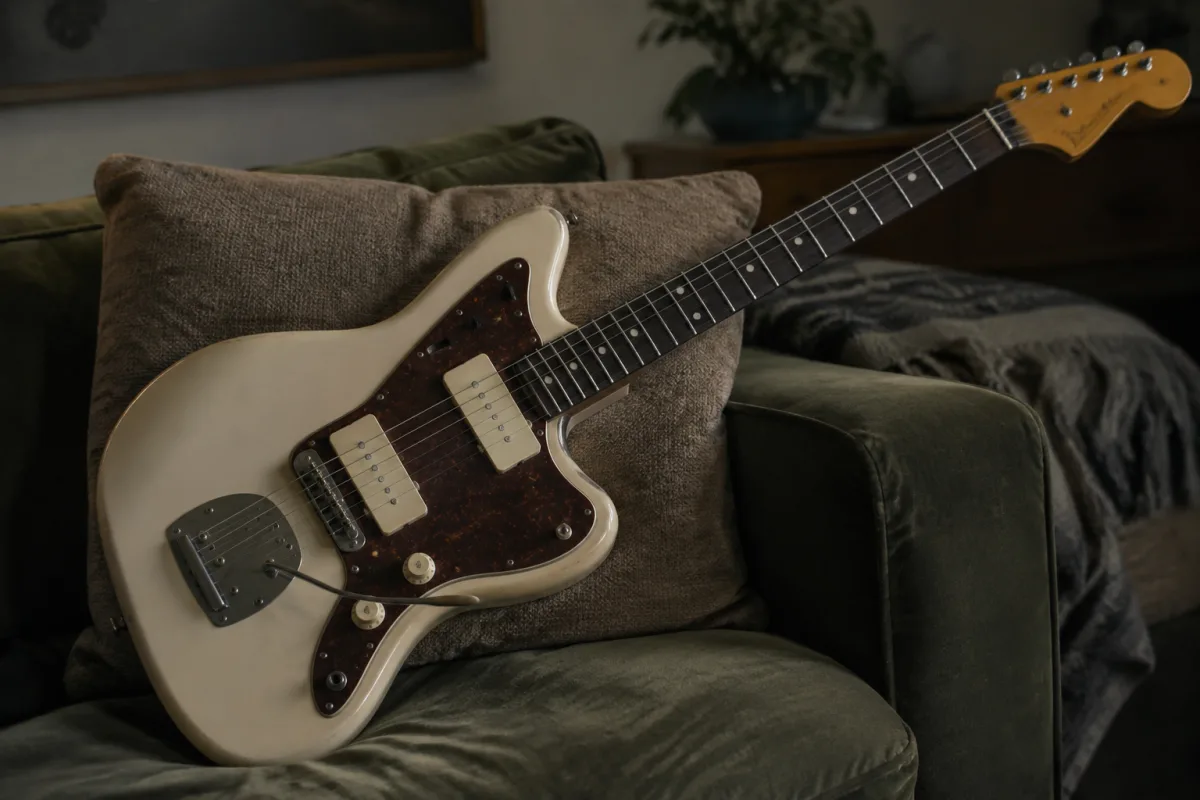
The Jazzmaster guitar is a distinctive instrument with a unique character that appeals to musicians seeking something beyond the conventional Stratocaster or Telecaster. Originally designed by Fender in 1958 as a premium jazz instrument, it has evolved to become a cult favourite across alternative rock, surf, indie and experimental music. Its offset body, distinctive electronics and warm, slightly dark tone make it instantly recognisable and genuinely musical in ways that continue to attract devoted players worldwide.
History and Origins
Fender introduced this model in 1958, positioning it as a high-end instrument for professional jazz players. However, jazz musicians largely ignored it, preferring semi-acoustic guitars and vintage archtops. Instead, it found an unexpected home in surf rock during the 1960s, where its unique tone and offset aesthetics became iconic. Dick Dale, a legendary surf guitarist, helped popularise the instrument by using it on his groundbreaking recordings.
By the 1970s and 1980s, the Jazzmaster guitar was largely forgotten by mainstream musicians, though a devoted minority kept the instrument alive. The 1990s saw a resurgence when alternative rock and indie bands discovered its unconventional character, making it the guitar of choice for artists seeking a distinctive voice outside the Fender Stratocaster mainstream.
Distinctive Design Features
The offset body shape is its most obvious visual characteristic — the upper bout is offset from the lower, creating an asymmetrical silhouette. This ergonomic design makes it comfortable to play whilst seated, and the offset body looks genuinely striking.
Beyond appearance, the Jazzmaster guitar features distinctive electronics. The original design includes single-coil pickups with wide-range specifications and a complex switching system featuring a rhythm circuit — controls that jazz musicians appreciated but modern players often bypass. Contemporary models simplify this, offering straightforward three-way switching.
Tone and Character
| Characteristic | Description | Suitability |
|---|---|---|
| Treble response | Clear and articulate with a slight shimmer | Surf, indie, alternative |
| Midrange | Warm and slightly scooped | Jazz, blues, experimental |
| Bass response | Tight with good definition | Clean and overdriven tones |
| Overall character | Jangly, vintage, slightly off-centre | Artists seeking character over polish |
The Jazzmaster guitar's tone is often described as warm and slightly dark — less bright than a Telecaster, less thick than a Stratocaster. This distinctive voice cuts through without sounding harsh or forced. The wide-range pickups that defined the original design capture a broader frequency spectrum, contributing to its tonal identity.
Why Musicians Choose This Instrument
Modern players select a Jazzmaster guitar for several reasons: the instrument's genuine individuality in an era of Stratocaster homogeneity, its appeal for musicians seeking vintage character and authenticity, and its practical playability for those with smaller hands (the offset body provides better ergonomics than conventional designs).
Beyond practicality, it attracts artists drawn to its cultural history. The instrument carries associations with surf rock heritage, 1990s indie rock, and experimental music — a lineage that appeals to musicians who value artistic integrity over mainstream convention. Owning and playing one makes a subtle but genuine statement about the player's musical philosophy.
The Current Market
Fender continues manufacturing this model in numerous configurations. The American Professional II version offers professional specifications at premium prices. The Player Series provides excellent value for developing musicians. Vintage models from the 1960s and 1970s command high prices from collectors and professional players.
Numerous third-party manufacturers also produce variations, including Squier (Fender's budget line), Paranoid Android, and bespoke builders. These alternatives offer varied price points and specifications, making instruments of this type accessible to musicians with different budgets and requirements.
Learning on This Instrument
The offset body ergonomics make this model particularly comfortable for players with smaller frames or those coming from classical guitar backgrounds. The scale length on some models can suit players with smaller hands. For developing musicians drawn to the aesthetic and character, it is entirely suitable as a first or early instrument.
Conclusion
The Jazzmaster guitar represents something increasingly rare in modern music: a distinctive instrument with genuine character that refuses to conform to mainstream aesthetics. Whether you're drawn by its iconic surf rock heritage, its appeal to alternative musicians, or simply its beautiful, unconventional appearance, it rewards exploration. The instrument's warm tone, offset ergonomics and rich history make it a genuinely compelling choice for musicians seeking an authentic, characterful alternative to conventional electric guitars.


Comments