
Jazzmaster Guitar Fender article
The Complete Guide to Jazzmaster Guitar Fender
The Fender Jazzmaster remains one of the most distinctive electric guitars ever produced, beloved by musicians across alternative rock, surf rock, and indie music scenes.
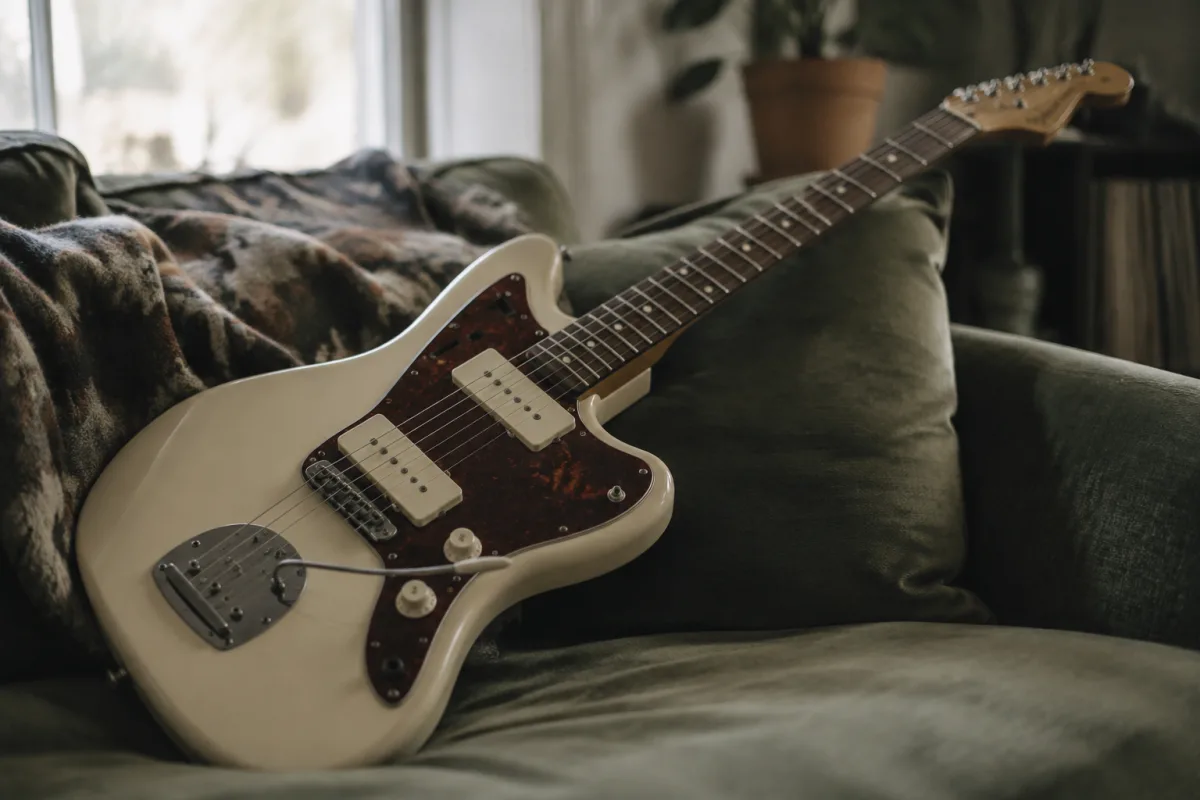
The Fender Jazzmaster remains one of the most distinctive electric guitars ever produced, beloved by musicians across alternative rock, surf rock, and indie music scenes. Originally designed in the late 1950s as Fender's answer to the Gibson ES-335, the Jazzmaster guitar has evolved into a cultural icon with a devoted following spanning decades. Its unique offset body shape, bright sonic character, and unconventional playing ergonomics combine to create an instrument that challenges convention and rewards creative exploration.
Historical Development of the Jazzmaster Guitar
Fender introduced their Jazzmaster in 1958, positioning it as a premium offset-body instrument aimed at professional jazz players. The early vision was to create something fundamentally different from Fender's existing Stratocaster design. The Jazzmaster guitar featured a larger, more angular body with an innovative vibrato system and unique pickup configuration intended to produce warmer, more articulate tones suitable for jazz idioms.
However, the instrument never gained significant traction among jazz musicians themselves. Instead, surf rock pioneers and later alternative rock players embraced the Jazzmaster guitar for its unconventional aesthetic and bright, cutting tone. By the 1960s and 70s, the Jazzmaster had become a fixture in the hands of adventurous players seeking distinctive sonics outside mainstream preferences.
Design and Construction Features
The offset-body design defines the Jazzmaster guitar's visual identity. Unlike the Stratocaster's symmetrical silhouette, the body features an upper bout that extends differently than the lower section, creating instantly recognisable proportions. This unconventional shape influences not only appearance but also ergonomics—the Jazzmaster guitar's contours suit standing players who prefer the body offset from their torso differently than traditional electric guitars.
Structurally, a Jazzmaster guitar typically features:
- Offset Body: Distinctive angular design with extended horn providing access to higher frets
- Single-Coil Pickups: Jazzmaster-specific pickup design producing bright, articulate tone with slight bite
- Floating Vibrato System: Complex mechanical tremolo with tuning stability challenges that characterise the instrument
- Shorter Scale Length: Typically 24 inches, shorter than Stratocaster's 25.5 inches
- Unique Bridge: Floating bridge assembly distinct from traditional fixed designs
Sonic Characteristics
A Jazzmaster guitar's tonal signature emerges from its pickup design and construction. The single-coil pickups produce bright, crystalline tones with prominent treble frequencies. When played cleanly, the instrument delivers sparkling, articulate character suited to surf rock's defining sound. Driven through overdriven amplifiers, a Jazzmaster guitar develops chimey yet aggressive characteristics that alternative rock players have long exploited.
The shorter scale length affects playability and intonation, contributing to the Jazzmaster guitar's characteristic twang. Strings experience less tension, allowing bends to produce slightly different pitch shifts compared to longer-scale instruments. This tonal idiosyncrasy, once considered a design flaw, became part of the instrument's charm for players seeking unconventional voicings.
Notable Jazzmaster Players and Influence
The Jazzmaster guitar's cultural significance grew through association with influential musicians. Surf rock pioneers adopted it during the 1960s, establishing the instrument's connection to that genre's aesthetic. Later, indie rock and alternative musicians rediscovered the Jazzmaster, with bands like The Cure, Sonic Youth, and My Bloody Valentine incorporating it into their distinctive sounds.
Contemporary artists continue exploring the Jazzmaster guitar's sonic potential. Indie, shoegaze, and math rock communities particularly favour the instrument for its ability to produce both delicate clean tones and aggressive distorted textures. This sustained cultural relevance keeps the Jazzmaster guitar relevant across generational shifts in musical taste.
Modern Fender Jazzmaster Variants
Fender currently manufactures several Jazzmaster guitar iterations addressing different player preferences and budgets. The American Professional series represents the company's premium offering, featuring updated electronics, improved vibrato reliability, and refined construction. These higher-end models maintain the classic Jazzmaster guitar aesthetic whilst incorporating contemporary manufacturing refinements.
The Player series provides more accessible Jazzmaster guitar options for emerging players. Whilst retaining essential characteristics, these instruments sacrifice some premium components to achieve lower prices. The Vintera series specifically recreates earlier Jazzmaster guitar models with historical accuracy, appealing to players seeking vintage authenticity.
The Vibrato System Challenge
The Jazzmaster guitar's floating vibrato system represents both blessing and curse. Innovative for its era, this complex mechanism allows extensive pitch manipulation. However, the design's tuning stability limitations frustrated players for decades. Modern Jazzmaster guitar models address these concerns through improved engineering, though some players prefer discovering solutions independently or deliberately accepting tuning instability as part of the instrument's character.
Third-party manufacturers now produce Jazzmaster guitar vibrato upgrades addressing traditional stability issues. Mastery Bridge makes widely respected replacement systems that dramatically improve a stock Jazzmaster guitar's tuning stability whilst preserving authentic aesthetics.
Playing and Adapting to the Jazzmaster
The Jazzmaster guitar presents unique challenges to players accustomed to Stratocasters or Les Pauls. The shorter scale requires finger adjustments; string tension feels lighter, demanding technique adjustments. The offset body positioning differs from what many players instinctively expect, requiring postural adaptation. These learning curves often prove less obstacle than opportunity—players report developing distinctive technique specifically because the Jazzmaster guitar demands different approaches.
The instrument's ergonomics particularly suit unconventional playing techniques. Its shape facilitates access to extreme fret positions, and the lighter string tension encourages experimental vibrato and bending applications. Creative players have long appreciated how the Jazzmaster guitar's unusual characteristics inspire novel musical ideas.
Aesthetic Appeal and Cultural Symbolism
Beyond sonic considerations, the Jazzmaster guitar functions as visual statement. Its distinctive silhouette immediately identifies players preferring alternative aesthetics. The instrument carries associations with cool, progressive musical communities—surf rock pioneers, indie experimenters, and artistic risk-takers. Owning a Jazzmaster guitar signals commitment to individuality and musical exploration over mainstream convention.
This symbolic dimension drives some purchasing decisions. Collectors value original 1960s Jazzmaster examples for both sonic character and historical significance. Contemporary players choose the Jazzmaster guitar partly for the instrument's sonic properties and partly for its cultural associations and distinctive visual presence.
The Jazzmaster guitar represents a fascinating convergence of design innovation, sonic character, and cultural significance. Originally envisioned for one purpose, it found its voice through alternative communities who embraced its unconventional characteristics. Today, the Jazzmaster guitar remains a distinctive choice for players unwilling to compromise creative vision for mainstream accessibility. Whether valued for its sparkling clean tones, aggressive overdriven textures, or iconic visual presence, the Jazzmaster guitar continues proving that sometimes the most influential instruments emerge from taking risks and embracing difference.
Frequently Asked Questions
Is a Jazzmaster guitar suitable for beginners? Whilst possible, the Jazzmaster guitar's shorter scale and offset ergonomics present learning challenges compared to Stratocasters or Les Pauls. Beginners with small hands may appreciate the shorter scale, but most would find traditional designs more intuitive to learn.
Can a Jazzmaster guitar produce heavy metal or hard rock sounds? Yes, though less naturally than instruments designed for high-gain applications. The Jazzmaster guitar can deliver aggressive tones through appropriate amplification, though players typically must work against the instrument's inherent bright character.
Why does my Jazzmaster guitar go out of tune easily? The floating vibrato system contributes to tuning instability. Consider upgrading to an aftermarket bridge system designed to improve stability whilst preserving authenticity.
What distinguishes a Fender Jazzmaster from similar offset guitars? Numerous manufacturers now produce offset-body designs inspired by the original Jazzmaster guitar concept. Fender's version maintains the iconic pickup configuration and vibrato system, though other makers offer their own interpretations.
How does the Jazzmaster guitar's shorter scale affect playability? The reduced scale length lowers string tension, making bends easier but intonation less forgiving. Hand and finger size matter—smaller players often appreciate the compact scale.
Are vintage Jazzmaster guitars significantly better than modern versions? Vintage examples command high prices for historical significance and specific tonal characteristics from aged components. Modern Professional series instruments offer refined engineering and reliability, though some players prefer vintage character.


Comments