
7 String Ibanez Guitars article
The Complete Guide to 7 String Ibanez Guitars
Ibanez's 7 string guitars deliver expanded harmonic possibilities with the signature precision engineering that defines the brand, making them essential instruments for players exploring metal, progressive rock, and experimental genres.
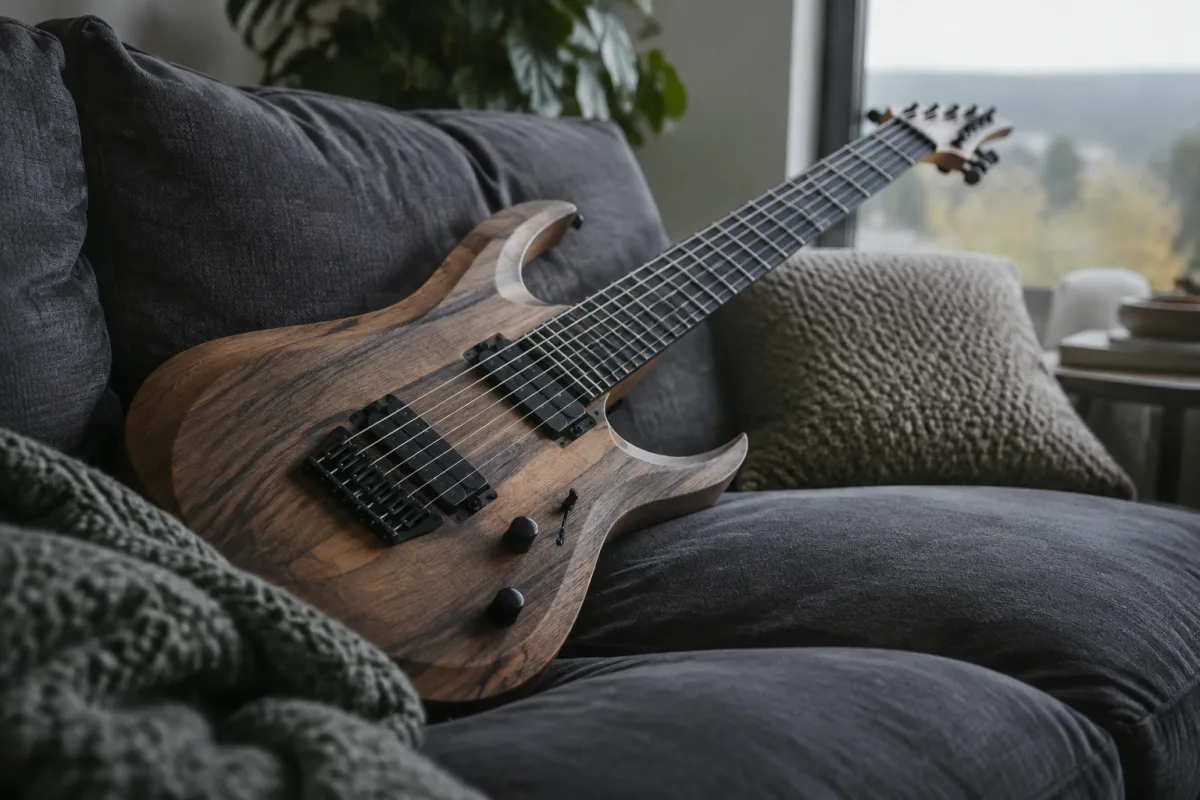
7 string Ibanez guitars represent a fascinating intersection of extended-range innovation and precision engineering. Whether you're exploring metal, progressive rock, or experimental genres, these instruments offer expanded tonal possibilities that standard six-string guitars simply cannot match. Understanding what makes Ibanez's seven-string offerings distinctive will help you make an informed choice about whether this extended-range platform suits your musical direction.
The Appeal of 7 String Ibanez Guitars
Ibanez pioneered the modern seven-string electric guitar during the 1990s, initially in partnership with Steve Vai, establishing the RG7 as the benchmark for extended-range instruments. A 7 string Ibanez guitar adds a low B string below the traditional low E, fundamentally expanding the harmonic palette available to players. This extra string enables deeper, more resonant tones that have become essential in metal and progressive music.
The appeal extends beyond mere extra pitch range. A 7 string Ibanez guitar rewards players with richer polyphonic possibilities, allowing complex chord voicings and riff patterns impossible on conventional six-string guitars. The slightly wider fretboard accommodates the additional string without compromising playability, and Ibanez's ergonomic body designs keep the instruments remarkably balanced despite their enhanced specifications.
Key Ibanez 7 String Models
Ibanez offers several distinct lines of 7 string guitars across their product range:
- RG7 Series — The flagship 7 string Ibanez guitar line, featuring the iconic sharp cutaway body. These instruments prioritise speed and precision, with thin necks and compound radius fretboards designed for lead work and rapid fingering patterns.
- S7 Series — A sleeker, single-cutaway variant that appeals to players seeking a more traditional guitar aesthetic. Despite its smaller profile compared to the RG, the S7 maintains the core Ibanez playability philosophy.
- Iron Label Series — Purpose-built for metal and hard rock, featuring hardtail bridges, reinforced hardware, and slightly heavier-gauge construction. A 7 string Ibanez guitar in this range offers rock-solid stability and aggressive tonal character.
- Prestige Series — Premium seven-string models with top-grade components, including hand-finished frets and superior tonewoods. These represent the pinnacle of Ibanez's engineering for serious players.
Tonal Characteristics
The tonal signature of a 7 string Ibanez guitar depends significantly on its pickup configuration and tonewoods. Most models use dual humbucking pickups positioned to deliver both clarity and aggression, crucial traits when channeling the low B string through gain-heavy amplification.
Ibanez typically constructs seven-string bodies from mahogany or ash, with maple tops on premium models. These materials resonate sympathetically with the extended lower register, producing tight, defined low-end frequencies without muddiness. The naturally bright Ibanez voice—a signature characteristic across their range—ensures even deeply extended chords maintain definition rather than degenerating into frequency fog.
Fretboard Accessibility and Playability
A concern many guitarists raise about 7 string Ibanez guitars concerns whether the expanded fretboard compromises comfort. In practice, Ibanez handles this remarkably well. Their seven-string necks remain slender, typically measuring around 48 mm at the nut—barely wider than a conventional six-string Ibanez despite accommodating seven strings.
The fretboard radius varies by model. Many seven-string Ibanez guitars feature compound radius designs, with flatter sections toward the nut for comfortable open-position playing and increasingly curved sections toward the body for precise bending and soloing. This engineering detail often passes unnoticed by casual observers yet profoundly affects daily playability.
Bridge and Hardware Specifications
Ibanez equips most 7 string models with either an Edge locking tremolo system or a fixed hardtail bridge. The choice significantly influences both playing style and maintenance requirements.
A 7 string Ibanez guitar with an Edge tremolo offers expressive pitch modulation capabilities, though maintaining stable tuning requires careful attention to bridge setup, especially across seven strings. The hardtail variants, increasingly popular on modern seven-string models, eliminate tuning stability concerns whilst providing a direct, uncoloured tonal transfer from strings through hardware into the body.
String locking mechanisms deserve particular attention. The lower mass and increased tension of the extended low string demand robust tuning stability. Ibanez designs their tuning machines and locking nut systems with this consideration in mind, preventing frustrating retuning between performances or recording takes.
Practical Considerations for Prospective Buyers
Purchasing a 7 string Ibanez guitar demands thoughtful consideration beyond initial attraction to the extended range:
- Amplifier Requirements — The low B string demands amplifier headroom and speaker efficiency to translate properly. Underpowered rigs may compress or distort the low-end response.
- String Selection — Seven-string guitar strings differ from standard six-string sets. Ensure you have ready access to appropriate gauge strings for replacement and experimentation.
- Technical Proficiency — The wider fretboard and extended range reward players with existing finger strength and dexterity. Absolute beginners may find traditional six-string instruments more approachable initially.
- Genre Suitability — Whilst versatile, seven-string Ibanez guitars excel in genres that genuinely exploit the extended range: metal, progressive rock, alternative, and experimental styles. Genre players may find the sixth-string platform more immediately rewarding.
Comparing New and Used Options
A 7 string Ibanez guitar remains a significant investment. The secondary market for these instruments remains robust, offering financial advantages for patient buyers. Used RG7 and S7 models from the past decade retain value reasonably well, particularly models from the Prestige line.
When evaluating used instruments, inspect frets carefully for wear patterns that suggest heavy playing or poor maintenance. The extended fretboard provides more surface area for potential fret wear. Verify that the tremolo (if equipped) operates smoothly across all seven strings and that tuning stability remains reliable. Quality used seven-string Ibanez guitars often deliver remarkable value without sacrificing playability or tone.
The Broader Seven-String Landscape
Whilst Ibanez remains dominant in the seven-string market, understanding the competitive landscape enriches purchasing decisions. Schecter, ESP, and other manufacturers produce competent seven-string instruments, each with distinctive characteristics. Ibanez's particular strengths lie in proven ergonomics, consistent quality control, and a deep catalogue of models across price points—from entry-level Gio series instruments through to hand-crafted Prestige models.
The community surrounding 7 string Ibanez guitars remains active and welcoming. Online forums, YouTube channels, and local music communities provide ongoing support for players transitioning to extended-range instruments. This ecosystem value—access to knowledge, technique inspiration, and troubleshooting guidance—compounds the practical advantages of choosing an established brand with broad adoption.
Final Thoughts on 7 String Ibanez Guitars
A 7 string Ibanez guitar opens creative possibilities that remain inaccessible on conventional instruments. The carefully engineered combination of ergonomic design, proven tonal characteristics, and extensive model range makes Ibanez a compelling choice for players committed to the extended-range journey. Whether you're crafting crushing riffs in a metal ensemble, exploring unconventional chord progressions in progressive contexts, or simply seeking to expand your harmonic vocabulary, these instruments deliver the precision engineering and playable design philosophy that has defined Ibanez guitars for generations. The investment in a quality seven-string model promises years of creative exploration and expanded musical expression.


Comments