


Ibanez Electric Guitar article
Ibanez Electric Guitar for Beginners: A Complete Guide
If you're learning guitar for the first time, an Ibanez can be exactly what you need. A guide to beginner-friendly Ibanez models, setup advice, and how to stay motivated whilst learning.
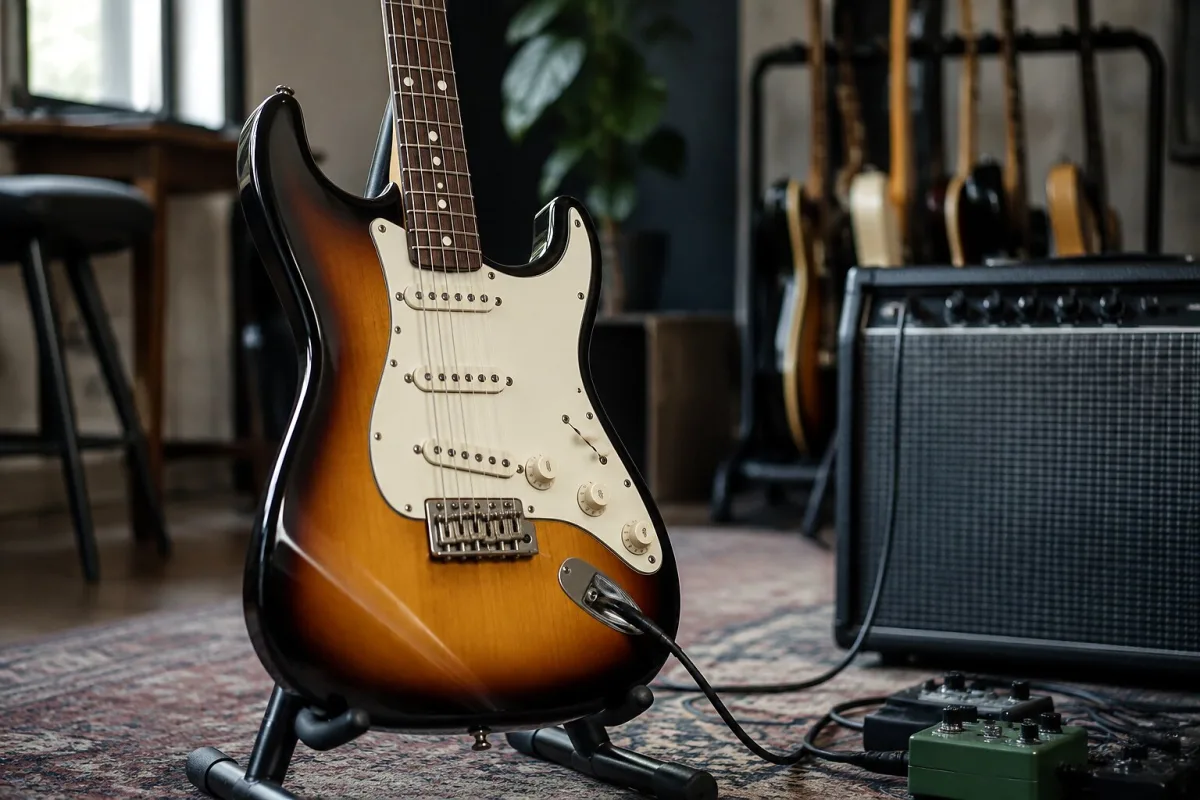
If you've never picked up a guitar before but the thought of learning has been nagging at you, an Ibanez might be exactly what you need. The brand's reputation for uncomfortable shred-machines is mostly myth — there are Ibanez models built specifically to make learning easier, with necks that sit gently in your hand and action that won't exhaust your fingers before you've learned your first song.
Why Ibanez for Your First Guitar?
A lot of guitar makers build for tradition. Ibanez builds for you — for how your hand actually works, how modern playing develops and what feels good under your fingers when you're starting out. That philosophy runs through the entire range, from the cheapest entry-level models right up to the hand-finished Prestige instruments.
The brand's thin, fast necks aren't just for metal players. They're comfortable for learning because your hand doesn't have to grip something thick and exhausting. The 24-fret necks give you more range to explore than you'll find on many starter guitars from other makers. The overall build quality, even in budget models, is reliable — nothing should fall off or buzz unexpectedly.
And here's the honest bit: if you start on an Ibanez, you're learning on something that's built well. You won't develop bad habits on a poorly-made instrument that's fighting you.
Which Ibanez Model Should You Choose?
Start with the AZES (AZ Essentials). This range was designed with beginners in mind. The neck is rounder and more familiar than the thin Wizard profiles on higher-end models — it feels like playing a traditional guitar, not a racing bike. The 250 mm fingerboard radius is gentle, the action comes from the factory set sensibly, and the price (around £300–400) is reasonable for a guitar you'll keep and treasure.
If that's too much, the GRG starts around £200. It's genuinely playable, though the fret finishing and hardware are simpler. Budget £50–100 for a professional setup — it transforms the experience — and you've got a proper learning guitar. The GRG isn't fancy, but it's real.
Avoid anything cheaper than £150. You're not saving money; you're buying frustration. A poor setup and cheap hardware will make every chord harder to play and every wrong note more discouraging.
Fixed Bridge vs. Floating Tremolo
When you're choosing, this is the key decision. A fixed bridge is simpler: you tune the strings, they stay in tune, and you focus on learning. A floating tremolo (the locking Edge system) lets you dive and flutter pitch, which is fun but needs setup knowledge and maintenance.
For your first guitar, choose fixed bridge. You can learn tremolo techniques later if you want — they're not essential, and they add a class of complications you don't need while you're building basic skills.
Setup and First Strings
A new guitar needs love. Spend £50–100 on professional setup — adjust action, intonation and neck relief so the guitar plays easily. New strings help too. You can spend £15 on a set of budget strings, or £30 on something that holds tune better and feels smoother. Both are fine; just pick something and go.
Your fingers will hurt at first. That's normal. Calluses build over weeks, and your hand adapts. If the action is truly high (strings far from the fretboard), that's a setup issue — get help. If it's just the discomfort of learning, that passes.
Finding Your Sound
An Ibanez's tone depends on the pickups. Entry-level models use simple pickups that sound bright and relatively thin compared to expensive models. That's fine for learning — you're not making an album yet. As you improve, you'll develop opinions about tone, and you can upgrade pickups or move to a nicer model.
But here's the thing: a cheap Ibanez played thoughtfully sounds better than an expensive Ibanez played carelessly. Technique, touch and intention matter far more than the logo on the headstock. Start simple. Listen to players you admire. Copy what they do. Let your ear develop before you spend money chasing tone.
Learn by Playing Real Songs
Don't spend six months learning scales. Pick a song you love and learn it. You'll learn more from playing one complete song than from a month of exercises. Your brain learns patterns by doing, and music is built on patterns. Find tabs (there's a thousand free sites), and start working.
Easy songs to start: "Smoke on the Water" (Deep Purple) is a classic for a reason. "Seven Nations Army" (The White Stripes) teaches rhythm and simple shapes. "Nothing Else Matters" (Metallica) is beautiful and surprisingly approachable. "Wonderwall" (Oasis) is everywhere and not as simple as it sounds — perfect for developing consistent technique.
Stick With It
Learning guitar is rewarding but slow. The first month is hardest — everything hurts, everything sounds bad, progress feels invisible. The second month things click a bit. By the third month you'll be playing actual songs and it suddenly feels possible. The key is practice: 20 minutes a day beats one epic weekend session.
An Ibanez won't make you a great player. But it won't get in your way either. It's built for learning, built to last, and built to make the process feel less painful. Pick one, learn something you love, and see where it takes you.




Comments