


Clean Frets on Guitar article
The Complete Guide to Clean Frets On Guitar
Master the art of cleaning frets on guitar with proper techniques, tools, and protective methods that keep your instrument sounding brilliant and playing smoothly.
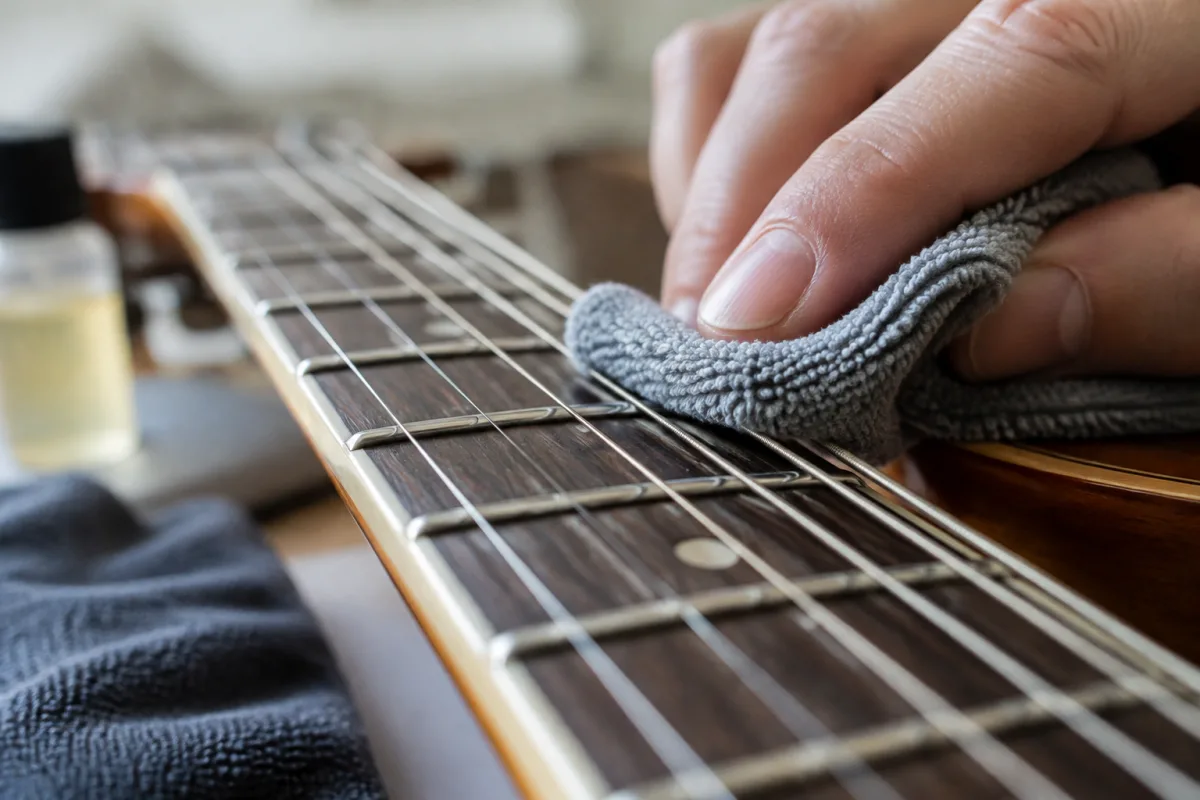
Keeping your guitar's frets clean fundamentally impacts playability, tone, and the instrument's longevity. Frets accumulate grime, oxidation, dead skin cells, and sweat debris that builds up visibly over time, dulling the beautiful metal work and potentially affecting the quality of your tone and smooth fretting action. Learning to clean frets on guitar properly takes minimal time but delivers dramatic improvements in how your instrument plays and sounds. Regular fret cleaning transforms a neglected guitar into an instrument that responds with clarity and satisfying responsiveness.
Why Clean Frets on Guitar Matter
The accumulation of dirt and oxidation on your frets creates multiple problems. A heavily soiled fret surface creates friction that interferes with smooth bending and string movement. Clean frets on guitar slide effortlessly under your fingers, enabling faster playing and reducing finger fatigue during extended sessions.
Tone suffers measurably when frets become heavily oxidised. Tarnished, oxidised metal does not conduct vibration as effectively as bright, clean frets. Clean frets on guitar respond with noticeably superior brightness and clarity. Players often experience a revelatory moment when they properly clean frets on guitar — suddenly their instrument sounds a full octave brighter and more responsive.
Basic Cleaning: Degreasing and Deoxidising
Basic cleaning of frets on guitar requires only a soft cloth and appropriate cleaner. A microfibre cloth or soft cotton towel paired with isopropyl alcohol effectively removes surface grime and light oxidation. Dampen your cloth lightly — never soak — and wipe each fret carefully, moving along the fret rather than across it to avoid streaking.
For deeper cleaning of frets on guitar, commercial fret cleaners specifically formulated for guitar metal prove worthwhile. These cleaners typically combine degreasing compounds with mild oxidation removers. When using any cleaner to clean frets on guitar, ensure masking tape protects the fretboard to prevent damaging the wood.
Protecting the Fretboard During Cleaning
The most critical step when you clean frets on guitar involves protecting the fretboard itself. Masking tape applied to the wood on either side of each fret prevents cleaner from contacting the rosewood, ebony, or maple. This protection proves essential because aggressive cleaners can damage fretboard finishes or discolour the wood.
Some players prefer cutting masking tape into precise strips; others apply tape along the full length of the fretboard, creating channels between the frets. Either approach works effectively. The key principle: never allow cleaning solution to contact the fretboard whilst you clean frets on guitar.
Deep Cleaning and Metal Polish
For heavily oxidised frets or instruments that have never received professional cleaning, metal polish offers superior results compared to basic cleaners. Specialized guitar fret polish contains gentle abrasives that remove oxidation whilst remaining mild enough to avoid damaging the metal underneath.
When you clean frets on guitar with metal polish, use only very light pressure and plenty of cleaning cloth — never aggressively scrub. The gentle abrasive removes oxidation through repeated, patient passes rather than aggressive rubbing. Quality products designed specifically for guitar frets work considerably better than general metal polishes.
Cleaning Between the Frets
Substantial debris often lodges in the narrow gaps between fret crowns and the fretboard. A soft toothbrush proves invaluable for dislodging trapped particles when you clean frets on guitar. Brush gently, using a downward motion to push debris out rather than grinding it deeper into crevices.
For stubborn, dried-on debris, soft wire brushes designed for cleaning guitar frets work excellently. These brushes feature very fine wire — far gentler than standard wire brushes — allowing thorough cleaning without damaging the frets themselves or the fretboard.
Fret Crowning and Professional Restoration
If your frets have become heavily worn or pitted, simple cleaning alone cannot restore them. Professional fret crowning involves levelling and reshaping frets to remove deep pits and wear patterns. This process requires specialised luthier equipment and considerable skill — not something to attempt at home.
However, before investing in professional fret work, ensure you've properly cleaned frets on guitar. Many instruments that appear worn actually just need deep cleaning and polish — professional fret restoration is unnecessary until frets are genuinely damaged or worn.
Regular Maintenance Schedule
Establishing a consistent cleaning routine prevents heavy oxidation and grime buildup. Light cleaning of frets on guitar after every few playing sessions — using just a soft cloth and isopropyl alcohol — keeps them in excellent condition without requiring intensive effort.
Deep cleaning to clean frets on guitar thoroughly approximately quarterly proves sufficient for most players. Those playing in particularly humid environments or with noticeably acidic sweat may benefit from monthly deep cleaning sessions.
String Condition and Fret Cleanliness
Old, worn strings accelerate fret tarnishing and grime accumulation. Fresh strings combined with newly cleaned frets on guitar create a synergistic improvement — your guitar suddenly feels and sounds dramatically better. Many players discover this transformative combination by coincidence and thereafter plan string changes to coincide with deep fret cleaning.
The relationship works both ways: clean frets on guitar make new strings stay cleaner longer because oxidation and grime buildup slows on pristine metal frets.
Tools Worth Having
Building a simple fret cleaning kit ensures you're always prepared to clean frets on guitar properly. Collect: microfibre cloth, isopropyl alcohol, masking tape, soft toothbrush, guitar-specific fret cleaner or metal polish, and soft wire brush. This modest collection of tools enables everything from light daily cleaning to deep restoration work.
Quality matters with these tools. Cheap masking tape leaves residue; cheap cloths scratch frets. Modest investment in proper supplies creates a setup that lasts years and delivers consistent, professional results whenever you clean frets on guitar.
Conclusion
Properly cleaned frets on guitar transform your playing experience entirely. The combination of improved feel, superior tone, and visual satisfaction makes fret cleaning an essential maintenance task deserving regular attention. Whether you clean frets on guitar yourself or engage a technician periodically, maintaining clean, bright frets keeps your instrument sounding and playing at its absolute best. Take the time to clean frets on guitar properly, and you'll discover an instrument that responds with the clarity, brightness, and responsiveness that inspired you to play in the first place.





Comments