


Sterling Music Man Bass article
The Complete Guide to Sterling Music Man Bass
Sterling Music Man basses deliver the legendary quality and iconic tone of the Music Man brand at a fraction of the StingRay price. Discover why they're favoured by professionals and serious amateurs alike.
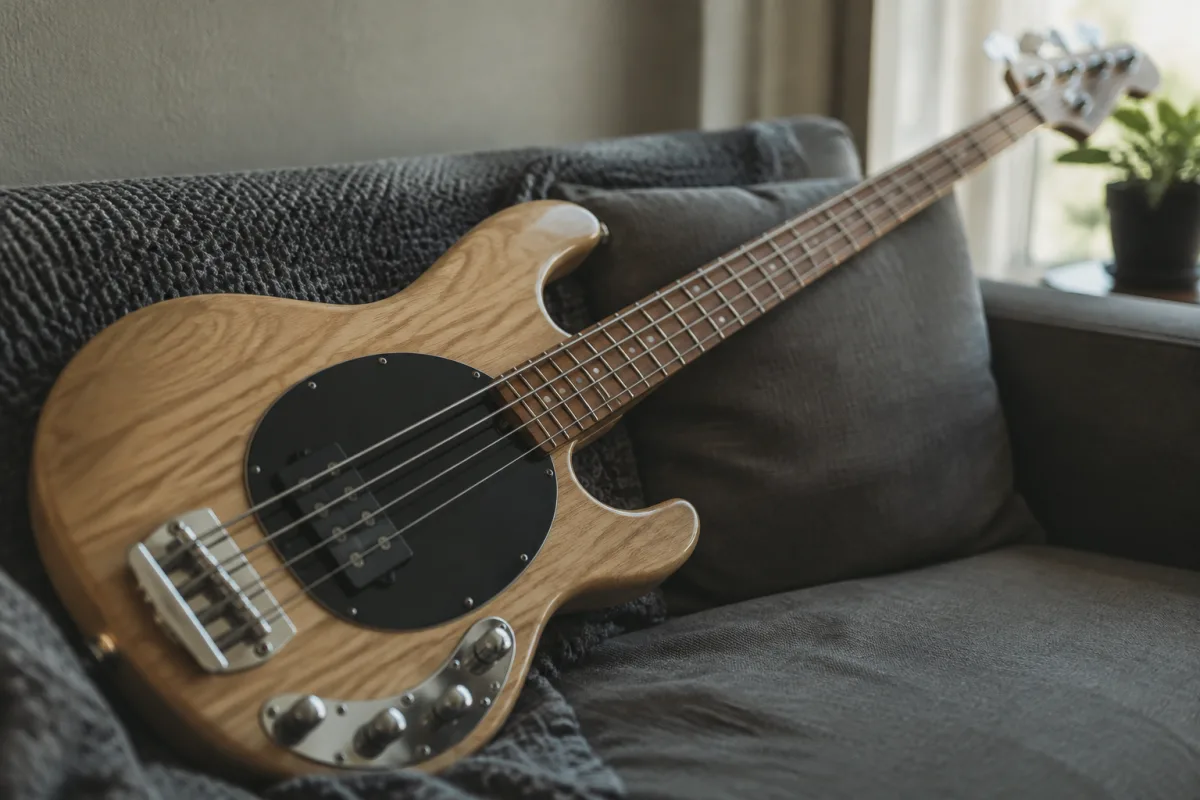
The Sterling Music Man bass represents an accessible entry point into the legendary quality that Music Man has built over decades. Built by Ernie Ball Music Man and distributed internationally, Sterling bass guitars deliver professional-grade playability and tone at a price point considerably lower than the flagship StingRay range. This guide explores what makes the Sterling Music Man bass an attractive choice for musicians across all skill levels and budgets.
A Brief History of Sterling
Music Man originally introduced the Sterling bass as a more affordable alternative to the iconic StingRay in the late 1990s. The strategy was straightforward: take the core design principles and quality construction that made StingRay basses famous amongst professionals, then streamline production to achieve a lower retail price. This approach successfully democratised access to Music Man instruments for a new generation of bass players who admired the brand but couldn't justify the expense of a full-price StingRay.
Today, Sterling basses occupy a unique market position—they're solidly built professional instruments, yet priced competitively with standard factory-made basses from other respected manufacturers. This positioning has made Sterling basses popular with session musicians, touring players, and serious amateurs alike.
Build Quality and Materials
Sterling Music Man basses share fundamental construction methods with their more expensive StingRay cousins. The body is typically constructed from alder or ash, finished with a hard-wearing polyester finish. The neck is bolt-on, a choice that provides easy access for any future repairs or replacements, though in practice the necks are remarkably stable and rarely require maintenance.
The tuning machines are robust, and the hardware is solid brass—nothing cheap about the physical construction. Players accustomed to mid-range Japanese instruments often comment that holding a Sterling bass reveals its above-average build quality immediately. There's no plastic to be found; every component feels purposeful and durable.
The Pickup and Electronics
The single humbucker pickup in a Sterling Music Man bass is a two-coil design that produces the warm, slightly aggressive tone that characterises the StingRay/Sterling lineage. This pickup differs significantly from the split-coil design found in Fender Precisions, offering a rounder tone with less treble bite and more low-mid presence. The pickup is relatively hot, meaning it produces a strong, clear signal even when played lightly.
The active electronics comprise a three-band EQ (bass, mid, treble) powered by a single 9-volt battery. The mid-range control is particularly useful in a mix—it allows fine-tuning of the upper-mid frequencies that often determine how a bass cuts through dense arrangements. Many bass players find that the active EQ on a Sterling reduces the need for extensive mixing console adjustments once the instrument is dialled in at the source.
Playing Comfort and Ergonomics
Sterling basses are famously comfortable to play, with a streamlined body contour that doesn't dig into the player's torso during extended sessions. The frets are well-crowned and properly dressed at the factory, meaning the action is typically low and playable straight out of the box. This is not universally true of budget basses, where rough frets often necessitate a professional setup before the instrument is truly usable.
The neck profile is slightly slimmer than a StingRay, a deliberate choice that makes the Sterling more accessible to players with smaller hands. Traditionalist StingRay devotees sometimes comment that this neck feels just slightly less substantial, but for most players, the practical advantage of easier playability outweighs any perceived loss of "feel." The balance point is excellent—the body sits naturally in your lap whether sat down or playing whilst standing with a strap.
Tone Characteristics
The Sterling Music Man bass produces a warm, punchy tone that sits well in rock, funk, pop, and soul contexts. The humbucker pickup naturally emphasises the fundamental and lower harmonics whilst de-emphasising excessive treble, resulting in a tone that's immediately useful in a mix. You don't need to spend hours searching through preset EQ settings to get a usable sound.
With the EQ flat or nearly flat, a Sterling bass provides a solid low end that professional players describe as "professional right off the shelf." The mid-range control is particularly valuable for funk playing, where cutting through the mix requires a strong presence in the 400–800 Hz region. Soloing these frequencies on a Sterling allows precise control impossible with a passive instrument.
Comparison with Other Budget Basses
Budget Fender Precisions and Jazzes, whilst famous and readily available, often require significant setup work to achieve playability comparable to a Sterling. The Sterling's advantage lies in its consistent factory quality—every instrument comes already properly set up and ready for professional use. Japanese manufacturers like Ibanez and Yamaha produce excellent budget basses, but those typically favour thinner tones and lighter body weights, whereas the Sterling delivers a heavier, fatter character.
What the Sterling doesn't offer is extensive tonal versatility. A passive split-coil Precision can switch rapidly between bright and warm extremes; the Sterling's single humbucker covers a narrower tonal range. This is not a weakness for musicians playing specific genres, but it's worth acknowledging for those seeking maximum tonal variety.
Reliability and Durability
Sterling Music Man basses are renowned for reliability. The hardware rarely fails, the frets wear slowly, and the active circuit is robust. The most common maintenance is replacing the 9-volt battery roughly once per year, assuming regular use. Beyond that, these basses require only the standard maintenance that any fine instrument needs—occasional fret cleaning, tuning machine lubrication, and re-stringing as required.
Resale value is solid. A well-maintained Sterling bass typically retains 60–70% of its original retail price over five years, which is respectable for an instrument in this price bracket. This stability means investing in a Sterling is a relatively safe proposition—you're unlikely to lose significant money if you decide to sell later.
Who Should Buy a Sterling Music Man Bass?
A Sterling Music Man bass is an excellent choice for anyone seeking a genuinely professional instrument without the premium price of a full-price StingRay. Touring musicians appreciate the reliability, session players value the consistent tone, and intermediate to advanced amateurs often discover that a Sterling outperforms far more expensive instruments from less established manufacturers.
If you play primarily funk or soul music and want a humbucker-equipped bass, the Sterling is arguably the best value proposition in its price range. If you need maximum tonal flexibility or prefer a lighter instrument, alternative options might suit you better. But for rock-solid build quality, professional tone, and legendary brand heritage at an accessible price, the Sterling Music Man bass stands nearly alone.
Conclusion
The Sterling Music Man bass represents the democratisation of genuine quality. By combining Music Man's engineering expertise with streamlined manufacturing, the Sterling delivers a bass that professionals use confidently in recording studios and on stages worldwide, yet at a price that serious amateurs can justifiably afford. Whether you're upgrading from a budget instrument or exploring Music Man quality for the first time, a Sterling Music Man bass rewards you with reliability, playability, and tone that inspire confidence in any musical context.





Comments