
The Martin Guitar Company article
The Complete Guide to The Martin Guitar Company
The Martin Guitar Company is one of the world's oldest and most respected guitar manufacturers, renowned for hand-crafted acoustic instruments that improve with age and define acoustic guitar excellence.
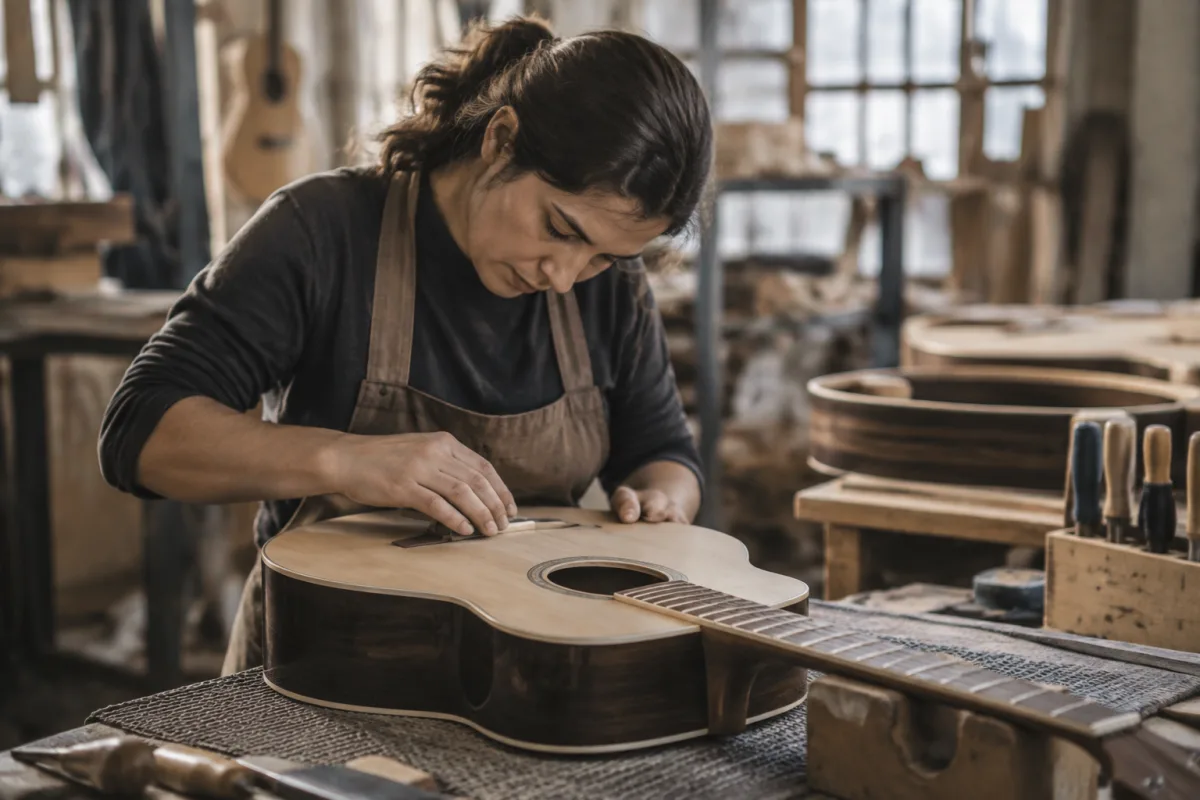
The Martin Guitar Company stands as one of the world's oldest and most respected guitar manufacturers, a company whose instruments have shaped music history and whose reputation for craftsmanship, tone and reliability remains unmatched nearly two centuries after its founding. From humble beginnings in a small Pennsylvania workshop in 1833, Martin has grown into an international brand whilst maintaining its commitment to hand-crafted acoustic guitars built from carefully selected tonewoods. Today, Martin guitars are the choice of folk legends, country stars, touring professionals and serious amateurs worldwide—instruments that improve with age and often become family heirlooms. Understanding the Martin Guitar Company reveals not just a manufacturer but a custodian of acoustic guitar tradition and the standard by which all other acoustic instruments are measured.
The History of the Martin Guitar Company
Christian Frederick Martin, a German immigrant and skilled guitar maker, founded his company in 1833 in Nazareth, Pennsylvania. Martin arrived in America with extensive experience in European guitar-making traditions, and he began producing instruments that refined existing designs whilst incorporating his own innovations. The early Martin guitars were smaller than modern standards, but their tone quality and construction quickly earned respect among discriminating musicians.
The company's breakthrough came in the late 19th century with the development of the dreadnought body shape—a large, powerful acoustic design that became industry standard. This innovation, paired with Martin's proprietary X-bracing system (a wood-bracing pattern that optimises tonal response), gave Martin instruments unmatched projection and clarity. By the early 20th century, Martin guitars were the choice of American folk and country musicians, and their reputation only solidified as folk music enjoyed cultural prominence in the 1960s.
The company has remained largely independent throughout its history—a remarkable achievement for a family business operating since 1833. Today, Martin is owned by a private investment group but retains its headquarters in Nazareth, Pennsylvania, and maintains strict adherence to traditional craftsmanship principles.
What Makes Martin Guitars Distinctive
Martin guitars are renowned for several characteristics that set them apart:
- Tone quality: Martin instruments are famous for their warm, rich tone with clear projection. The company's wood selection and construction methods produce acoustic guitars that sound full and responsive from day one and improve significantly over years and decades.
- Construction craftsmanship: Each Martin guitar is hand-assembled and inspected; the company employs traditional construction methods combined with modern precision. This labour-intensive approach results in instruments that feel solid and respond to subtle playing dynamics.
- Tonal consistency: Despite hand construction, Martins display remarkable consistency from instrument to instrument. A D-28 built in 2000 and a D-28 built in 2020 will sound distinctly like Martins, with family resemblance immediately apparent.
- Longevity: Martin guitars are built to last generations. Proper maintenance can see an instrument remain playable and valuable for 50+ years, with tone often improving as the wood ages and stabilises.
- Resale value: Martin guitars hold their value exceptionally well. A used Martin often costs nearly as much as a new one; vintage Martins from the 1930s–1960s command premium prices and are considered investments.
Martin Guitar Company's Product Lines
Martin organises its guitars across several series, targeting different players and budgets:
| Series | Construction | Price Range (GBP) | Target Market |
|---|---|---|---|
| Special & Limited | Premium solid woods, hand-crafted | £3,000–£10,000+ | Collectors, serious professionals |
| Standard (D-15, D-18, D-28, etc.) | Solid woods, traditional X-bracing | £2,000–£4,500 | Professional musicians, serious amateurs |
| Road Series | Solid woods, cutaway options, modern features | £1,800–£3,500 | Touring musicians, soloists |
| X Series | High-pressure laminate (HPL), durable | £1,000–£2,000 | Gigging musicians, students, travel |
| Backpacker & Travel Series | Compact, HPL construction | £300–£800 | Travellers, casual players, learning |
| Special Editions (Retro, Vintage) | Recreations of classic models | £2,500–£5,000 | Enthusiasts, collectors |
The Standard Series remains Martin's flagship—instruments built with premium solid tonewoods and hand-crafted to the company's highest standards. These guitars command premium prices but deliver tone that justifies the cost for professionals and serious amateurs.
Wood Selection and Craftsmanship
Martin's reputation for tone stems largely from meticulous wood selection. The company sources:
- Soundboard wood: Sitka spruce or other premium spruce species. Sitka spruce is prized for its strength-to-weight ratio and ability to project tone clearly.
- Back and sides: East Indian rosewood (warm, darker tone), mahogany (brighter, articulate), or other premium hardwoods. Each wood type imparts distinctive tonal characteristics.
- Neck and headstock: Mahogany or other hardwoods chosen for stability and workability.
- Fingerboard and bridge: Ebony or rosewood, chosen for durability and appearance.
Martin purchases wood years in advance and allows it to season naturally before construction. This patient approach results in wood that is stable, resonant and unlikely to warp or crack as the guitar ages. Many players credit this wood-seasoning practice with Martin's legendary longevity.
The Martin Guitar Company and Modern Production
Despite maintaining traditional hand-craftsmanship values, Martin has adopted modern manufacturing techniques where appropriate. Computer-controlled machinery assists in precision tasks, but skilled craftspeople remain central to the assembly process. Each guitar undergoes multiple inspection stages before leaving the factory.
The company has also expanded its product range to include acoustic-electric guitars fitted with quality onboard electronics, enabling Martin instruments to be amplified for stage performance without sacrificing acoustic tone. This innovation has kept Martin relevant in contemporary performance contexts whilst maintaining tonal integrity.
Collecting and Investing in Martin Guitars
Martin guitars are among the most collectible musical instruments. Vintage models—particularly pre-1970s dreadnoughts with pristine finishes—often appreciate in value. A Martin D-28 from 1954 might cost £5,000–£10,000 today, compared to £300–£500 when new. This value retention reflects both the instruments' longevity and their cultural significance.
Serious collectors focus on specific eras, wood combinations and production details. Factors affecting vintage Martin value include:
- Year of manufacture (pre-1960s generally more valuable)
- Wood combination (all-solid-wood models preferred)
- Condition (original finish and minimal repair highly valued)
- Rarity (limited production years command premiums)
- Serial number (certain runs are particularly desirable)
Learning and Maintenance
Proper care ensures a Martin guitar retains value and sounds excellent for decades. Essential maintenance includes:
- Humidity control: Store at 45–55% relative humidity. Excessively dry environments cause cracking; excessive moisture promotes swelling and warping.
- Regular cleaning: Wipe the body and neck after playing to remove perspiration and dust.
- String changes: Replace strings every 2–3 months of regular playing with quality bronze-wound or phosphor-bronze strings.
- Professional setup and servicing: Have the guitar professionally set up annually, with adjustments to truss rod, bridge saddle, nut and action as needed.
- Hard case storage: Always store in a hardcase, never a soft gig bag, to protect against humidity fluctuation and physical damage.
The Martin Guitar Company's Cultural Significance
Martin guitars are synonymous with acoustic music itself—folk, country, singer-songwriter and classical traditions all feature Martins prominently. Legendary musicians—Woody Guthrie, Johnny Cash, Paul Simon, Willie Nelson—played Martins and associated the brand with artistic authenticity and quality. This cultural association transcends mere product: owning a Martin connects a player to generations of musicians and a tradition of acoustic excellence.
Conclusion
The Martin Guitar Company represents nearly two centuries of continuous craftsmanship, innovation and commitment to acoustic guitar excellence. Whether you're investing in a vintage Martin as a collectible, purchasing a new Standard Series instrument for professional use, or simply appreciating the company's historical significance, Martin guitars embody a philosophy that fine instruments improve with age and reward serious musicians with tone and playability. In a world of mass production, Martin stands as a testament to the value of tradition, quality and patience—ideals that remain central to the company's identity and appeal.
Frequently Asked Questions
Q: What is the difference between Martin D-15, D-18 and D-28?
A: These Standard Series dreadnoughts differ in their back and side wood, which affects tone. D-15: mahogany (bright, articulate). D-18: mahogany (similar to D-15 but with hand-selected details). D-28: East Indian rosewood (warm, deeper tone). All feature Martin's signature X-bracing and dreadnought size.
Q: Are vintage Martin guitars better than new ones?
A: Vintage Martins are highly sought after and often sound exceptional due to decades of wood seasoning. However, modern Martins are built to equal or superior specifications with improved construction tolerances. Both old and new can be excellent; the choice depends on preference, budget and availability.
Q: How long does a Martin guitar last?
A: With proper care, 50–100+ years or more. Many Martins built in the 1930s are still played professionally. The instrument's longevity is legendary and justifies the investment.
Q: Is a Martin guitar a good investment?
A: Historically yes. Vintage Martins hold value extremely well and often appreciate. New Standard Series Martins also hold their value; a five-year-old used Martin typically costs 80–90% of its original price. Lower-cost X Series and Backpacker models depreciate more but remain solid instruments.
Q: What's the best Martin guitar for beginners?
A: An X Series Martin (£1,000–£2,000) offers genuine Martin quality at an accessible price. The instrument is durable and suitable for years of regular playing. If budget allows, a Road Series is an excellent step up with slightly better tone.
Q: Can I resize the action on a Martin guitar?
A: Yes, a qualified luthier can adjust action via bridge saddle modification or truss rod work. However, work should only be performed by someone experienced with Martins to preserve the instrument's value and sound.
Q: Do all Martin guitars sound the same?
A: Martin guitars share a recognisable "family" tone, but individual instruments vary slightly due to hand construction and natural variation in wood. Two D-28s will sound distinctly like Martins but with subtle individual character.
Q: Is a Martin guitar suitable for all music genres?
A: Martins excel in folk, country, singer-songwriter and classical contexts. They can work in other genres but are optimised for acoustic music; electric instrument styles (rock, metal, rap) typically use electric guitars instead.


Comments