


Guitar Locking Nuts article
Guitar Locking Nuts for Beginners: A Complete Guide
A beginner's guide to guitar locking nuts demystifying this simple tuning stability innovation.
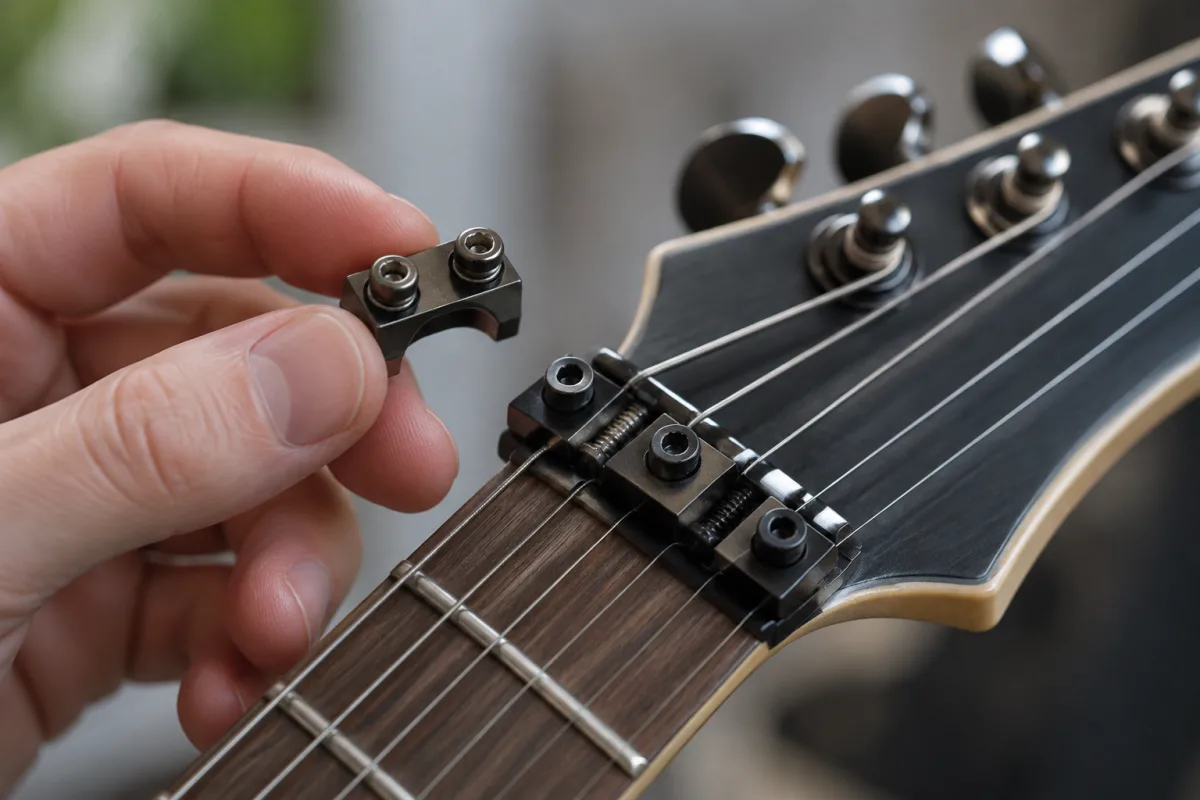
You've heard experienced guitarists mention locking nuts, and you might wonder what the fuss is about. Locking nuts seem like mysterious specialised equipment, but they're actually a simple solution to a genuine playing problem. This beginner's guide demystifies locking nuts by explaining what they do, why you might encounter them, how to use them properly, and whether they matter for your current playing. We're not diving into technical engineering; we're focusing on practical understanding that helps you appreciate this relatively simple innovation. For comprehensive technical details, the complete guide to guitar locking nuts covers everything in exhaustive detail.
The Fundamental Problem Locking Nuts Solve
When you tune a guitar with a standard nut, the strings rest in small grooves cut into the nut's material. As you play—especially when using the tremolo system or bending strings aggressively—the strings gradually shift slightly in those grooves. That microscopic movement causes tuning instability: your carefully tuned guitar slowly goes flat or sharp during playing. The higher the strings sit in those grooves, the more they shift. Professional musicians performing hour-long sets found this frustrating and limiting.
A locking nut solves this problem by physically clamping each string in place, preventing any movement once you've tuned. This innovation meant musicians could use aggressive tremolo techniques, bend strings hard, and maintain perfect tuning throughout extended performances. What started as a professional tool has trickled down to amateur and beginner levels.
How Locking Nuts Actually Work
A standard nut has grooves for each string; a locking nut adds small clamps or locking mechanisms for each string position. When you've tuned to pitch, you tighten these locking clamps. The clamps press the string into position firmly enough that it cannot shift. That's genuinely all there is to it: a simple mechanical solution using leverage and friction.
Different manufacturers use slightly different clamping mechanisms—some use threaded bolts, others use cam levers. The variety means that different locking nuts require different techniques to engage and release. However, the core principle remains identical: lock the strings to prevent movement.
Why Beginners Might Encounter Locking Nuts
If you're learning on a modern guitar from a respected manufacturer, you might find locking nuts already installed. Many contemporary instruments include them as standard or optional equipment. This doesn't mean you need them; it just means they've become common enough that many new guitars feature them. You're probably using a guitar with a locking nut and haven't even thought about it.
Alternatively, you might inherit or purchase a used guitar equipped with one. Understanding how to engage and disengage the locking mechanism prevents frustration and potential damage. Many beginners accidentally over-tighten locking clamps, creating problems they then don't understand. Knowing what you're working with prevents these mistakes.
Understanding When Locking Nuts Actually Matter
Here's the honest truth: if you're not using a tremolo system or playing aggressive techniques, locking nuts provide minimal benefit. Most beginner playing—learning chord changes, practising scales, playing straightforward songs—happens at volumes and intensities that don't challenge standard nut tuning stability significantly. A locking nut might improve your tuning stability by 10%, which is nice but not essential.
If you're drilling through simple covers and focusing on fundamental technique, a standard nut and careful tuning management work perfectly well. Locking nuts become genuinely valuable when you're diving hard into tremolo use or performing complex arrangements with intense bend work.
Using a Locking Nut: Practical First Steps
If your guitar has a locking nut, locate the clamps—they're typically visible on the headstock immediately behind the nut. Loosen them completely before tuning. Use your standard tuning method until the strings are at pitch. Then, tighten each clamp firmly but not excessively; you're aiming for "comfortably snug," not "gorilla strength." If you over-tighten, you risk damaging the nut or the clamp mechanism itself.
Some locking nuts require loosening before retuning, which is a minor inconvenience. Others allow fine-tuning whilst locked. Read your guitar's manual or watch a quick video to understand your specific mechanism. Each manufacturer designs slightly differently, and a few minutes of learning prevents frustration.
Common Beginner Misconceptions
Many beginners assume locking nuts mean "you never retune this guitar." That's not accurate. Strings still detune gradually due to stretching and temperature changes. Locking nuts prevent movement during playing, not the natural detuning that happens over hours and days. You still need to check and adjust tuning regularly.
Another misconception: locking nuts prevent tuning drift entirely. They dramatically improve tuning stability but don't create perfect permanence. Aggressive playing techniques can still cause subtle detuning; locking nuts just slow the process significantly.
Some beginners think locking nuts are a status symbol indicating professional-level equipment. They're not. They're practical tools that solve specific problems. Many professional players use guitars with standard nuts by choice. The presence or absence of locking nuts says nothing about instrument quality or your skill level.
Maintenance and Care
Locking nuts require minimal maintenance. Keep clamp mechanisms clean and lightly lubricated (one tiny drop of light machine oil is enough). Don't leave clamps locked when you're not playing for extended periods; releasing tension reduces wear on the clamping mechanisms. When restringing, unlock the clamps completely, remove old strings, install new ones, and then retune and re-lock.
If a clamp feels stiff or gritty, a tiny amount of lubricant solves the problem. Overly stiff clamps sometimes indicate dust or corrosion; gentle cleaning and minimal lubrication restore smooth operation.
Should You Worry About Locking Nuts as a Beginner?
If your guitar has one, learn how to engage and disengage it properly, then use it without stress. They're simple mechanisms that work reliably. If you're choosing a new guitar, locking nuts are a nice feature but not an essential requirement. Many excellent beginner guitars have standard nuts, and you'll develop perfectly fine playing skills on them. Don't let the presence or absence of locking nuts influence your guitar choice; focus instead on playability, tone, and budget fit.


Comments