
Full Size Piano article
The Complete Guide to Full Size Piano
A full-size piano has 88 keys and professional-grade action. Learn about upright vs grand pianos, specifications and how to select the ideal instrument.
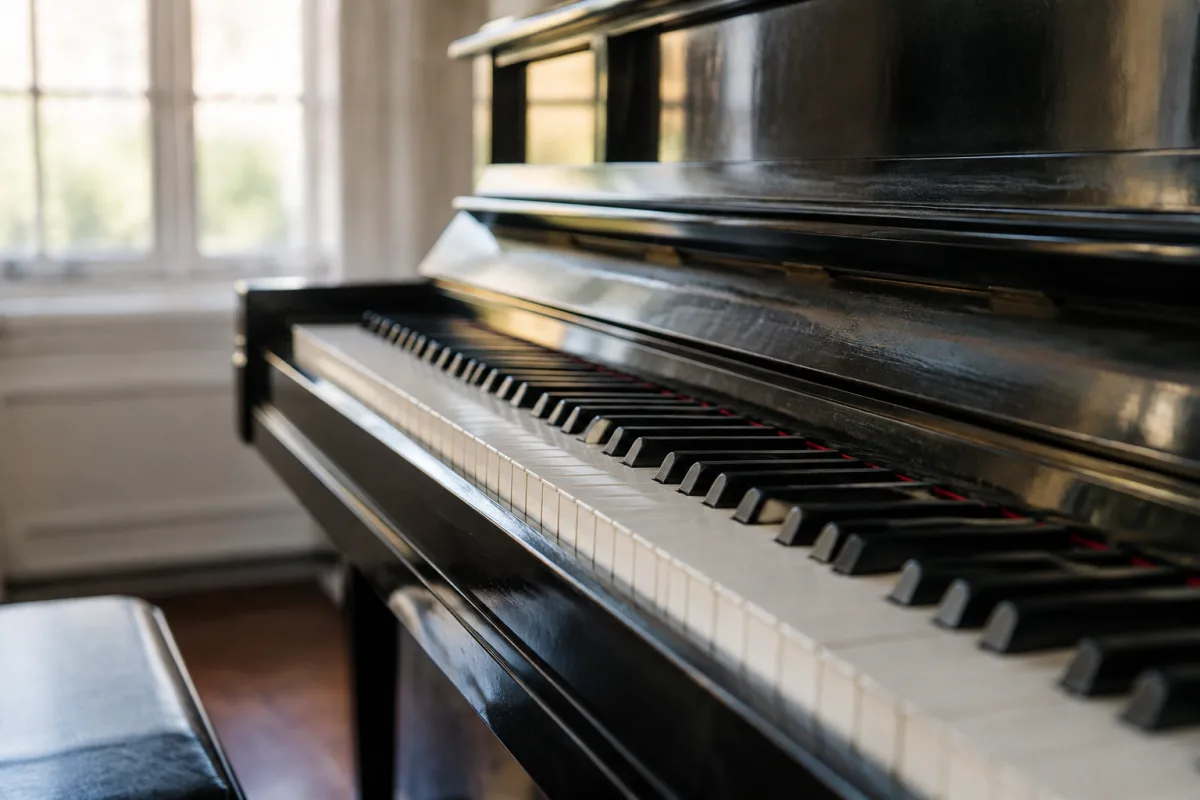
Full-Size Pianos: Specifications, Types and Choosing One
A full-size piano refers to any piano with a complete 88-key keyboard, the standard for concert instruments, studios and serious players. Unlike compact or midi keyboards with fewer keys, full-size pianos offer the complete range of musical expression. Understanding the distinctions between upright and grand full-size pianos, and the specifications that define their character, helps you choose an instrument suited to your needs.
What Defines a "Full-Size" Piano
The term "full-size" most commonly denotes an 88-key keyboard, the standard established by Steinway and accepted universally for concert and recording work. Pianos with fewer keys (61, 76) are considered compact or portable; 88 keys is the professional norm. A full-size piano also implies a complete action mechanism — the mechanical levers, springs and escapement that give the piano its responsiveness and feel.
In acoustic pianos, "full-size" also suggests a substantial instrument: an upright at least 121cm tall or a grand 5 feet or longer. Compact uprights (under 110cm) sacrifice tone and action quality for space.
Full-Size Upright Pianos
Upright pianos, ranging from 121cm to 135cm tall, are the most common full-size instruments for homes and studios. A 121–130cm upright is a workhorse: sufficiently large to deliver authentic piano tone and action, compact enough to fit in living spaces. Height dictates internal volume and soundboard size, which influences tone projection and sustain.
Manufacturers like Yamaha (U1, U3) and Kawai (K-200, K-300) produce uprights in this range at £3000–8000 new. Used uprights from reputable makers often represent better value, particularly Japanese instruments maintained carefully by previous owners.
Full-Size Grand Pianos
Baby Grands (5'–5'6")
Baby grands are the smallest grand pianos, offering more space inside the instrument than any upright. The lid opens fully, revealing the soundboard, and the action is superior to uprights for responsive playback and fast repetition. Cost: £10,000–30,000 new; £8,000–20,000 used in good condition.
Medium Grands (5'6"–6')
Medium grands expand size and tonal projection further. Soundboards are larger; actions are quicker and more refined. These are semi-concert instruments suitable for teaching studios, recording facilities and advanced amateurs. Cost: £15,000–50,000 new.
Concert Grands (7'–9')
Concert grands are the gold standard of piano construction. Every component is optimised for performance: the soundboard is largest, the action fastest, and the tone greatest in power and nuance. These instruments are owned by concert halls, recording studios and elite performers. Cost: £80,000–200,000+.
Specifications Defining Full-Size Pianos
| Specification | Typical Range (Uprights) | Typical Range (Grands) | Effect on Sound & Performance |
|---|---|---|---|
| Height/Length | 121–135cm | 5'–9' (152–274cm) | Larger = bigger tone, longer sustain, more resonance |
| Soundboard Size | Varies; larger in taller models | Increases with length | Larger board = fuller tone, better bass projection |
| Action Type | Standard or repeating Renner/Yamaha | Advanced repeating action; faster reset | Faster repetition = quicker playing possible |
| Number of Strings | 200–230 | 230–275 | More strings = richer tone, stronger projection |
| Pedal Function | Soft, Sustain, Soft-Sustain combo | Soft, Sustain, Sostenuto (selective sustain) | Sostenuto on grands allows advanced techniques |
Key Quality Indicators for Full-Size Pianos
Soundboard Material: European spruce is premium; Asian spruce is acceptable. Laminated soundboards (rare on full-size new pianos) offer durability but less tonal richness than solid wood.
Action Mechanism: Renner actions (German, premium) respond faster than Yamaha or Kawai actions (Japanese, reliable). However, quality regulation matters more than brand; a perfectly regulated Yamaha action outperforms a poorly regulated Renner.
Hammer Felt: Softer hammers (younger pianos) produce warmer tone; harder hammers (aged pianos) produce brighter tone. This can be adjusted by a technician via hammer voicing.
Digital Full-Size Pianos
Full-size digital pianos (88-key stage pianos and portable keyboards) offer weighted action and authentic sound engines at £600–2000. Yamaha P-125, Roland FP-90X and Korg are industry-standard choices. For recording, practice and portable gigging, digital full-size pianos offer unmatched value and zero maintenance.
Choosing Between Upright and Grand Full-Size Pianos
Uprights suit home learners and teachers: space-saving, affordable and sufficient in tone quality. Grands suit recording studios, performance venues and serious students: superior action responsiveness, more sophisticated tone control and prestige. If space and budget allow, a baby grand (5'–5'6") is the ideal compromise between upright practicality and grand sophistication.
Verdict
A full-size piano, whether upright or grand, acoustic or digital, is a serious investment in musical expression. The 88-key keyboard provides complete artistic range; a quality action allows rapid and nuanced playing. Choose acoustic if you value authentic tone and long-term resale; digital if you prioritise portability and maintenance-free operation. Whatever you select, buy the best quality you can afford — a well-maintained full-size piano remains useful and valuable for a lifetime of playing.



Comments