
2 Hand Guitar article
Buying a Second-Hand Guitar: What to Check Before You Pay
The used market is where the value is. It is also where the problems are — and almost all of them are findable in ten minutes if you know where to look.
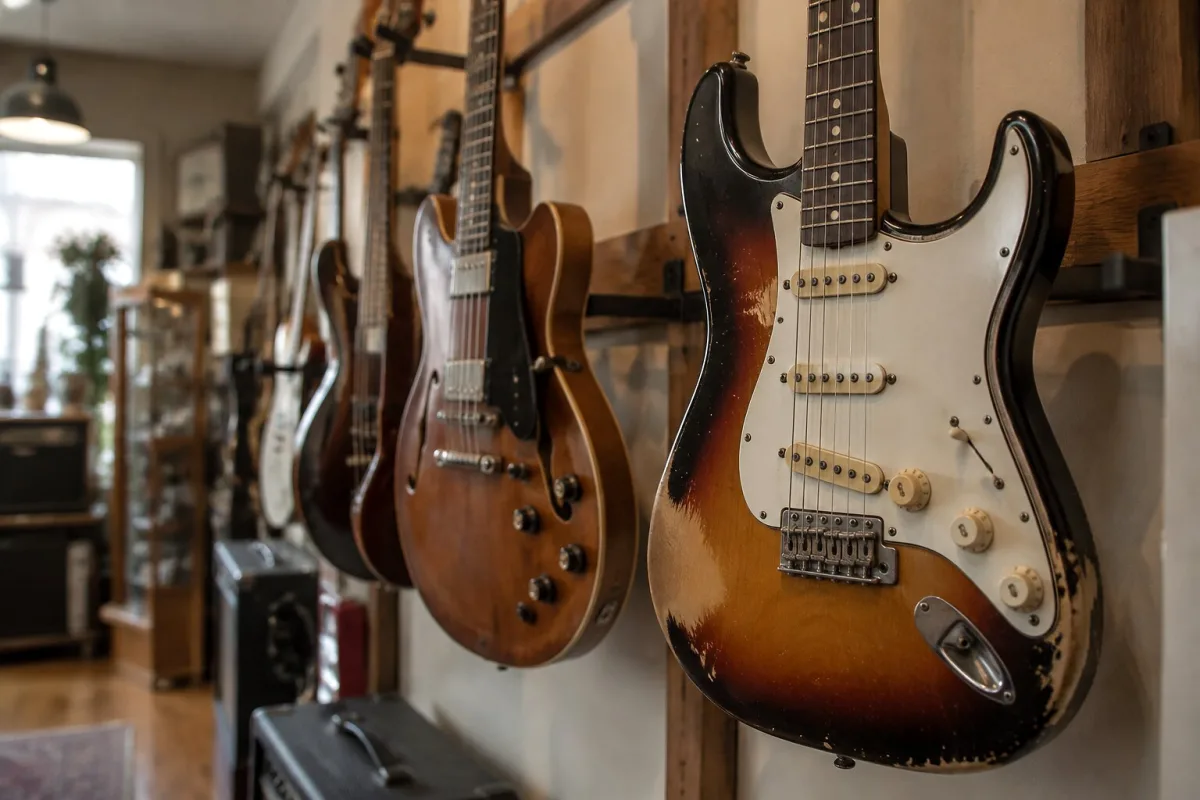
I have bought more guitars second-hand than new, and the best one I own came out of a shop in south London with a scratch across the back and a price that made me check twice. I have also bought a beauty that turned out to have a twisted neck, which taught me more than the good ones did.
The used market is where the value is. It is also where the problems are, and almost all of them are findable in ten minutes if you know where to look.
Why buying used is usually the better bet
A guitar is not a car. There is no engine to wear out and nothing that degrades simply from use — if anything, a well-made instrument that has been played regularly tends to settle rather than deteriorate.
Meanwhile the price falls off a cliff the moment it leaves the shop. A second-hand guitar at four hundred pounds is routinely an instrument that cost six or seven hundred new, and the difference is almost entirely somebody else's depreciation rather than anything you will feel.
The neck, which is nearly everything
Start here, because this is the fault that cannot be economically fixed.
Hold the guitar up and sight down the neck from the headstock towards the body, looking along the edge of the fingerboard as though checking a plank for straightness.
- A slight forward bow — a gentle dip in the middle — is normal and correct.
- A backbow, humping upwards, is a job for a technician and sometimes for nobody at all.
- A twist, where the neck spirals so the two edges disagree, is the one to walk away from. It is rarely worth repairing.
Then check the truss rod actually turns. Ask before touching it, and if the seller does not want it touched, ask yourself why.
The ten-minute inspection
- Frets. Run a finger along the edges for sharp ends, then look for flat, pitted wear under the first few frets. Refretting costs real money.
- Every note. Play chromatically up every string. Buzzes, dead spots and choked notes tell you about the neck and the frets together.
- Tuning stability. Tune it, play hard for a minute, check again. Drift usually means tuners or a badly cut nut.
- Electrics. Plug in. Sweep every knob and flick every switch listening for crackle, and wiggle the jack socket, which is the single most common fault on a gigged guitar.
- The neck joint. On a bolt-on, look for gaps. On a set neck, look very carefully for a repaired break behind the headstock — a torch held to the back of the neck shows what polish hides.
- The bridge and top. On an acoustic, look for lifting or bellying around the bridge. That is structural.
What does not matter
Buyers routinely reject a good second-hand guitar over things that make no difference and accept a bad one because it looks clean.
- Buckle rash and dings. Cosmetic. They also lower the price, which is the point.
- Old strings. A few pounds and ten minutes.
- A rough setup. Action, relief and intonation are adjustments, not faults. Budget for a professional setup and negotiate accordingly.
- Worn finish. On the neck, many players actively prefer it.
Acoustic or electric changes what you check
The ten-minute routine holds either way, but the expensive faults live in different places.
On an electric, the electronics are the common nuisance and the cheap fix: pots, switches and jack sockets are inexpensive parts and an hour of a technician's time. The neck and frets are where the money hides.
On an acoustic, the body is structural and there is no cheap fix. Look hard at the bridge for any sign of lifting, at the top for bellying behind it, and along every seam for separation. Sight across the top: it should be gently domed, not sunken or swollen. A cracked top can be repaired well; a distorted one rarely is.
Humidity is the acoustic buyer's real enemy, and an instrument stored in a cold garage for three winters will tell you so through its action and its seams.
What to pay
Work out the used market price before you go, not the new one. Completed listings tell you what people actually paid rather than what sellers hoped for.
Then subtract honestly for what it needs. A setup, a fret dress, new tuners and a rewire are all real costs, and a seller asking full money for an instrument needing all four is not offering you a deal. Most private sellers expect some negotiation; naming specific faults politely works far better than a blunt low offer.
Where to buy, and what each costs you
Every second-hand guitar reaches you through one of three routes. A shop will have checked and set up the instrument, usually offers some warranty, and prices accordingly. A private sale is cheaper and everything is your risk. An online auction is cheapest and riskiest of all, since you cannot do any of the above until it arrives.
My own rule: buy privately when I can play it first, and from a shop when I cannot. The premium is roughly the cost of the setup I would have paid for anyway.
Before you hand over the money
Ask what the guitar has been through. Has it gigged? Been stored somewhere cold or damp? Had work done, and by whom? A seller who knows the answers is usually a seller who looked after it.
And take the number seriously. Look up what the model sells for used, not new, and remember that a second-hand guitar needing frets or a neck repair is not a bargain at any discount.
The last word
Buy the one that feels right in your hands. Specifications, timbers and brand arguments all come a distant second to whether you pick it up when you walk past it. A second-hand guitar with a scratch on the back that you play every day is worth more than a pristine one that stays in its case — and it costs less, which is the happiest arithmetic in music.


Comments