


High String Guitar article
High String Guitar for Beginners: A Complete Guide
The high strings on guitar (B and high E) challenge most beginners. Here's how to master them and play confidently.
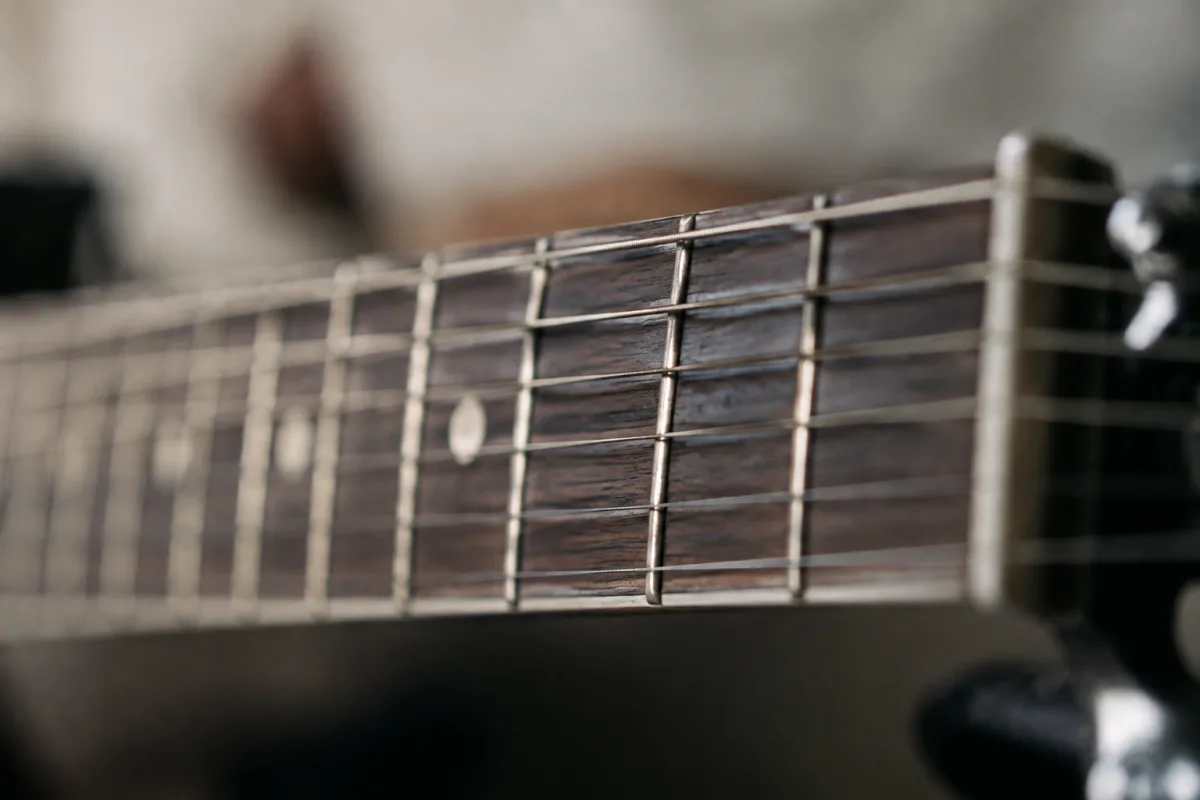
The high string guitar presents a unique challenge for beginners. Those thin, high-pitched strings at the top of your guitar's neck are where many players struggle initially. They're easy to mute accidentally, they respond sensitively to technique, and they're prone to buzzing if you're not precise. This beginner's guide helps you master the high string guitar, understand what makes them different from the deeper strings, and develop confidence playing them cleanly and accurately.
Understanding Your High String Guitar Setup
A standard guitar has six strings. The highest two strings (the B string and the high E string, also called the treble strings) make up your high string guitar in practical terms. These are the strings beginners find most temperamental. The high string guitar setup depends on your instrument's construction—neck width, fret spacing, string gauge, and action height all affect how difficult the high string guitar feels.
On a high string guitar, string spacing is tighter than on the thicker strings. This means there's less room for error, which is why many beginners find high string guitar playing frustrating at first. But with focused practice, your hands adapt quickly.
Why High String Guitar Playing Is Harder for Beginners
The high string guitar presents specific challenges that deeper strings don't:
- String thickness: Thinner strings vibrate more easily and respond to the slightest touch. Applying too much pressure on a high string guitar bends the pitch sharp; too little pressure produces a muted or dead tone.
- Muting risk: Your fingers on a high string guitar easily mute adjacent strings because the spacing is tight. The B string sits between the high E string and the G string—a tight sandwich.
- Buzzing tendency: When frets aren't perfectly level or your finger placement is imprecise, the high string guitar buzzes loudly. Lower strings are more forgiving.
- Tuning sensitivity: High string guitar strings drift slightly when temperature changes or you bend them during playing. They're more sensitive indicators of tuning accuracy.
- Speed differences: Playing fast on a high string guitar requires different hand movements than the lower strings because the physical spacing is different.
Developing a Proper High String Guitar Technique
Mastering the high string guitar comes down to technique. Here's what separates confident playing from struggling:
- Finger placement matters enormously: On a high string guitar, land your fingers just behind the fret wire, not in the middle of the gap between frets. This gives the string proper support.
- Pressure control: Press the high string guitar strings firmly but lightly. Your finger should "kiss" the string just hard enough to make it ring clearly. Excessive pressure produces sharp pitch and tires your hand.
- Minimise adjacent string contact: Angle your fingers so only the fingertip touches the high string guitar string you're fretting. This takes practice but prevents muting.
- Consistent pick or finger attack: Whether you're using a pick or fingers on a high string guitar, consistency matters. The high string guitar responds more noticeably to variations in attack angle and velocity.
- Hand independence: On a high string guitar, your fretting hand and picking hand must work in sync. Beginner tension often manifests as sloppy high string guitar playing.
Common High String Guitar Mistakes
New players make these predictable errors on a high string guitar:
- Pressing too hard: The most common high string guitar mistake. Beginners squeeze, thinking harder equals clearer tone. Actually, it produces pitch problems and hand fatigue.
- Playing only the low strings initially: Avoiding a high string guitar issue doesn't solve it—it delays it. Practise high strings daily, even if frustrating, to build skill faster.
- Assuming high string guitar difficulties mean the instrument is faulty: Usually it's technique. Test your guitar with someone experienced. Actual fret problems are rare; technique issues are universal among beginners.
- Neglecting muting control: A high string guitar demands precise finger placement. Practising slowly, focusing on clean note production, teaches muting control faster than rushing.
- Giving up on speed too early: Speed on a high string guitar comes gradually. Building muscle memory through slow, accurate practice for weeks transforms your abilities.
- Forgetting to listen critically: When practising a high string guitar, listen carefully to tone quality. Buzzing, muting, or pitch issues are diagnostic—they tell you what to fix.
Building High String Guitar Confidence
Confidence on a high string guitar comes from consistent, focused practice. Choose one piece using high string guitar strings and work through it slowly. Nail every note before speeding up. Once that feels natural, move to another. Building comfort on a high string guitar is about accumulating successful experiences, not rushing to complexity.
Your Path Forward with High String Guitar
Every accomplished guitarist struggled initially with a high string guitar. What separates those who persevere from those who give up is patience and consistent practice. A high string guitar doesn't punish you—it teaches you. Your fingers and hands adapt. Your ears develop sensitivity to pitch. Within weeks of daily practice, the high string guitar transforms from frustrating to natural.
For detailed technical information about guitar strings, fret geometry, and optimising your high string guitar setup, check the complete guide to high string guitar. Until then, focus on technique. Practise slowly. Listen critically. Your high string guitar playing will flourish.


Comments