


7 String PRS Buying guide
7 String Prs: A Complete Buyer's Guide
A comprehensive buyer's guide for 7-string PRS guitars. Learn about extended-range specifications, model comparisons, playability considerations, and price tiers.
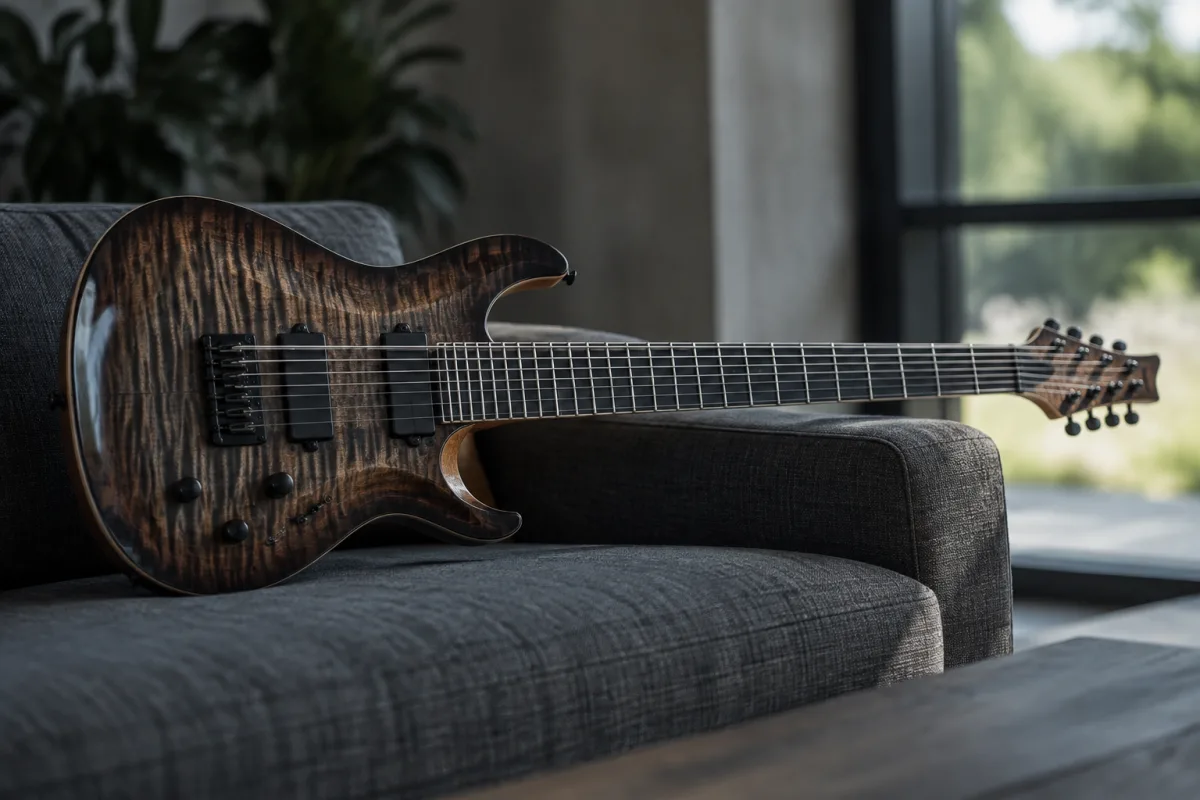
Stepping into 7-string guitars is stepping into extended-range playing—territory where aggressive riffing, deep tones, and modern metal playing thrive. PRS 7-string guitars offer the craftsmanship and tone quality synonymous with PRS's reputation, combined with extended range capability. If you're considering investing in a 7-string PRS, you're making a significant commitment to a particular playing style and sonic direction. This guide walks you through exactly what to evaluate when buying a 7-string PRS, from understanding extended-range design to comparing models, assessing playability, and ensuring you choose the right instrument for your needs.
Understanding 7-String Guitar Design
A 7-string guitar adds a low B string below the standard low E, extending downward range by a perfect fourth. This low string enables djent (palm-muted progressive metal riffing), drop tunings, and extended range soloing. PRS 7-string guitars maintain the quality construction and tonal refinement PRS is famous for whilst accommodating the wider body, thicker gauge strings, and different neck geometry that 7-string playing demands.
Switching to 7-string guitar requires technique adjustment—your fretting hand learns new positions, your picking hand develops new muting patterns. It's not a casual upgrade; it's committing to learning an instrument variant. When buying a 7-string PRS, understand this commitment.
PRS 7-String Model Range
PRS offers 7-string variants across their lineup:
| Model Series | Price Range | Key Features | Best For |
|---|---|---|---|
| PRS SE 7-String | £600–900 | Bolt-on neck, quality pickups, PRS specifications at accessible price, Indonesian-made | Budget-conscious players, students exploring 7-string, gigging musicians prioritising affordability |
| PRS S2 7-String | £1,100–1,600 | Bolt-on neck, upgraded pickups, semi-custom appointments, US-made hardware | Serious hobbyists, intermediate professionals, players wanting US quality at moderate cost |
| PRS Core 7-String | £2,200–3,500 | Set-neck construction, premium pickups, extensive customisation, USA-made | Professional touring musicians, recording artists, players wanting premium PRS quality |
| PRS Private Stock 7-String | £4,000+ | Bespoke construction, master luthier attention, unlimited customisation, collector-grade | Collectors, wealthy enthusiasts, touring professionals demanding ultimate quality |
Neck Geometry and String Spacing
The extra string fundamentally affects neck width and playability. PRS 7-string necks are wider than standard 6-string necks to accommodate string spacing. The extra string space doesn't mean cramped fretting; it means your hand adjusts to slightly wider positions. When buying a 7-string PRS, test the neck in person if possible. Neck width preferences are individual; what feels comfortable varies between players.
String spacing (distance between strings) should feel natural under your fingers. Poor spacing creates muting difficulties; excellent spacing allows clean articulation and controlled muting. PRS engineered 7-string spacing thoughtfully, but individual preference varies.
Bridge and Tuning Stability
7-string guitars place additional stress on bridges and tuning mechanisms. PRS 7-string guitars feature reinforced bridges and quality tuning machines handling the thicker low B string tension. Tuning stability is critical; the low B is prone to drifting if hardware is poor. When buying a 7-string PRS, verify the bridge is robust and tuning machines are quality locking units preventing slippage.
Pickup Selection for Extended Range
PRS pickups are voiced for extended-range instruments on professional models. The pickups handle low B string frequencies without muddiness, maintaining articulation and clarity. Entry-level 7-string PRS models use adequate pickups; professional models feature premium pickups engineered specifically for aggressive playing and modern tones. Pickup choice significantly impacts the characteristic PRS tone in extended range.
Body Design and Comfort
7-string guitars are slightly larger than standard 6-string models to accommodate the wider neck. PRS 7-string bodies are ergonomically designed for extended playing sessions. Comfort varies based on individual body type and playing position. When buying a 7-string PRS, play standing and sitting for extended periods. Neck weight and body thickness should feel balanced and comfortable.
Tuning Considerations
Standard 7-string tuning is B-E-A-D-G-B-E (low B added). Some players prefer drop tunings (B-E-A-D-G-B-E tuned lower). Your choice affects playing feel and requires different string gauges. When buying a 7-string PRS, ask about recommended string gauges and tuning options. PRS specifications typically accommodate standard tuning comfortably; alternative tunings may require consultation with a technician.
Price Tiers and Value
PRS 7-string guitars span from approximately £600 (SE models) to £4,000+ (Private Stock). Entry-level SE 7-strings offer genuine PRS quality at accessible prices—perfect for testing 7-string commitment without major investment. Mid-range S2 and Core models appeal to serious players and professionals. Premium models serve collectors and wealthy musicians prioritising absolute quality.
Value concentrates in S2 and Core ranges where quality improvements are significant but price jumps remain reasonable. SE models are legitimately quality instruments; jumping to Core models reveals professional-grade refinement.
Common Buying Mistakes
Buying a 7-string as a 6-string upgrade: 7-string guitar is fundamentally different requiring significant technique adaptation. Don't purchase expecting smooth transition; expect learning curve.
Underestimating genre specificity: 7-string guitars dominate metal and progressive music. If you primarily play pop, blues, or rock, 7-string feels unnecessarily complex. Clarify your musical direction before investing.
Choosing budget models for heavy playing: Budget 7-string PRS models aren't ideal for aggressive djent playing. Professional-tier models with superior hardware handle aggressive playing better. Match playing intensity to model tier.
Neglecting hand size: Wider necks challenge small-handed players. If you struggle with standard 6-string necks, 7-string will be frustrating. Test extensively before purchasing.
Dismissing used 7-string PRS guitars: Used models offer excellent value. Inspect for damage and fretwork carefully, but quality used PRS 7-strings maintain value and perform identically to new models.
Setup and Maintenance
7-string guitars require professional setup addressing specific geometry. A luthier experienced with extended-range instruments is essential. Budget £60-120 for professional setup. Maintenance is identical to 6-string guitars—regular string cleaning, occasional neck adjustment, periodic fret levelling. The low B string wears faster and requires more frequent replacement.
Making Your Decision
Start by confirming 7-string guitar matches your musical style and playing intensity. Test models within your budget; neck feel and pickup character should inspire you. For serious players and professionals, S2 and Core models offer best value. For exploratory purchases, SE models suffice. For exhaustive specifications, model comparisons, and historical context, see our complete guide to 7-string PRS guitars, which covers the full landscape.
Buying a 7-string PRS is investing in an instrument that opens new sonic possibilities and playing techniques. Choose thoughtfully, practice diligently, and your 7-string PRS becomes an essential creative tool.



Comments