


Firebird Studio article
Firebird Studio for Beginners: A Complete Guide
Intimidated by the Firebird Studio's bold looks? Don't be. This semi-hollow body guitar is actually forgiving to learn on and sounds professional from day one.
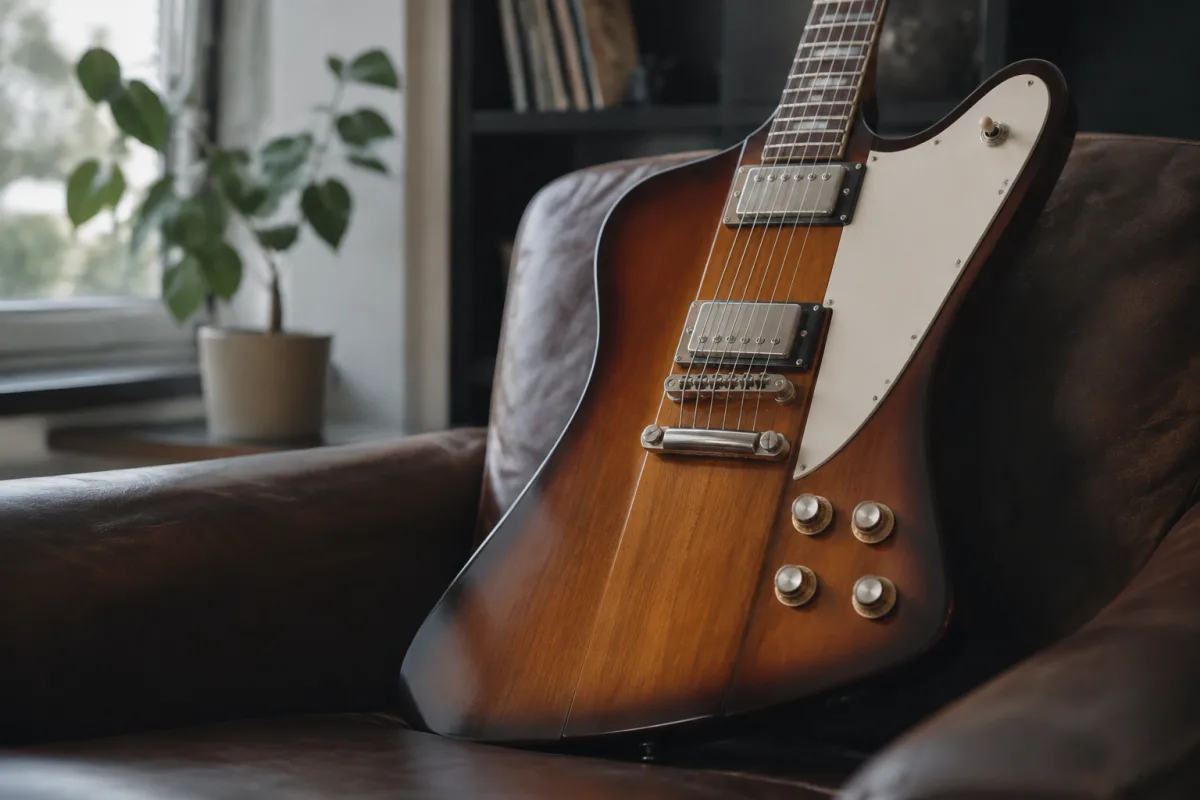
Your First Firebird Studio: A Beginner's Introduction
The Firebird Studio feels intimidating at first—its angular body, bold looks, and reputation as a serious guitar can make newcomers hesitate. But here's the truth: if you're drawn to Firebirds, this model is actually an excellent starting point. It's forgiving to learn on, more affordable than you might expect, and its character rewards you with genuine tone as you develop.
Why the Firebird Studio Works for Beginners
Gibson's Firebird Studio bridges two worlds beautifully. You get the iconic reverse-body design that makes players look twice, but with a semi-hollow body construction that's more forgiving on your hands and wrists than a solid body would be. That resonance also means the guitar rewards lighter touch—a real gift for learners still building finger strength.
The weight is moderate, too. Firebirds look hefty but this model feels substantial without dragging on your shoulder during long practice sessions. That matters more than you'd think; a comfortable guitar is one you'll actually pick up every day.
Another beginner advantage: the Firebird's neck, whilst narrow, is well-proportioned. It won't feel cramped once you've acclimatised, and the radius (curvature) makes open chords and barre chords easier than on some flatter designs. First-timers often worry they're doing something wrong; the Firebird feels right from day one.
Setup and First Impressions
When your Firebird arrives, don't panic if it needs adjustment. Most new guitars do. The first thing to check:
- Action height (how far the strings sit above the fingerboard). Too high and your fingers will ache; too low and you'll get buzzing. A luthier can set this properly in under an hour. It's worth the investment for comfort.
- Truss rod relief (the slight curve in the neck). Sight down the fingerboard. If it looks perfectly straight or bowed backwards, a professional adjustment will transform playability.
- Frets. Run your finger along the frets sideways. A few light dings are normal; deep grooves or high spots need attention.
- Electronics. Plug in, switch pickups, adjust the volume and tone knobs. Listen for crackles—occasional pops are fine, but persistent noise suggests dirty potentiometers.
If you're not confident doing this yourself, an initial professional setup costs about £60–80 and is the cheapest investment you'll make in your playing comfort.
The Firebird's Pickups: Understanding Your Sound
The Firebird Studio uses humbucker pickups—big, powerful single units that reject feedback and hum brilliantly. This is genuinely beginner-friendly. You plug in and immediately sound rich and full; there's less of that thin, buzzy nasal tone that puts new players off.
You have two pickups: one near the neck (warm, thick, great for rhythm and blues) and one near the bridge (bright, snappy, ideal for leads). The three-way switch lets you choose either, or blend both together. Spend time flipping between them. Notice how the neck pickup sounds fat and forgiving when you make mistakes, whilst the bridge is more critical of technique? That's character you'll grow into.
The volume and tone pots (the round knobs on the body) control your signal before it hits your amplifier. Turn down the tone knob gradually and hear the highs disappear, leaving a warmer, darker voice. You don't need to understand the physics—just know that these tools are yours to shape your sound.
First Mistakes Beginners Make with Firebirds
Learning from others' stumbles will save you time:
- Holding the body wrong. The Firebird's shape tempts you to grip the pointy lower bout; resist. Hold it like any guitar—let the body rest on your thigh, hand underneath the neck for support. The shape feels awkward precisely because it's new, not because you're doing it wrong.
- Cranking the amp too early. New players plug in, turn the amp to 5, and wonder why feedback wails back. Start at 2. Raise it slowly. If your amp distorts before you're ready, you won't hear yourself play cleanly.
- Neglecting the strap. Firebirds look cooler standing up, but sitting down at first is kinder to your posture and fretting hand. Use a strap long enough to let the headstock sit at chin height when sat down. This becomes second nature; learn it first.
- Skipping string maintenance. New strings on a Firebird will go sharp or flat wildly for 24 hours. That's normal. Don't assume the guitar's broken; let them settle. After a week they'll stabilise beautifully.
- Ignoring the semi-hollow body's needs. This guitar resonates freely. That's beautiful, but it means feedback at higher volumes. Keep your amp at moderate levels whilst learning. As you gain control, you'll understand how to manage it.
Building Your Skills with the Firebird Studio
The Firebird rewards precision. Because it's semi-hollow and resonant, sloppy technique is audible—finger noise, muting mistakes, uneven pick attack. That sounds like a drawback, but it's actually a gift. You'll hear immediately when you're doing something wrong, and you'll adjust faster.
Start with open chords and simple songs. The Firebird's thin, responsive neck makes transitions smooth. Practice barre chords; the guitar won't punish you for imperfect pressure. As your hand strength builds, you'll find power and precision come naturally.
Listen to artists who played Firebirds—Robby Krieger of The Doors, St. Vincent, Nick McCabe. Hear how different they sound? That's technique and intention; it's not the guitar making them special, it's what they do with it. A Firebird doesn't make you great, but it won't hold you back.
Accessories You Actually Need
You don't need much, but a few pieces of kit will improve your experience:
- A proper strap (leather or padded fabric) beats the thin one that might come with the guitar. Comfort matters.
- A hardcase or quality gig bag. The Firebird's angular body makes it vulnerable in soft gigs.
- A tuner. A clip-on tuner (around £12) is simpler than tuning by ear when you're starting out.
- Basic cleaning supplies. A soft cloth for the body and fretboard oil for the rosewood fingerboard will keep the guitar looking and playing beautifully for years.
Everything else—effects pedals, specialist cables, fancy picks—can wait. Master the instrument first.
Why This Matters
A Firebird Studio isn't a beginner's compromise; it's a genuine musical partner. You're not outgrowing it in six months; you're growing into it over years. The semi-hollow body means you'll hear your playing clearly, feedback included, which teaches you real control. The tone is professional from day one, so you won't sound like you're using a toy.
You're making a serious choice when you pick up a Firebird. Own that. Learn it thoroughly, be patient with setup and maintenance, and you'll have a guitar that sounds better every year as your technique improves. That's the beginner's advantage: you're not fighting cheap electronics or a poor neck—you're just learning how to be a musician.
The Firebird's reputation isn't hype; it's a result. Start here, and you'll understand why.


Comments