


Gibson J 45 Acoustic article
Gibson Acoustic Hummingbird: A Complete Guide
The Gibson J-45 acoustic stands as one of music's most iconic instruments, revered for its warm, resonant tone and timeless reliability. Discover what makes this dreadnought special.
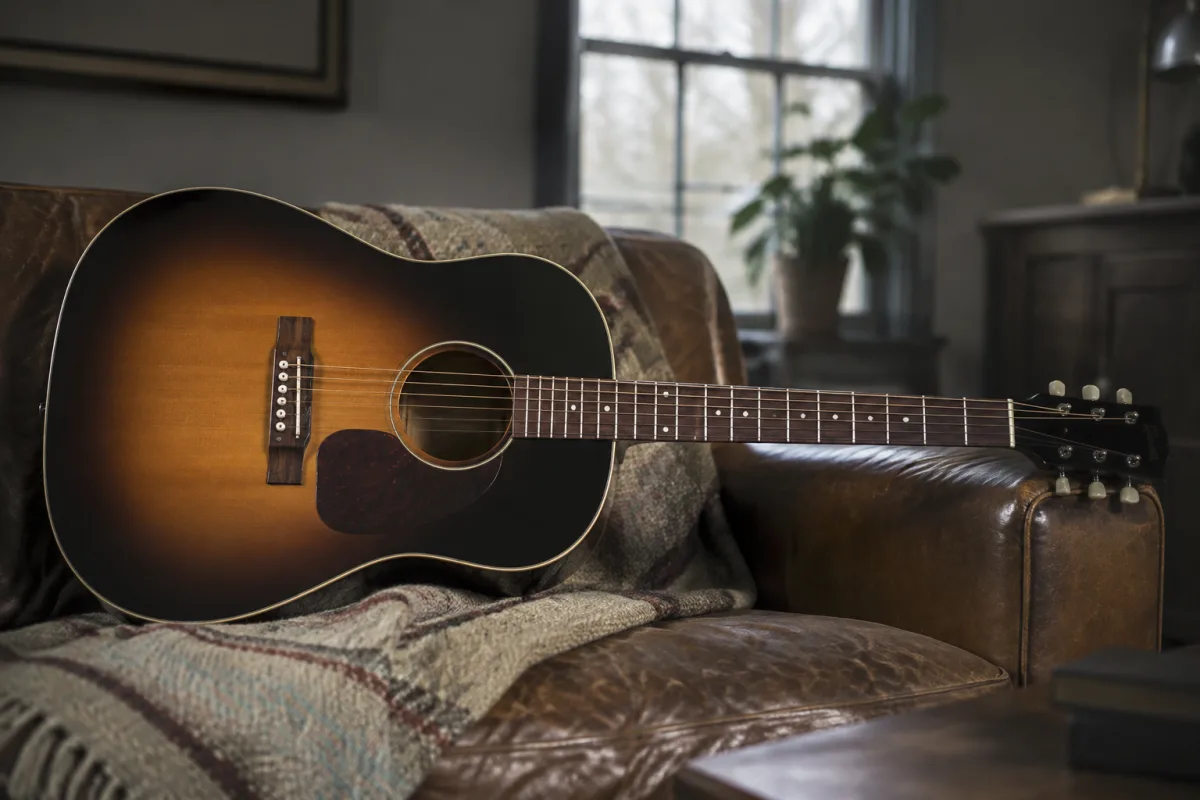
The Gibson J-45 acoustic stands as one of the most iconic instruments in music history. From folk legend Woody Guthrie to contemporary fingerstyle virtuosos, this dreadnought has shaped the sound of generations. But what makes it special? It's the marriage of thoughtful design, premium materials, and that unmistakable warm, resonant tone that inspires better playing and better songs.
The Legend of the Model
Introduced in 1942, this guitar didn't arrive by accident. Designers at Gibson crafted it to sit at the perfect intersection of power and subtlety—loud enough for stages and recording studios, yet intimate enough for personal songwriting. The generous spruce top paired with maple back and sides became the template that other makers would chase for decades. It quickly attracted serious musicians who valued its reliability and distinctive voice.
What separates this model from the pack isn't just marketing or nostalgia. It's the wood selection, the bracing patterns, the neck-to-body joint, and decades of refinement. Examples from 1945 still play beautifully today, and modern instruments build on that same principle—designed to last, to improve with age, and to reward committed players.
Tone and Projection: What Players Love
Open this guitar and listen. The first thing you notice is the balance. High notes ring clear without harshness. Low notes rumble with authority. The midrange sits forward, making vocals and lead lines cut through in a mix. This is why it became the choice for session players and recording studios—the instrument does half the mixing work for you.
The spruce top ages beautifully, developing richer complexity over time. A well-played example from the 1950s or 1960s can sound absolutely transcendent, which is why vintage models command serious money. Even new versions benefit from a "played-in" period where the wood gradually settles and the tone deepens. You won't hear dramatic changes in a month or two, but over a couple of years of regular playing, you'll feel it opening up.
Projection is where the dreadnought excels. This design produces volume without needing thin wood or brittle bracing. Stand one up in a room, and it'll fill the space naturally. For fingerstyle players, each note has presence and clarity. For strummers, the guitar delivers punch without losing definition.
Construction and Materials
The essence of this model lies in its materials. The top is Sitka spruce—prized for its strength-to-weight ratio and tonal characteristics. Sitka has a natural brightness that other woods simply cannot replicate. The back and sides are traditionally Indian rosewood, though alternatives like maple offer different aesthetic and sonic qualities.
The maple binding and multi-ply construction reinforce the structure. The neck is typically mahogany, chosen for stability and workability. The carves are generous and comfortable—designed for hours of playing without fatigue. The action (string height) comes set at the factory to be playable yet crisp, though many players eventually adjust it to taste.
One detail matters: the headstock. Gibson uses a solid design on this model, which contributes to head mass and sustain. Some competitors use slotted headstocks to save weight and cost, but a solid version offers measurable tonal benefits. It's one of those "you get what you pay for" elements.
Action and Playability
Out of the box, it's generally playable, though fresh instruments can feel slightly stiff—the wood needs settling time, and your hands need adjustment to the neck profile. The neck is substantial—wider than many competitors, with a rounded profile that fingerstyle players often find more comfortable than thinner, flatter designs.
The action (distance between strings and fretboard) typically comes factory-set around 2.5 mm at the 12th fret on the bass side, slightly less on the treble side. This is playable but not aggressive. Some players prefer lower action for easier barre chords; others keep it higher to avoid buzz during hard strumming. The solid construction means you can confidently lower the action without introducing problems—something riskier on cheaper instruments with less stable tops.
Vintage vs. Modern Instruments
A vintage example from the 1940s through 1960s represents a different creature from a modern one. These older models have often developed extraordinary tone through decades of playing and wood aging. The bracing has relaxed, the spruce top has matured, and the overall instrument has reached a kind of tonal perfection. This is why collectors and professionals will pay £15,000 to £40,000 or more for pre-war or early postwar versions.
Modern examples benefit from consistent quality control and contemporary setup standards. You're not gambling on unknown history or repairs. A new model will play beautifully right out of the case and improve with time. The tonal difference between a 1950s version and a contemporary one is real but subtle—refined complexity rather than night-and-day change.
The Gibson J-45 acoustic carries a retail price around £2,500 to £3,500, depending on finish and specification. It's genuinely expensive, but it's also a lifetime investment. Many view it as a "buy once, cry once" decision—spend now and you'll own the guitar for decades, playing it on recordings, stages, and intimate sessions.
The Dreadnought for Different Players
Singer-songwriters love this model because it's forgiving yet inspiring. Plug it into a microphone and it sounds professional without tricks. Folk players value the volume and tradition—playing the same design that inspired legendary music feels like joining a lineage. Fingerstyle specialists appreciate the neck and clarity. Even electric players often keep one handy for acoustic overdubs or unplugged moments.
It works equally well in studio and on stage. The guitar doesn't need amplification to be heard in an ensemble, yet it accepts pickups and electronic amplification beautifully when required. This versatility—sounding at home in a living room or concert hall—is partly why this model has endured over eighty years.
Alternatives Worth Considering
If this option is out of reach, several makers offer compelling alternatives at lower prices. The Martin D-28 is often compared directly and has devoted followers—slightly more treble-focused, with different aesthetics. The Taylor 914 or Taylor 916 bring modern innovations and easier playability, though some feel they lack the character of the original. The Yamaha LL16 is underrated, offering solid construction and balanced tone at a fraction of the cost.
Budget options like the Epiphone EJ-200 exist, but the jump in quality, durability, and tone when stepping up to a Gibson J-45 acoustic or comparable high-end model is substantial. It's a qualitative shift. You're investing in better sound plus an instrument that rewards playing for decades.
Maintenance and Care
This dreadnought deserves respect. Store it in a hardcase, not a gig bag—the construction is too valuable for risk. Keep it away from extreme heat, cold, and humidity swings. Acoustic guitars are sensitive to environmental changes, and the solid wood can crack or warp with fluctuations. A room staying between 40 and 60 percent humidity is ideal.
Change strings every three to six months depending on playing volume. Corroded strings dull the tone and stress the neck. Clean the fingerboard occasionally. Have the nut and saddle checked professionally if action becomes unplayable. These minor costs protect the instrument's value and keep it sounding beautiful for life.
Is It Right for You?
Ask yourself: Do I play regularly and seriously enough to justify the investment? Will this instrument inspire me to play better and write better songs? Am I buying for a lifetime, or hoping to resell for profit? If you're a dedicated acoustic player with real musical ambitions, this Gibson J-45 acoustic will repay its cost in inspiration and capability. If you're a beginner or casual player, you might start with a solid mid-range instrument and graduate later.
But here's the truth: this model does inspire better playing. There's something about holding an instrument with that much history, craftsmanship, and engineered sound that makes you play it well. You'll naturally slow down, listen more carefully, and craft songs with more intention. That, ultimately, is what justifies the cost.





Comments