
Guitar Pick Plectrum article
The Complete Guide to Guitar Pick Plectrum
Your guitar pick plectrum choice fundamentally shapes your tone, technique and playing experience, making it one of your most critical equipment decisions.
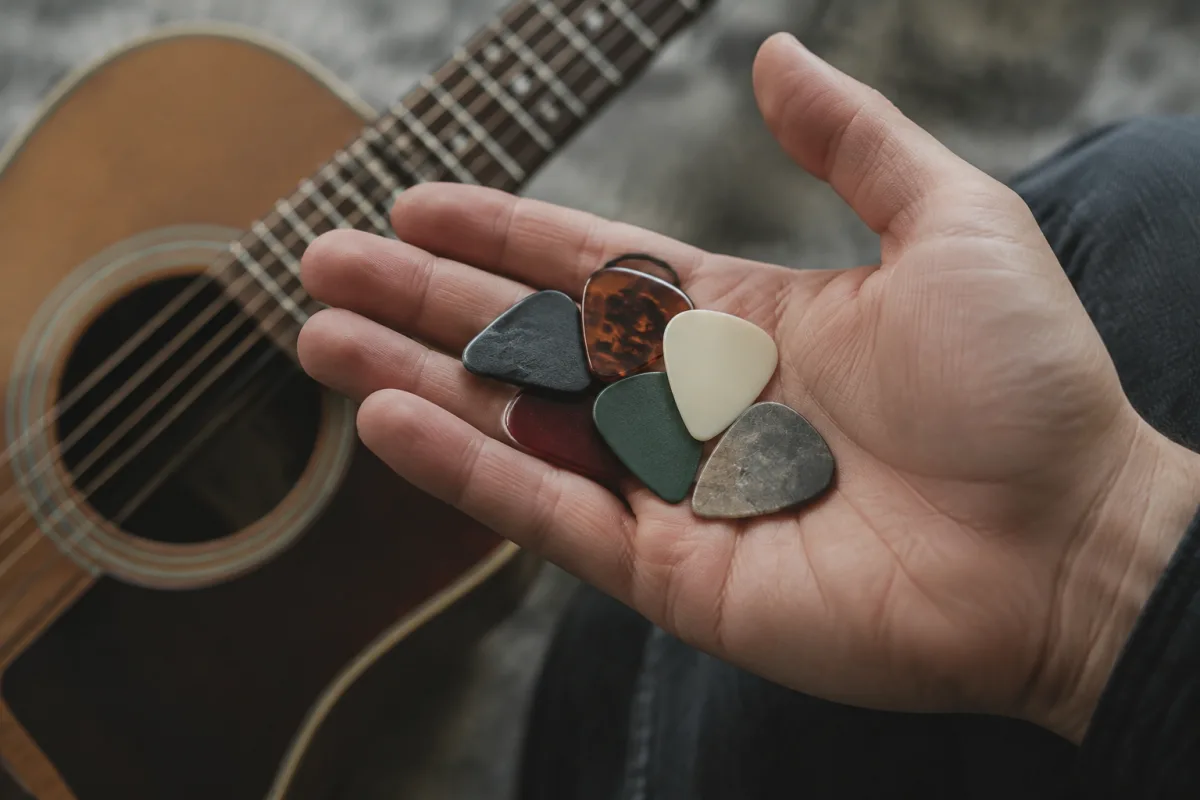
The guitar pick plectrum stands as one of the most essential yet undervalued accessories in every guitarist's arsenal. This small piece of material between your fingers and strings fundamentally shapes your tone, technique and overall playing experience. Whether you're learning basic chords or executing complex solo passages, understanding how your choice affects your playing enables you to make informed decisions that enhance your musicianship.
Understanding the Basics
A pick is simply a small, typically triangular piece of material held between thumb and fingers to strike strings. Despite its simplicity, your choice dramatically influences sound. Different materials, thicknesses and shapes create vastly different tonal characteristics and playing sensations.
Beginners often overlook this choice, assuming all picks are roughly equivalent. Experience quickly reveals this misconception—switching options can transform your tone as dramatically as changing amplifiers or effects.
Material Considerations
Celluloid represents the classic material for pick construction. This material produces warm, rounded tones prised for blues and rock. Delrin offers brighter tones and superior durability, favoured by electric and metal players. Nylon creates mellower sounds suitable for fingerstyle approaches.
Exotic materials expand possibilities further. Metal picks deliver aggressive, sharp tones perfect for extreme metal genres. Stone picks (jade or slate) provide unique acoustic properties and exceptional longevity. Tortoiseshell alternatives maintain traditional aesthetics whilst using sustainable materials.
Thickness and Gauge
Pick thickness—measured in millimetres—profoundly affects playability and tone. Thin options (under 0.6mm) produce softer, more flexible sounds. Medium thickness (0.6–1.0mm) offers balanced articulation and durability. Heavy gauges (over 1.0mm) deliver defined attack and sustained power.
Your playing style dictates appropriate thickness. Lead players often prefer heavier versions providing precise control and articulation. Rhythm players may favour lighter options offering faster strumming and softer tone. Bass players typically use thick versions generating powerful, defined notes.
Shape Variations
The standard triangular design represents conventional choice, offering balance between comfort and control. Teardrop-shaped versions provide additional comfort, particularly for players with larger hands. Jazz picks—smaller and sharper—enable fast, precise articulation. Rounded variants offer a warmer, softer approach.
Experimentation reveals personal preference. Some players discover their ideal guitar pick plectrum shape through years of casual exploration. Others deliberately test various designs to optimise their setup.
Tone Shaping Potential
Your choice influences your tonal palette as much as equipment choices. A thick celluloid option produces vintage warmth; the same thickness in Delrin generates modern brightness. Metal versions create aggressive edge perfect for metal; nylon options offer smooth, rounded character.
Matching your selection to your amplifier, guitar and desired tone optimises your sound. A high-gain metal amp paired with a thick metal pick delivers the aggressive tone metal demands. Jazz players pair their amplifier with softer versions to create smooth, articulate tones.
Technique and Control
Different options demand different technique adjustments. Thinner versions require lighter touch and careful control; excessive force causes playing errors. Thicker designs enable more aggressive attack without unwanted noise. Some players maintain multiple picks for different playing contexts.
Beginning guitarists benefit from medium-weight options offering balanced playability and durability. As technique develops, experimentation with alternatives reveals which designs complement your emerging style best.
Durability Considerations
Traditional celluloid options wear relatively quickly, particularly in aggressive playing styles. Metal and stone designs offer exceptional longevity, potentially lasting years. Delrin provides a middle ground—durable enough for regular playing without excessive expense.
The cost-benefit analysis must account for replacement frequency. Cheap, disposable options require constant replenishment; premium, durable versions represent modest investments in long-term consistency.
Grip and Comfort
How your guitar pick plectrum feels in your hand affects technique development and playing enjoyment. Smooth versions offer clean grip; textured options provide security during aggressive playing. Some feature finger grips or specialized ergonomic shaping.
Extended practice sessions reveal comfort preferences. Rough versions cause blisters; overly smooth options slip during sweaty performances. Finding your ideal balance prevents hand fatigue and enables longer, more enjoyable sessions.
Finding Your Perfect Pick
The ideal choice remains a personal discovery. Start with standard medium-weight options, then explore variations systematically. Test different materials—notice how Delrin feels differently from celluloid. Try various thicknesses and shapes, noting how each affects your tone and technique.
Many professional musicians carry multiple guitar pick plectrum options, selecting based on specific songs, venues or moods. Building a small collection enables quick experimentation and ensures backups when your favourite picks inevitably go missing during performances.


Comments