


Guitar Double Stand Buying guide
Guitar Double Stand: A Complete Buyer's Guide
Shopping for a guitar double stand? Learn what specifications matter, how to assess stability and protection, and avoid common buying mistakes.
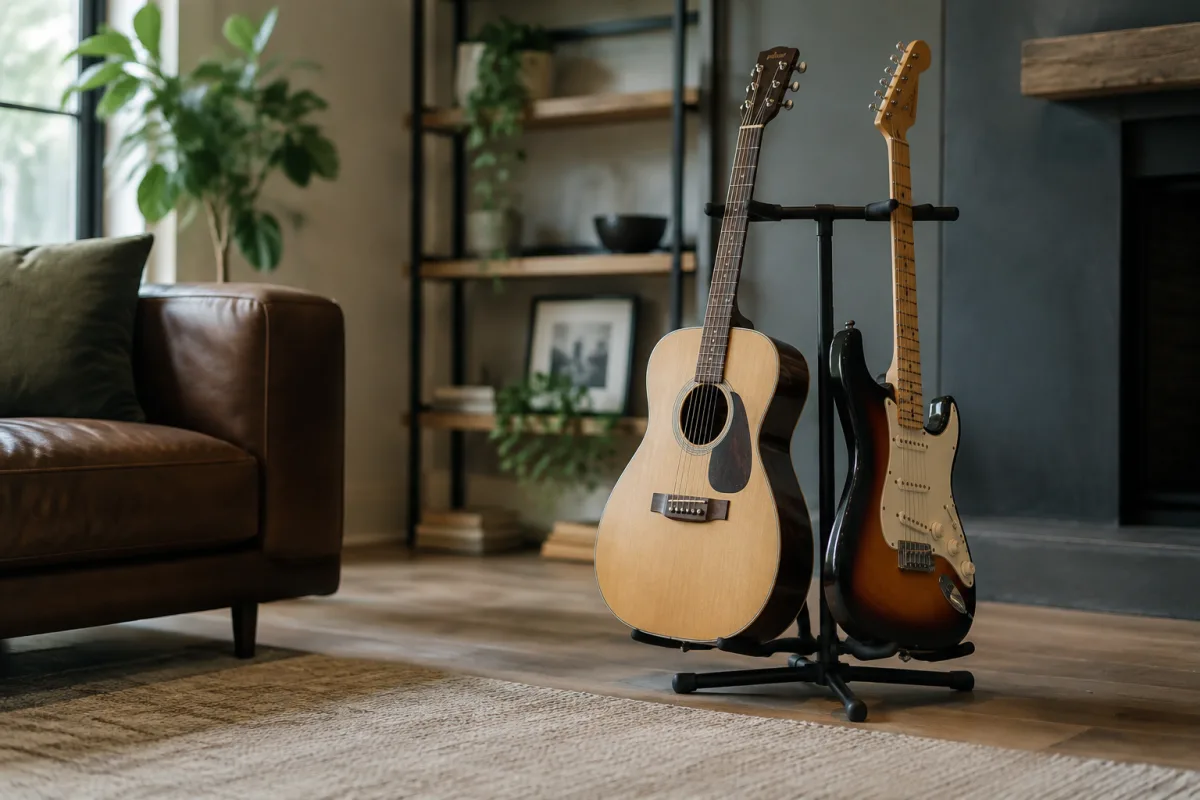
A guitar double stand is a simple purchase that dramatically affects your practising environment. Display your instruments beautifully, protect them from damage, and keep them readily accessible—or buy the wrong stand and spend weeks frustrated by instability, poor grip design, or inadequate protection. This guide examines the practical purchasing factors that separate an excellent double stand from a regrettable purchase. We'll explore stability considerations, protection features, space efficiency, compatibility with different guitar types, and pricing tiers so you select a stand that genuinely serves your guitars and setup.
Stability: The Non-Negotiable Foundation
Everything else matters only if your stand doesn't tip over. Verify stability specifications first:
- Base footprint and weight distribution – Wider bases resist tipping better than narrow ones. A double stand with a 50cm footprint is genuinely more stable than one with a 35cm footprint, regardless of height. Check the base dimensions carefully.
- Stand weight** – A heavier stand resists tipping when guitars are held. A 3kg stand with two 2kg guitars (5kg total loaded) has more stability than a 1.5kg stand with the same load. Look for metal stands rather than plastic; they're heavier and more stable.
- Grip security and cradle design – Does the stand grip guitars firmly without marring them? Do the cradles position guitars securely? Poor grip designs allow guitars to shift or slip. You want guitars that won't move if the stand gets a slight nudge.
- Positioning of guitar supports** – Are the two guitar positions offset vertically or horizontally? Horizontal offset (one guitar higher, one lower) distributes weight better than vertical offset, improving overall stability. This detail significantly affects practical safety.
- Base anti-slip feet – Does the stand have rubber feet or felt pads? These resist sliding on smooth floors and prevent scratching. Non-slip feet matter more than you'd expect for everyday practicality.
Stability is genuinely non-negotiable. An unstable stand creates nervous energy every time you use it and risks expensive guitar damage.
Protection Features: Keeping Your Guitars Safe
A double stand must protect guitars from damage:
- Neck cradle design and padding – The area where the neck rests should have protective padding (usually rubber, felt, or foam). Hard plastic or bare metal cradles damage finishes over time. Check the padding material and coverage—does it fully cradle the neck or leave edges exposed?
- Body support and contact points – Where do guitar bodies rest? Wide, padded support areas distribute pressure safely. Single-point supports can cause stress concentration and potentially warp guitars over extended use. Multi-point body support is genuinely superior.
- Padding thickness and quality – Thin padding provides minimal protection. Look for 5-10mm of quality rubber or felt. Cheap foam padding compresses and hardens over years, losing protective capability.
- Compatibility with different finishes** – Gloss finishes, matte finishes, and exotic materials react differently to contact surfaces. The best stands accommodate various finishes safely. Check reviews mentioning compatibility with your specific guitar finishes.
- Adjustability for different guitar sizes** – Can the cradles adjust for acoustic, electric, classical, or bass guitars? A fixed position works for one guitar type but might poorly support others. Adjustable cradles accommodate different body sizes safely.
Protection details determine whether your guitars remain in pristine condition or show wear and damage from daily stand contact.
Space Efficiency and Practical Placement
Your double stand must fit into your actual living space:
- Stand footprint (width and depth)** – Double stands typically occupy 40-70cm width and 25-40cm depth. Measure your available floor space carefully. A stand that fits the shop doesn't necessarily fit your bedroom corner.
- Stand height considerations** – Typical double stands stand 45-70cm tall. Taller stands are harder to access the top guitar; shorter stands might feel cramped. Consider accessibility for different guitar types and your personal preference.
- Profile when viewed from the side** – Does the stand look elegant from the side, or does it look like metal scaffolding? If your stand sits in a visible location, visual appeal affects your living space genuinely.
- Portability vs. permanence** – Are you planning a permanent studio setup or do you anticipate moving frequently? Lightweight portable stands sacrifice some stability but pack easily. Heavy, robust stands suit permanent installations.
- Wall mounting as alternative** – If floor space is precious, wall-mounted stands use zero floor area. They sacrifice some convenience (accessing guitars requires wall access) but are brilliant for space-conscious setups.
Practical space considerations prevent buying stands that look great in theory but frustrate in daily use.
Compatibility With Different Guitar Types
Your double stand must safely accommodate your specific guitars:
- Acoustic vs. electric body shapes** – Acoustic guitars have wider, rounder bodies. Electric guitars are thinner and lighter. Some stands suit one type poorly. Universal stands with adjustable cradles accommodate both safely; fixed-design stands might not.
- Classical guitar headstocks** – Classical guitars have slotted headstocks (strings go through slots, no tuning pegs protruding). Some cradle designs assume mechanical tuning pegs and grip poorly on classical guitars. Verify compatibility if you own classical instruments.
- Bass guitar weight and length** – Bass guitars are heavier and longer than regular guitars. Not every "universal" double stand safely handles bass weight. Check weight capacity and length compatibility explicitly.
- Headstock design variations** – Different headstock styles (straight, slanted, angled, offset) fit differently into universal cradles. The "universal" designation often means "fits most headstocks adequately" rather than "fits all perfectly."
Instrument-specific compatibility prevents later frustration with poor fit or stability for certain guitars.
Price Brackets and Value Assessment
Understanding pricing tiers prevents over or underspending:
| Budget Level | Typical Price | What You Get | Best For |
|---|---|---|---|
| Budget | 25-50 pounds | Basic metal or plastic construction, minimal padding, basic stability | Casual players, temporary setups, student use |
| Mid-Range | 50-120 pounds | Solid metal construction, quality padding, good stability, adjustable cradles | Regular home players, semi-professional use, protection-focused buyers |
| Premium | 120-250 pounds | Robust construction, high-quality padding, excellent stability, finish options | Professional musicians, high-value guitar protection, aesthetic considerations |
| Specialty/Custom | 250+ pounds | Custom-built options, exotic materials, specialised designs | Collectors, professional studios, bespoke requirements |
Most musicians find mid-range stands offer genuine value. Premium stands suit people with expensive instruments wanting maximum protection. Budget stands work for casual use but show wear quickly.
Common Buying Mistakes to Avoid
Buyers typically stumble on these points:
- Buying purely on appearance without testing stability** – A gorgeous stand that wobbles is genuinely terrible to use daily. Stability matters more than looks by a substantial margin.
- Assuming one size fits all guitar types** – A stand designed primarily for electric guitars might poorly accommodate your acoustic. Test fit if possible or read reviews specifically mentioning your guitar types.
- Neglecting padding inspection** – Don't just glance at padding. Check thickness, material (avoid cheap foam), and coverage. Thin or poor-quality padding causes long-term finish damage.
- Not measuring actual floor space** – The stand's footprint might surprise you when it arrives. Measure your available space carefully before purchasing. Returning oversized stands is frustrating and expensive.
- Choosing based on weight capacity alone** – A stand rated for 15kg might be structurally adequate but tip easily if positioned poorly. Weight capacity and stability design are different concerns.
- Ignoring reviews mentioning specific guitars or finishes** – If you own a particular guitar type, find reviews specifically mentioning that type. Generic "this stand is great" reviews miss compatibility nuances.
- Overlooking finish compatibility** – Gloss finishes, matte finishes, and lacquered instruments respond differently to contact surfaces. A stand that's perfect for one finish might damage another.
Avoiding these mistakes transforms a potentially regrettable purchase into a genuinely satisfying investment.
Verification Checklist Before Purchasing
Work through this before committing money:
- Does the footprint fit my actual available floor space? (Measure twice.)
- Is the base stable with full guitar weight loaded? (Check reviews on stability specifically.)
- Does the padding protect my guitar finishes safely? (Check material and thickness.)
- Will it safely accommodate all my guitar types? (Read reviews mentioning those types.)
- Are the cradles adjustable or fixed? (Adjustable suits multiple instruments better.)
- Does it have anti-slip feet and protective contact surfaces?
- What's the warranty, and can I return if unsatisfied?
- Do I prefer floor-mounted stability or wall-mounted space efficiency?
- Is the price point appropriate for my needs and guitar values?
Answering these honestly prevents impulse purchases.
Where to Buy and Return Policies
Purchase source matters for peace of mind:
- Specialised music retailers** – Staff understand guitar compatibility. They often allow hands-on testing. Good retailers have fair return policies.
- Online marketplaces** – Broader selection, competitive pricing. Verify return policies carefully—some restrict returns on stands, which is frustrating for purchases you can't test before delivery.
- Second-hand market** – Significant savings possible from used stands in good condition. Verify stability and padding condition before finalising purchase.
Prioritise return policies. A 30-day no-questions-asked return window lets you verify fit and stability in your actual space before committing permanently.
The Right Double Stand Serves Your Guitars Well
Your guitars deserve protection and accessibility. The ideal double stand is stable, protective, space-efficient, and compatible with your specific instruments. It disappears into your daily routine—you grab guitars easily, they rest safely, and you never worry about tipping. Poor stands create daily frustration and risk instrument damage. Invest time in selection, verify the specifications that matter, and you'll enjoy your stand for years. The slightly higher price for quality construction genuinely pays back through safety and durability.
For broader context about guitar stands and accessories, see the complete guide to guitar double stands.
Buying Checklist Summary
- Verify base stability and weight distribution resist tipping.
- Check that padding material protects your guitar finishes safely.
- Measure your floor space carefully—stands are larger than they appear.
- Confirm compatibility with your specific guitar types and body shapes.
- Choose adjustable cradles over fixed designs for flexibility.
- Mid-range stands (50-120 pounds) offer best value for most musicians.
- Read reviews specifically mentioning your guitar types or finishes.
- Prioritise stability and protection over aesthetic appeal.
- Buy from retailers with good return policies.
- Test or inspect padding quality—it's crucial for long-term protection.
With careful consideration, a guitar double stand becomes an essential piece of infrastructure for your musical practice and guitar care.


Comments