


Guitar Cleaner article
Guitar Cleaner for Beginners: A Complete Guide
Keeping your guitar clean is easier than you think. This beginner's guide explains which guitar cleaner products to use, how to clean safely, and the simple routine that keeps your guitar beautiful.
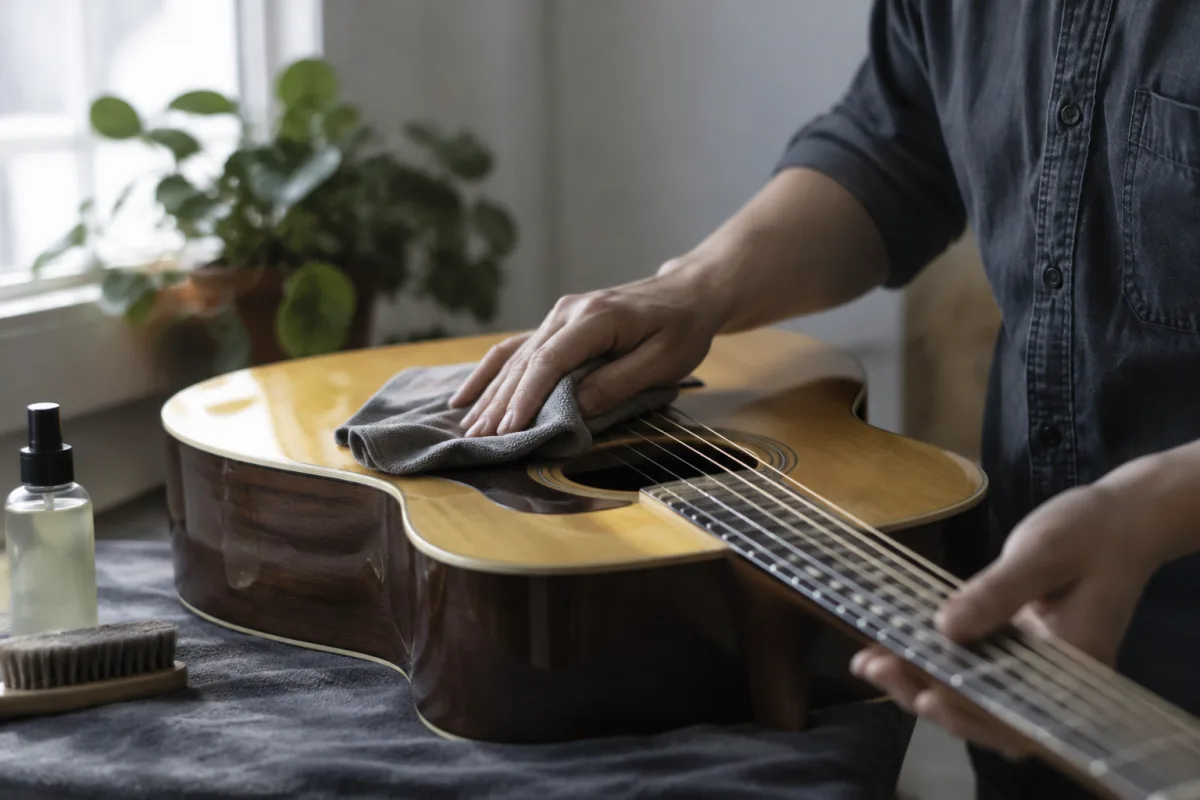
If you've just acquired a guitar, you might not realise how important guitar cleaner is to your instrument's longevity and playability. Your guitar deserves gentle care, and using the right guitar cleaner makes maintenance simple and even enjoyable. This beginner's guide removes all the mystery around cleaning your guitar and helps you develop habits that will keep your instrument looking beautiful and playing brilliantly for decades.
Why Guitar Cleaner Matters More Than You Think
As a nervous first-time guitar owner, you might wonder whether cleaning is really necessary. Here's why it matters:
- Protects your investment. A quality guitar is expensive. Regular cleaning prevents deterioration and maintains resale value.
- Improves playability. Built-up dirt and oils make frets sticky and reduce comfort. Cleaning makes playing more enjoyable.
- Prevents long-term damage. Sweat, dust, and humidity can damage wood finishes and electronics. Prevention is far cheaper than repair.
- Feels rewarding. Watching your guitar sparkle after cleaning is genuinely satisfying and builds ownership pride.
- Extends component life. Regular cleaning extends the life of strings, tuning machines, and electrical components.
- Makes playing more pleasant. A clean, well-maintained guitar feels better in your hands and sounds its best.
Types of Guitar Cleaner Explained Simply
Understanding different cleaner types removes confusion when shopping:
- Body polish: Formulated for guitar finish surfaces (wood or polyurethane). It cleans, shines, and protects in one step. This is your go-to for making your guitar look beautiful.
- Fretboard conditioner: Specialised for rosewood, ebony, or other fretboard woods. It cleans dried oils, removes built-up dirt, and nourishes wood. Always use fretboard cleaner specifically—general polishes damage fretboards.
- Hardware cleaner: Designed for metal components (tuning machines, bridge, strap buttons). These prevent oxidation and keep metal components looking new.
- String cleaner: Prolongs string life by removing sweat and dirt that cause corrosion. Not essential but valuable if you want to extend expensive string lifespan.
- All-purpose cleaner: Some products work on body, fretboard, and hardware. Generally less specialised but convenient for beginners wanting simplicity.
Common Beginner Mistakes to Avoid
New guitarists make these predictable mistakes when cleaning:
- Using household cleaners or window spray. Never use Windex or furniture polish on your guitar. These damage finishes and can harm electronics. Always use guitar-specific products.
- Over-saturating with liquid. Too much cleaner traps moisture and damages wood. Use minimal liquid—wring out cloths thoroughly until almost dry.
- Neglecting the fretboard. Many beginners ignore fretboards, not realising that dried oils and dirt accumulate over months. Fretboards deserve specific cleaning.
- Scrubbing aggressively. Your guitar finish is more delicate than you think. Use gentle, circular motions—never scrub hard.
- Applying cleaner directly to the guitar. Always apply cleaner to your cloth first, then wipe the guitar. Pouring cleaner directly risks seeping into seams and electronics.
- Skipping the strings. Strings accumulate sweat, dirt, and dead skin. Wipe them with a string cleaner to maintain tone and extend lifespan.
Your Beginner Guitar Cleaning Routine
Developing a simple cleaning habit ensures your guitar stays beautiful and plays well:
- After every play session: Wipe down your strings and body with a soft, dry microfibre cloth. This removes sweat and dust that would otherwise accumulate.
- Weekly (or after heavy playing): Use a string cleaner on all strings, paying attention to areas beneath the strings where dirt hides.
- Monthly: Polish your body and clean hardware with appropriate guitar cleaner. This takes 10 minutes and keeps your guitar showroom-ready.
- Every 3–6 months: Use fretboard conditioner to nourish wood and remove accumulated oils and dirt. Inspect for any damage or wear.
Step-by-Step Beginner Cleaning Process
- Loosen your strings (or remove them if doing deep cleaning). This allows access to the fretboard and body areas normally covered.
- Use a soft brush to gently remove loose dust from frets, body cavities, and around hardware.
- Apply fretboard conditioner to your cloth (never directly to the fretboard), then wipe gently across each fret from bass side to treble side. Use a clean area of cloth for each fret to avoid spreading dirt.
- Use body polish on another cloth, applying gentle circular motions across your guitar body. Pay special attention to areas your hands touch frequently—these collect the most oil and dirt.
- Wipe down all hardware (tuning machines, bridge, strap buttons) with a dry cloth, removing any oxidation or dirt.
- Polish strings with string cleaner, sliding the cloth up and down each string while applying gentle pressure.
- Use a final, dry microfibre cloth to buff away any residual product, leaving your guitar shiny and dry.
- Retune your guitar and you're done.
Essential Cleaning Supplies for Beginners
| Product Type | Examples | Cost | Necessity |
|---|---|---|---|
| Body Polish | Lemon Oil, Dunlop 65 Polish, Music Nomad | £8–£15 | Essential |
| Fretboard Conditioner | Lemon Oil, Dunlop 65 Conditioner, Fender | £6–£12 | Essential |
| Microfibre Cloths | Any brand, preferably lint-free | £3–£8 (pack) | Essential |
| String Cleaner | Dunlop String Conditioner, Music Nomad | £5–£10 | Optional |
| Soft Brush | Guitar cleaning brush with soft bristles | £4–£8 | Helpful |
Products to Avoid Completely
- Window cleaner (Windex, etc.) - damages finishes and harms electronics
- Furniture polish - wrong formulation for guitar wood
- Paper towels - scratch finishes and leave lint
- Regular clothes - often shed fibres and harbour dirt
- Excessive water - can damage wood and electronics
- Abrasive products - scratch frets and finishes irreparably
Storage Between Cleaning Sessions
Proper storage prevents dirt accumulation between cleanings:
- Store in a dry, climate-controlled room away from direct sunlight.
- Use a guitar stand or wall mount, not a case for everyday storage (cases trap moisture).
- Keep your guitar away from heating vents, air conditioners, and windows where humidity and temperature fluctuate.
- Store cleaning supplies in sealed containers away from your guitar to prevent spills.
When to Seek Professional Cleaning
Some cleaning situations exceed beginner capabilities:
- Deep fret oxidation or tarnish—professional fret polishing is required
- Finish damage or cracks—luthier expertise needed for proper repair
- Electronics cleaning—internal circuit boards require professional handling
- Deep conditioning of extremely dry fretboards—professional care recommended
Your Cleaning Journey Begins
Guitar cleaning is genuinely simple once you understand the basics. Develop a routine, use appropriate products, and your instrument will reward you with years of beautiful appearance and reliable performance. For deeper exploration of guitar maintenance, professional cleaning techniques, and comprehensive product recommendations, see our complete guide to guitar cleaner, which covers advanced care methods, product comparisons, and maintaining specific guitar types.
Start Simple
Don't let guitar cleaning intimidate you. Armed with basic guitar cleaner, microfibre cloths, and these simple techniques, you can maintain your instrument like a professional. Your guitar is made to be played, cared for, and enjoyed. Start your cleaning routine today—your future self will thank you.


Comments